Foundation stays on skin 8–16 hours a day, longer than almost any other beauty product. That prolonged contact makes ingredient quality just as important as shade or finish. Conventional formulas sometimes include synthetic fragrances, certain preservatives, or petroleum-derived additives that sensitive individuals prefer to limit, and cosmetic manufacturing also carries an environmental footprint, from agriculture to packaging to shipping.
Growing consumer demand for cleaner formulations and sustainable packaging has pushed brands to prove that performance and responsibility can coexist. But even the healthiest formula fails if it doesn’t suit your skin. Finding the right organic foundation comes down to three factors:
- Skin type — determines how the formula performs all day
- Undertone — ensures the shade blends naturally
- Coverage — achieves the finish you want without discomfort
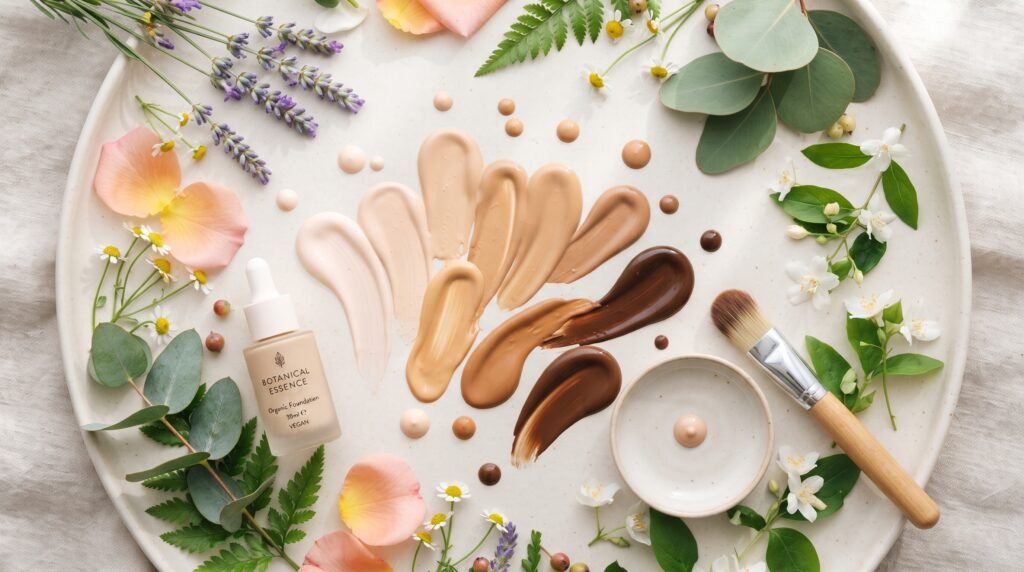
Unlike products rinsed away quickly, foundation forms a continuous layer that interacts with sweat, sebum, sunlight, humidity, and pollutants throughout the day. Ingredient transparency matters here: brands that openly disclose full ingredient lists, sourcing practices, and third-party certifications make it far easier to compare products on evidence rather than marketing claims.
What Makes a Foundation “Organic”?
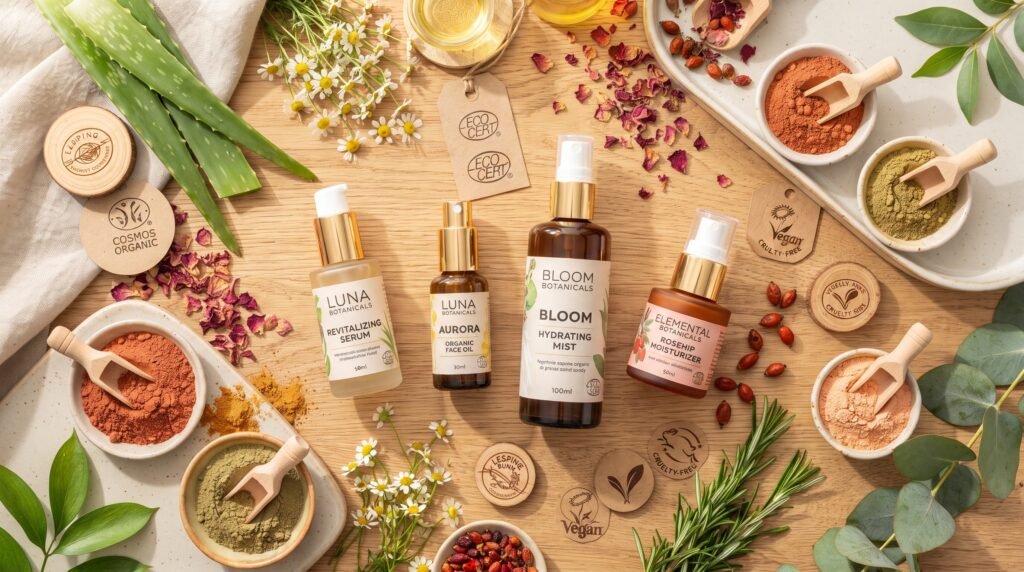
There’s no single legal definition of “organic foundation.” Certifications like COSMOS, Ecocert, and USDA Organic each apply different sourcing and processing standards, so ingredient lists and certification logos matter more than front-label marketing.
| Term | What It Means |
| Organic | Certified organically grown ingredients; sustainability and traceability focus |
| Natural | Naturally-sourced ingredients, but not necessarily organically grown |
| Mineral | Relies on zinc oxide, titanium dioxide, iron oxides, mica; popular for oily/acne-prone skin |
| Clean Beauty | Excludes selected ingredients; standards vary widely by brand |
Ingredients Consumers Should Avoid
Beneficial Ingredients Commonly Found in Organic Formulas
Organic Foundation Finder by Skin Type
| Skin Type | Look For | Avoid | Top Brands |
| Dry | Cream/serum/liquid formulas; dewy or satin finish; medium buildable coverage; aloe, jojoba, argan, squalane, shea, rosehip, vitamin E | Drying alcohols, ultra-matte finishes, heavy absorbent powders | RMS Beauty, ILIA Beauty, Ere Perez, Juice Beauty, Fitglow Beauty |
| Oily | Lightweight liquid or mineral formulas; natural/soft-matte finish; zinc oxide and mineral pigments; fast-setting | Heavy waxes, rich butters, thick cream formulas | Alima Pure, Lily Lolo, Inika Organic, Zao Makeup, Mineral Fusion |
| Combination | Lightweight liquid/serum; satin finish; squalane, jojoba, aloe, green tea; breathable, non-comedogenic | Heavy butters, thick occlusive waxes, excess fragrance | Kjaer Weis, Inika Organic, ILIA Beauty, RMS Beauty, Ere Perez |
| Sensitive | Fragrance-free, minimal ingredient lists, dermatologist-tested; aloe, chamomile, calendula, squalane, vitamin E | Synthetic fragrance, formaldehyde-releasers, drying alcohols, harsh additives | Jane Iredale, Alima Pure, RMS Beauty, Inika Organic, Lily Lolo |
| Mature | Serum or lightweight liquid/cream; satin/luminous finish; squalane, rosehip, argan, vitamin E, aloe | Ultra-matte finishes, heavy powders, high alcohol content | ILIA Beauty, Fitglow Beauty, Juice Beauty, RMS Beauty, Kjaer Weis |
Best Organic Foundation Brands I Would Suggest
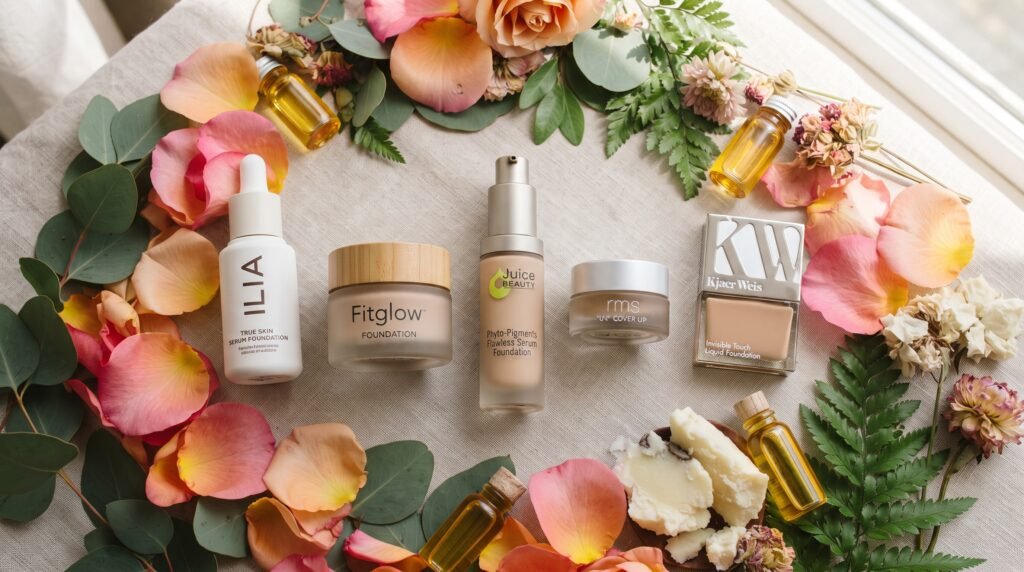
1. ILIA Beauty
- Hydrating serum-like texture.
- Natural radiant finish.
- Skin-conditioning botanical ingredients.
- Cruelty-free.
- Sustainable packaging improvements.
- Excellent everyday option.
2. Fitglow Beauty
- Rich in nourishing plant oils.
- Comfortable long wear.
- Supports skin hydration.
- Clean ingredient philosophy.
- Cruelty-free.
- Premium quality.
3. Juice Beauty
- Certified organic botanical ingredients.
- Antioxidant-rich formulations.
- Comfortable luminous finish.
- Sustainable sourcing.
- Cruelty-free.
- Moderate pricing.
4. RMS Beauty
- Dewy finish that enhances mature complexions.
- Botanical oils soften dry skin.
- Lightweight coverage avoids caking.
- Clean ingredients.
- Eco-conscious packaging.
- Worldwide availability.
5. Kjaer Weis
- Luxurious cream formulations.
- Elegant refillable packaging.
- Organic ingredient focus.
- Cruelty-free.
- Refillable system minimizes waste.
- Premium investment product.
For combination skin, which combines an oily T-zone with drier cheeks, the key is balance rather than extremes: an overly matte formula can leave dry areas flaky, while a very hydrating one can make the T-zone shine by midday. Lightweight, buildable formulas that adapt across different areas of the face tend to work best, especially paired with a suitable primer.
Most of these brands share common values: cruelty-free testing, growing use of recyclable or refillable packaging, and transparent, plant-based ingredient sourcing. Pricing ranges from budget-friendly (Lily Lolo, Mineral Fusion) to premium (Kjaer Weis, Fitglow Beauty).
Finding Your Undertone
Undertone is the subtle hue beneath your skin and stays constant even as your complexion changes with sun exposure.
| Undertone | Veins | Jewelry | Tanning | Colors That Flatter | Common Mistake |
| Warm | Green | Gold | Tans easily | Mustard, olive, camel, terracotta | Choosing cool/pink shades that look ashy |
| Cool | Blue/purple | Silver | Burns before tanning | Sapphire, emerald, berry | Choosing yellow-based shades that look orange |
| Neutral | Both blue and green | Both gold and silver | Tans gradually, occasional burn | Most colors | Assuming neutral always means yellow-toned |
| Olive | Green with blue hints | Both | Tans easily | Olive, chocolate, cream, muted neutrals | Standard warm shades oxidizing orange |
Expert Tip: Apply foundation along the jawline and wait 15–30 minutes before judging the match; some formulas oxidize slightly after contact with air and skin oils.
Choosing the Right Coverage
| Coverage Level | Best For | Benefits | Recommended Formulas |
| Sheer | Beginners, everyday wear, minimal routines, clear skin | Lightweight, breathable, quick application | Tinted serums, skin tints, organic BB creams |
| Medium | Uneven tone, mild redness, small blemishes, daily/professional wear | Natural finish, buildable, flexible for most skin types | Satin liquid foundations, buildable creams |
| Full | Acne marks, hyperpigmentation, melasma, rosacea, special occasions | Strong coverage, long wear, less concealer needed | Buildable cream foundations, high-pigment liquids |
Expert Tip: Thin, buildable layers usually look more natural and feel more comfortable than one thick layer, regardless of coverage level.
How Organic Foundations May Support Skin Health
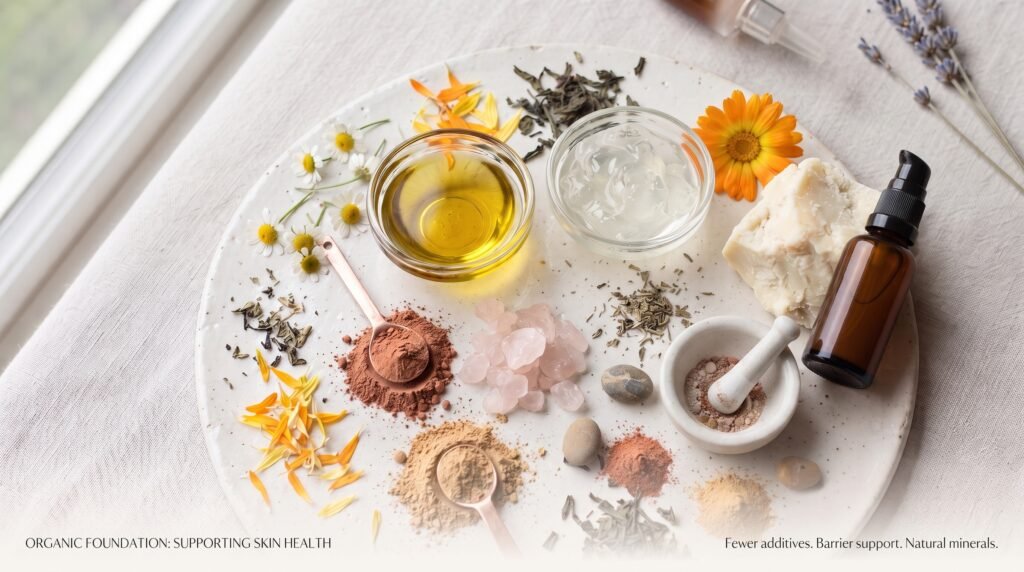
While no foundation can treat skin conditions, well-formulated organic products may offer these advantages:
- Fewer synthetic additives — many are made without parabens, phthalates, formaldehyde-releasers, or synthetic fragrance
- Skin barrier support — squalane, jojoba oil, aloe, shea butter, and rosehip oil help reduce water loss
- Lower irritation risk — fragrance-free, minimal-ingredient formulas suit sensitive skin
- Fewer breakouts — breathable, non-comedogenic textures with zinc oxide and mineral pigments
- Antioxidant protection — green tea, vitamin E, pomegranate, and grapeseed extracts help counter environmental stress (never a substitute for sunscreen)
- Microbiome-friendly formulation — gentler formulas may better support the skin’s natural balance
Foundation is only one piece of skin wellness; nutrition, hydration, sleep, sun protection, and a solid skincare routine matter just as much.
Environmental Benefits
| Factor | Impact |
| Sustainable farming | Less pesticide use, better soil health, protects pollinators |
| Biodegradable ingredients | Plant-based oils and waxes break down more readily than synthetics |
| Safer manufacturing | Reduced hazardous chemicals, solvents, and water pollution |
| Recyclable/refillable packaging | Glass bottles, aluminum containers, bamboo compacts, refill systems |
| Lower carbon footprint | Renewable energy, efficient transport, responsible sourcing |
| Ethical sourcing | Fair labor practices, cruelty-free testing, supply-chain transparency |
Practical Buying Guide
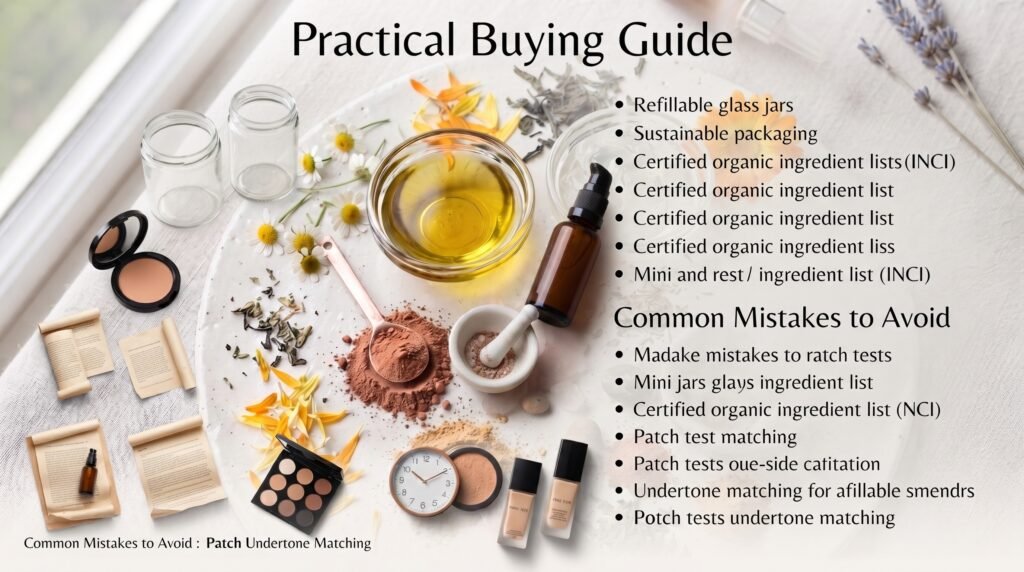
Mind expiration: Most liquid foundations last 6 –12 months after opening; watch for odor, separation, or texture changes
Check certifications: COSMOS Organic, COSMOS Natural, Ecocert, USDA Organic, NATRUE — each has different standards
Read the full ingredient list (INCI) rather than trusting front-label claims
Watch for greenwashing: Terms like “natural-inspired” or “eco beauty” aren’t regulated
Favor sustainable packaging: Glass, refillable compacts, minimal plastic
Patch test first: Apply behind the ear or on the inner forearm and wait 24–48 hours
Check for oxidation: Test on the jawline and evaluate after 15–30 minutes in daylight
Common Mistakes to Avoid
Buying based on trends alone rather than fit for your skin
Matching skin tone but ignoring undertone
Choosing ultra-matte formulas for dry or mature skin
Using oil-rich, dewy formulas on very oily skin
Assuming “natural” means certified organic
Skipping the ingredient label and patch test
Applying one thick layer instead of building thin ones
Final Thoughts
The perfect foundation does more than create a flawless complexion. It should work in harmony with your skin while reflecting your personal values. Choosing an organic foundation means looking beyond color alone and considering formulation, ingredient transparency, skin compatibility, and environmental responsibility.
The best foundation for you is one that matches your skin type, undertone, and desired level of coverage, while providing comfortable, long-lasting wear. Whether your priority is hydration for dry skin, oil control for oily skin, gentle ingredients for sensitivity, or a luminous finish for mature skin, today’s organic beauty market offers high-performing options for nearly every need.
Every purchase also represents an opportunity to support brands that invest in sustainable farming, ethical sourcing, cruelty-free practices, and environmentally responsible packaging. As more consumers demand cleaner, more transparent cosmetics, the industry continues to move toward safer formulations and lower-impact production methods.
Beautiful skin begins with healthy choices, not only in the products you wear but also in the habits you build every day. Nourishing skincare, sun protection, balanced nutrition, and thoughtful cosmetic choices work together to promote long-term skin wellness.
Related Guides
Organic Concealer Guide: Can One Fix Both Under-Eyes and Blemishes?
Organic Serums Decoded: Which Natural Actives Are Actually Stable?
Best Certified Organic Korean Skincare-Makeup Hybrids [2026 Guide]
How to Choose Organic Lipstick: A Shade-by-Shade, Ingredient-by-Ingredient Guide
10 Proven Ways to Reduce Your AC Energy Bills in the GCC

10 Best Passive Cooling Techniques for GCC Homes