Buying an organic concealer sounds simple until you actually try to use the same formula across your entire face. We’ve all been there: a clean, plant-based formula that looks beautifully smooth and luminous under your eyes suddenly slides right off a blemish by lunchtime. Conversely, that high-pigment matte spot concealer you love can instantly cake around fine lines, making your under-eye area look dry and tired.
This doesn’t mean your favorite clean beauty brand made a bad product. It just means the formulation is trying to solve two entirely different cosmetic problems.
Anatomically, the skin under your eyes and the skin over a breakout have opposite needs. Let’s break down why you should separate them, what organic ingredients to actually look for, and how to shop smarter without falling for “clean beauty” greenwashing.

The Formulation Battle: Under-Eyes vs. Breakouts
To understand why a universal concealer rarely works, you have to look at what you are trying to accomplish in each zone.
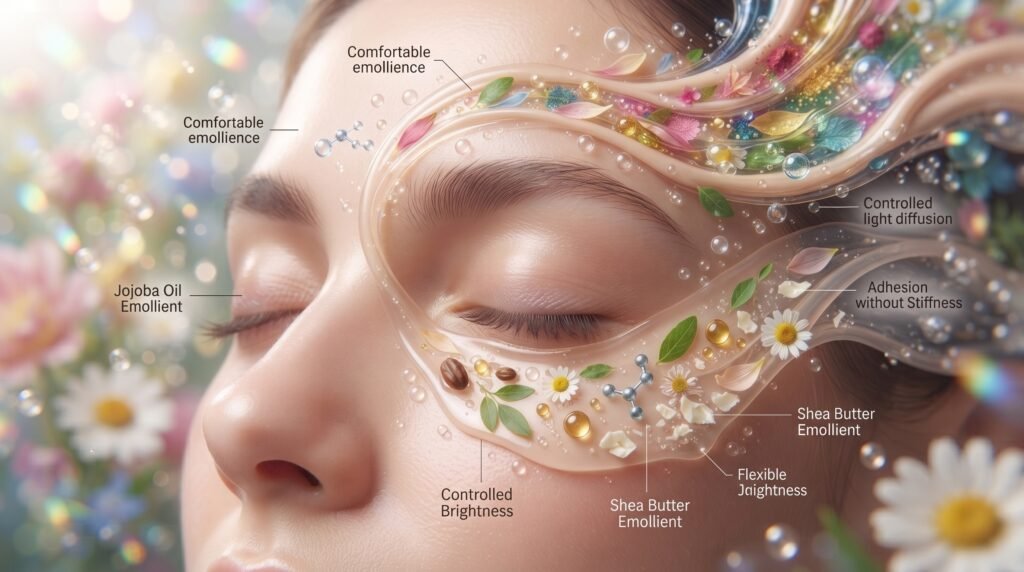
The Under-Eye Goal (Light Diffusion & Flexibility): The skin around your eyes is exceptionally thin, has very few oil glands, and is in constant motion. A proper under-eye formula needs to stretch with your expressions. It requires light-reflecting properties to optically brighten shadows rather than just laying down a thick, heavy blanket of pigment.
The Blemish Goal (Adhesion & Matte Precision): A breakout is raised, often oily, and highly discolored. To cover it, you need a formula with serious grip that physically adheres to the spot. It requires a soft-matte or satin finish to absorb excess sebum and minimize the appearance of texture, because adding luminosity to a raised bump will only make it stand out.
| Under-Eye Requirements | Helpful Formula Characteristic | Importance |
| Dry-looking skin | Emollients + humectants | Improves surface feel and appearance |
| Fine lines | Flexible texture/film system | Helps avoid a stiff, heavy appearance |
| Darkness | Appropriate pigment blend | Visually neutralizes discoloration |
| Dullness | Controlled optical effect | Can create a fresher appearance |
| Creasing | Balanced texture | Reduces excessive product accumulation |
| Sensitive area | Well-tolerated formula | Improves cosmetic comfort |
Decoding Organic Under-Eye Ingredients: What Actually Works?
When shopping for a clean under-eye concealer, ignore the marketing claims about “magical dark circle cures” and look straight at the structural emollients and humectants.
1. Plant-Derived Squalane
When the skin under your eyes appears dry or rough, look for squalane near the top of the ingredient list, as it mimics the skin’s natural moisture barrier and leaves a very smooth feel without the heavy, greasy sensation associated with ordinary oils. Note: Make sure that the manufacturer indicates squalane (the stable, hydrogenated form), not squalene, as the latter oxidizes rapidly when it comes into contact with the skin.
2. Jojoba Ester & Oils
Jojoba is technically a liquid wax ester that closely matches human sebum. In an under-eye formula, it acts as a flexible lubricant. It allows the pigments to sit evenly on top of the skin without migrating into fine lines when you smile or blink.
3. Shea Butter
Shea butter provides deep, rich moisture that is very pleasant for dry skin. Yet it is important to achieve a balanced composition. In the case of a clean cream concealer with a high amount of raw shea butter, the mixture can become overly moisturized, which can cause your mascara or eyeliner to smear and bleed all day.
The Heavy Hitters for Organic Blemish Concealing
To hide a red rash, the approach shifts from hydration to coverage and oil regulation.
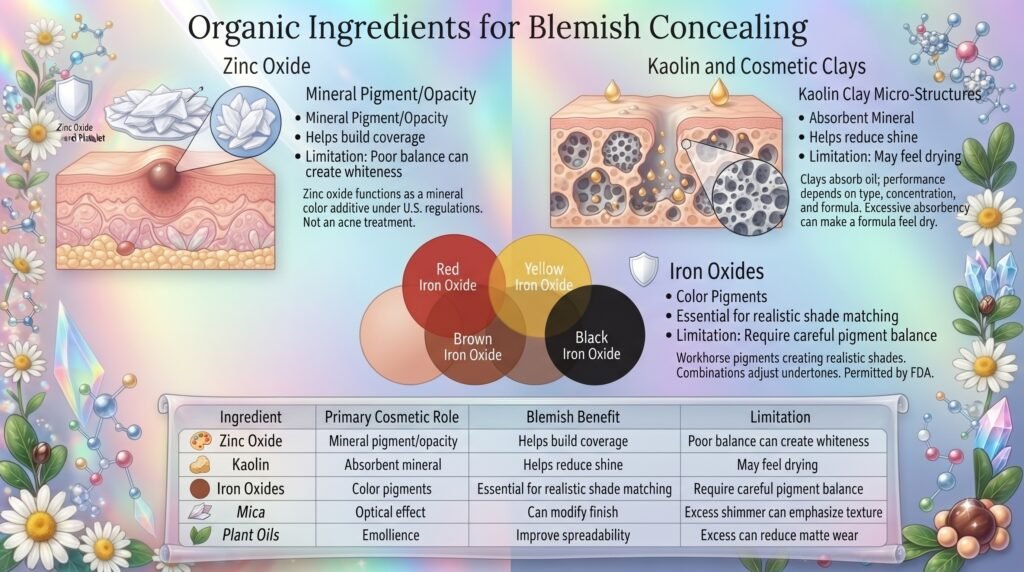
1. Iron Oxides
These are the genuine mineral pigments that enable the production of realistic, skin-like tones. Unlike synthetic dyes, high-purity iron oxides blend easily into the complexion in order to counteract hyperpigmentation and redness.
2. Kaolin Clay
For people with oily or acne-prone skin, including a little kaolin clay in a concealer can be very advantageous, since the clay’s ability to absorb excess surface oil gives the product a non-reflective consistency and prevents the pigment from rubbing off raised blemishes. It should, though, be avoided to use formulas in which clay is the main ingredient, as this may dry out the blemish and lead to the skin flaking.
3. Zinc Oxide
While zinc oxide is famously used for sun protection, in a spot concealer, it provides excellent physical opacity and coverage. A common clean beauty myth is that a zinc-infused concealer will actively “cure” acne. In reality, unless it is registered as an active over-the-counter drug, zinc functions primarily as a soothing, highly opaque cosmetic pigment.
| Ingredient | Potential Cosmetic Role | Under-Eye Suitability | Important Consideration |
| Jojoba and oils | Emollient | High | Overall formula balance matters |
| Plant based Squalane | Lightweight emollient | High | Does not treat dark circles |
| Shea butter | Rich emollient | Moderate-high | May feel heavy for some users |
Clean Beauty Checklist: Greenwashing Red Flags to Avoid
The organic makeup space is filled with confusing buzzwords. When choosing your products, keep these practical realities in mind: “Organic” vs. “Certified Organic”: Since anyone can put ‘organic’ on the front label, check for verified standard stamps such as COSMOS or USDA Organic to make sure the claims regarding the sourcing are actually subject to regulation.
The Non-Comedogenic Myth: Just because a concealer is packed with natural botanicals doesn’t mean it won’t clog your pores. Heavy organic oils (such as coconut or wheat germ oil) can be highly comedogenic. Always audit the full ingredient list if you are prone to breakouts.
The Packaging Dilemma: Sustainable beauty is almost never a simple black-and-white matter. Although large glass jars have a nice appearance and are considered environmentally friendly, they usually result in greater shipping weight (and therefore a higher carbon footprint) compared with lightweight, recycled PCR plastics. Moreover, open tubs allow the natural, preservative-free formulations to come into contact with air and with bacteria from your fingers each time you dip into them.

The Verdict: Do You Really Need Two Tubes?
If you have relatively balanced skin and only deal with an occasional, faint spot, a single, high-quality hybrid satin concealer with buildable medium coverage can easily pull double duty.
However, if you struggle with very dry, shadowed under-eyes alongside oily, highly textured breakouts, using a single product will always feel like a compromise. Investing in two distinct, targeted textures will actually save you product in the long run, giving you a fresh, luminous gaze and a flawlessly camouflaged complexion without the cakey buildup.
Related Guides
Organic Serums Decoded: Which Natural Actives Are Actually Stable?
Best Certified Organic Korean Skincare-Makeup Hybrids [2026 Guide]
Organic Foundation Guide 2026: Find Your Perfect Match

How to Choose Organic Lipstick: A Shade-by-Shade, Ingredient-by-Ingredient Guide
10 Proven Ways to Reduce Your AC Energy Bills in the GCC

10 Best Passive Cooling Techniques for GCC Homes