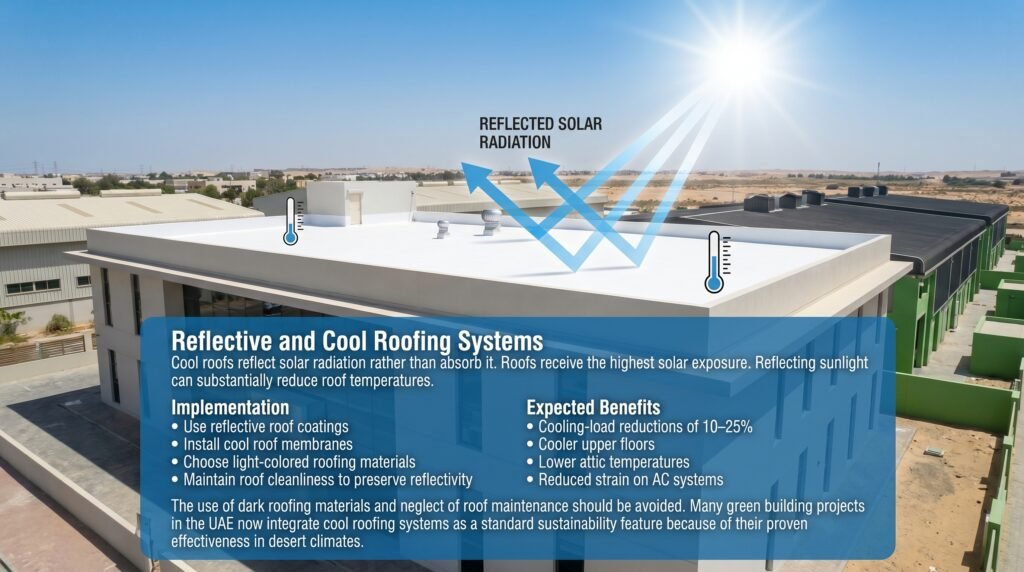
Summer in the GCC is a serious test of how efficiently our homes handle extreme heat. Across the UAE, Saudi Arabia, Qatar, Oman, Bahrain, and Kuwait, temperatures can rise to levels that keep air conditioning systems running for long hours every day, often making them the largest contributor to household electricity consumption.
In cities such as Dubai, Abu Dhabi, Riyadh, Doha, and Kuwait City, cooling demand increases dramatically during peak summer months. Modern lifestyles, high-rise buildings, large villas, extensive glass facades, and the urban heat island effect make homes absorb more heat than ever before.
For many families, the result is predictable: rising electricity bills. However, reducing AC electricity consumption does not mean living in an uncomfortable home. The goal is not to switch off cooling or tolerate excessive heat. The real solution is creating smarter homes that require less energy to stay comfortable.
Through better AC management, improved insulation, efficient technology, and climate-responsive design, GCC homeowners can reduce cooling costs while creating healthier and more sustainable living spaces. The future of comfortable desert living is not about using more energy — it is about using energy intelligently.
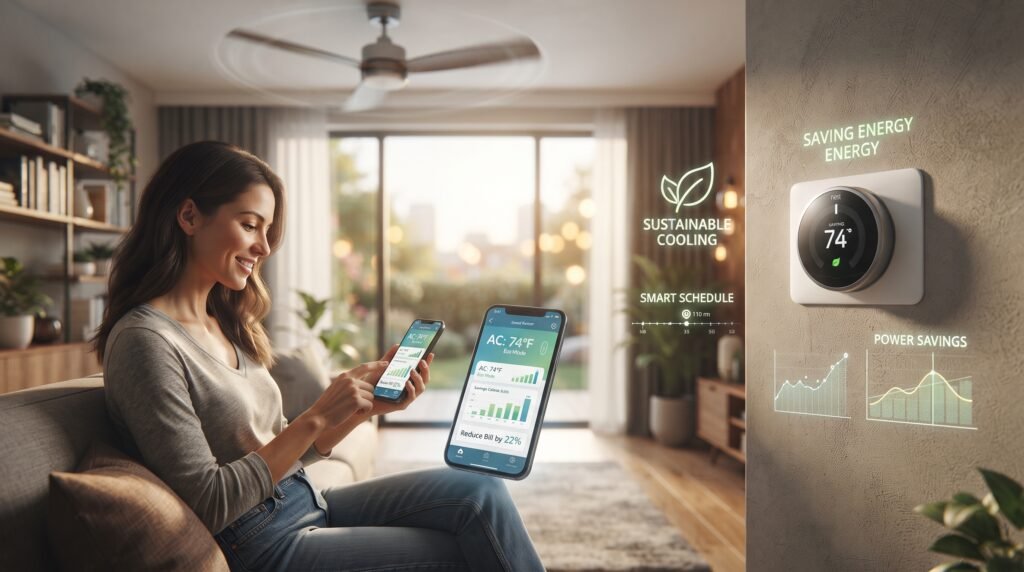
Factors That Increase Cooling Demand and Spike Electricity Bills:
Extreme Outdoor Temperatures
During summer afternoons, outdoor temperatures in many GCC regions can exceed 40°C. The AC system must continuously fight against heat entering through walls, roofs, windows, and doors.
Poor Home Insulation
Many older homes were not designed with modern energy efficiency standards. Without proper insulation, heat quickly transfers into indoor spaces, forcing AC units to run longer.
Heat Entering Through Windows
Large glass windows create beautiful views and natural lighting, but they can also become major sources of solar heat gain.
A home with untreated glass can absorb significant heat during the day, increasing cooling requirements.
Inefficient AC Operation
Old air conditioners, incorrect sizing, dirty filters, and poor maintenance reduce efficiency and increase electricity consumption.
Incorrect Cooling Habits
Many households unknowingly waste energy by setting thermostats extremely low, cooling empty rooms, leaving doors open, or running AC systems inefficiently.
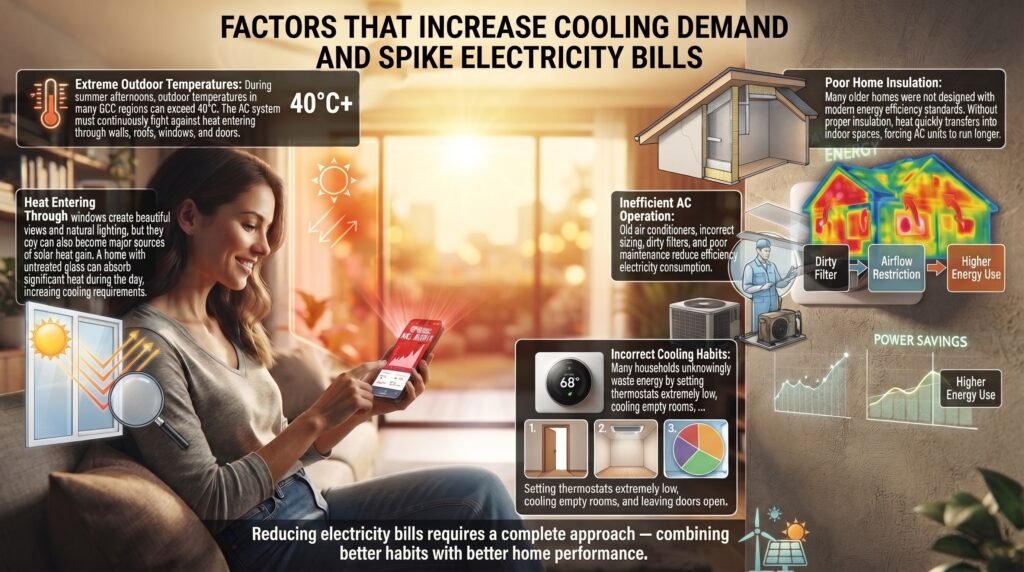
To reduce AC energy bills requires a comprehensive approach that combines better habits with improved home performance.
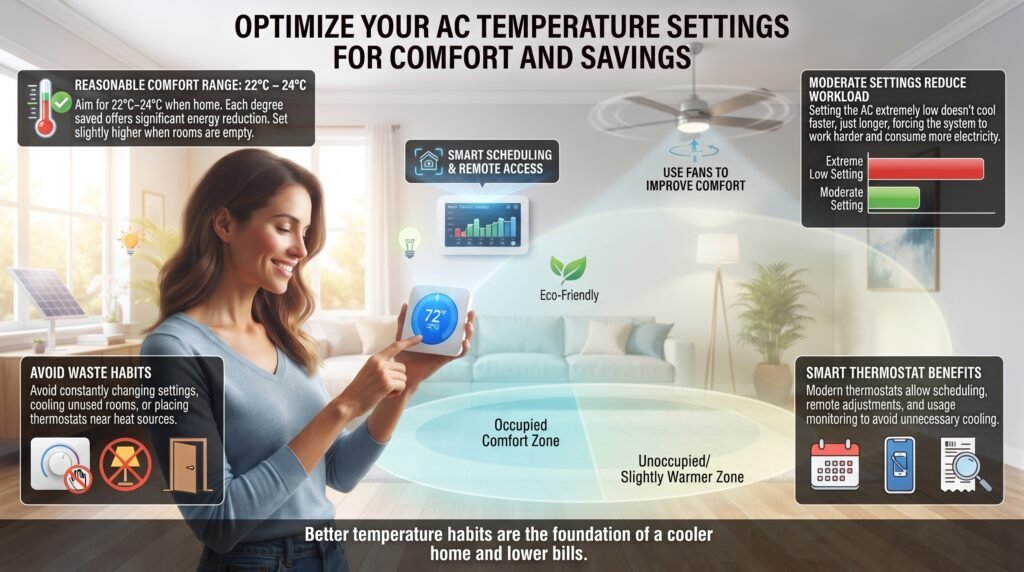
1. Optimize Your AC Temperature Settings
- Adjust thermostat configurations; avoid setting AC temperatures extremely low, as this creates a very cold indoor environment and forces the AC system to work harder and consume more electricity.
- An air conditioner does not cool abruptly because the thermostat is set lower; it continues operating longer until it reaches the required selected temperature.
- AC systems operate for many hours during summer; even a small temperature adjustment can create noticeable energy savings. A moderate setting allows the system to maintain comfort while reducing workload.
- A reasonable comfort range is around 22°C–24°C during normal occupancy, slightly higher temperatures for empty rooms, and using fans to improve comfort.
- Modern smart thermostats allow homeowners to create cooling schedules, adjust temperatures remotely, monitor energy usage, and avoid unnecessary cooling.
- Avoid constantly changing thermostat settings, cooling unused rooms, and placing thermostats near heat sources.
2. Improve AC Maintenance and Performance
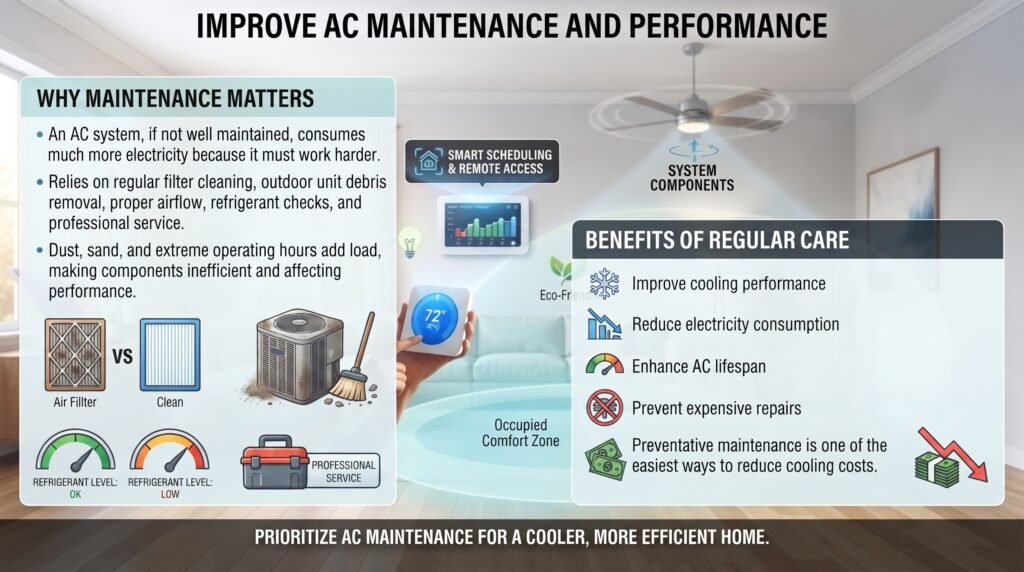
- An AC system, if not well maintained, often consumes much more electricity because it must work harder to achieve the same cooling result.
- Air conditioners depend on regular filter cleaning, removal of dust and debris from outdoor units, proper airflow, proper refrigerant levels, and professional service.
- Accumulation of dust and sand, and extreme operating hours place additional load on HVAC units if components become inefficient, thus affecting cooling performance.
Regular maintenance can:
- Improve cooling performance
- Reduce electricity consumption
- Enhance AC lifespan
- Prevent expensive repairs
- Preventive maintenance is one of the easiest ways to reduce cooling costs.
3. Upgrade Home Insulation
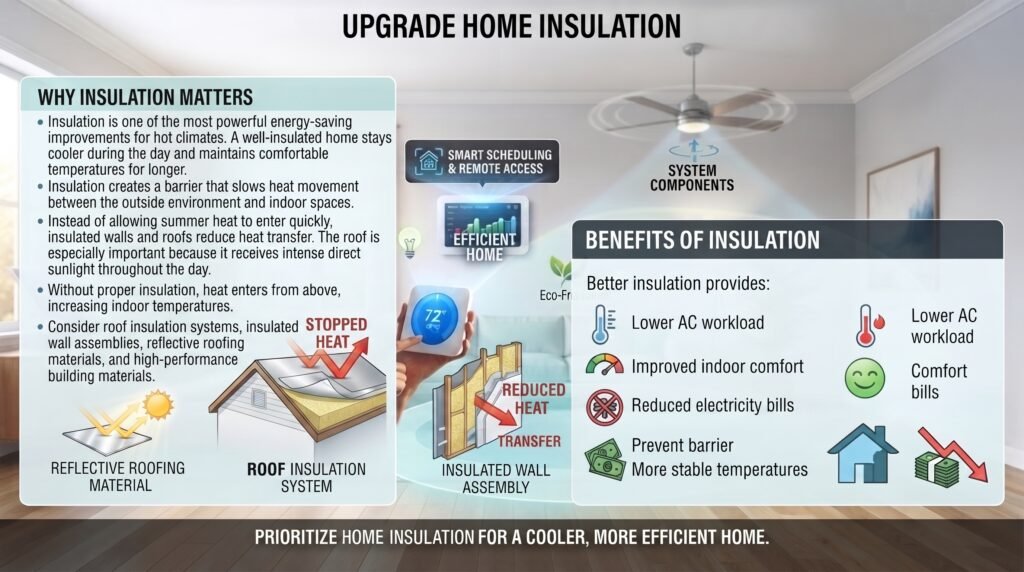
- Insulation is one of the most powerful energy-saving improvements for hot climates. A well-insulated home stays cooler during the day and maintains comfortable temperatures for longer.
- Insulation creates a barrier that slows heat movement between the outside environment and indoor spaces.
- Instead of allowing summer heat to enter quickly, insulated walls and roofs reduce heat transfer. The roof is especially important because it receives intense direct sunlight throughout the day.
- Without proper insulation, heat enters from above, increasing indoor temperatures.
- Consider roof insulation systems, insulated wall assemblies, reflective roofing materials, and high-performance building materials.
Better insulation provides:
- Lower AC workload
- Improved indoor comfort
- Reduced electricity bills
- More stable temperatures
4. Reduce Heat Gain Through Windows
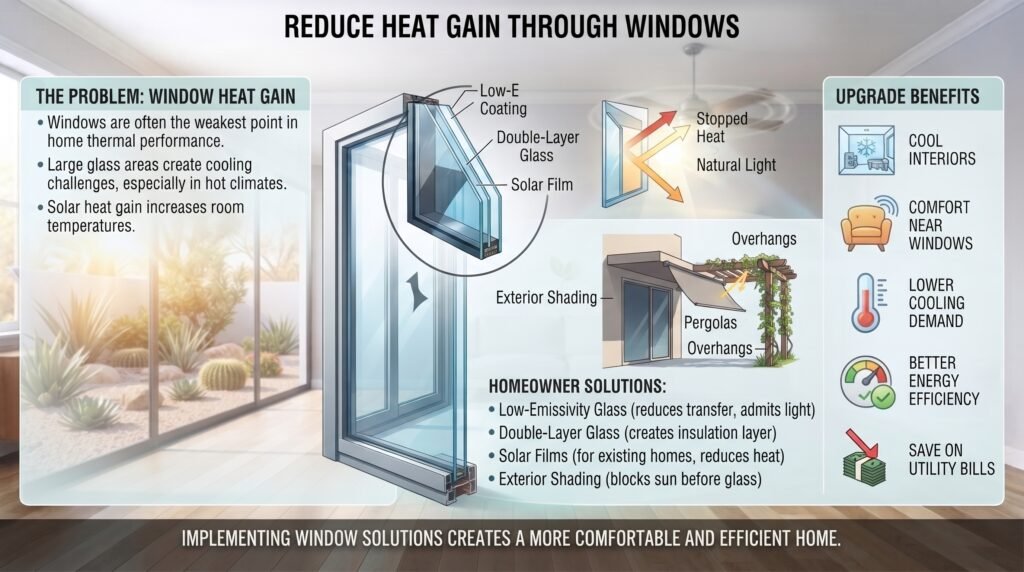
- Windows are often the weakest point in a home’s thermal performance. Beautiful, large glass areas can create significant cooling challenges in desert environments.
- Sunlight passing through glass creates solar heat gain. The interior absorbs this heat, increasing room temperatures.
Homeowners can consider:
- Low-emissivity glass reduces heat transfer while allowing natural light.
- Double-layer glass creates insulation between indoor and outdoor temperatures.
- A practical option for existing homes, solar films reduce heat entering through windows.
- Exterior shades, pergolas, and overhangs block sunlight before it reaches the glass.
These upgrades can provide:
- Cool interiors
- Improved comfort near windows
- Lower cooling demand
- Better energy efficiency
5. Use Smart Thermostats and Home Automation
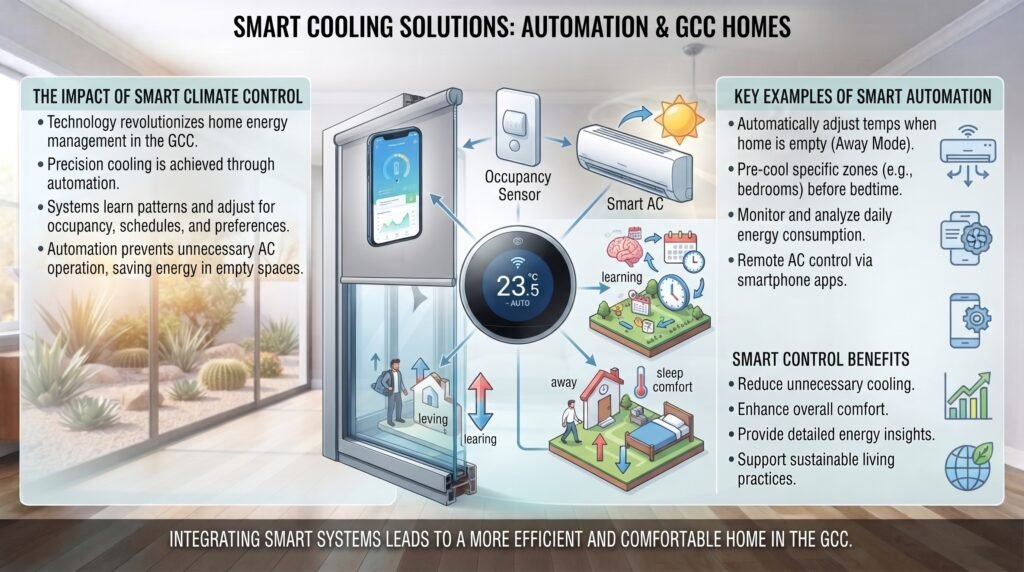
- Technology is transforming how modern GCC homes manage energy. Smart home systems make cooling more precise and efficient.
- Smart control systems learn household patterns and adjust cooling based on occupancy, time schedules, temperature conditions, and user preferences.
- Many homes waste energy cooling empty spaces. Automation prevents unnecessary AC operation.
Examples include:
- Automatically increasing the temperature when nobody is home
- Cooling bedrooms before bedtime
- Monitoring daily energy consumption
- Controlling AC remotely through mobile apps
Smart controls can:
- Reduce unnecessary cooling
- Improve comfort
- Provide energy insights
- Support sustainable living practices
6. Improve Natural Ventilation and Airflow
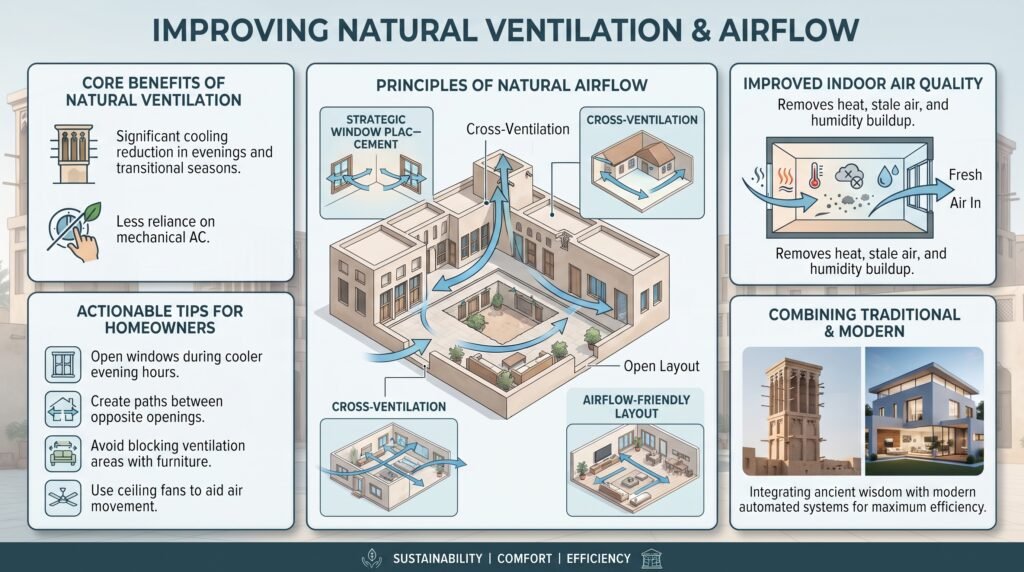
- Improving natural airflow can significantly reduce cooling demand, especially in the evenings, winter months, and transitional seasons.
- Traditional Gulf homes understood airflow principles long before modern air conditioning existed. Combining these ideas with modern technology can create more comfortable and efficient homes.
Natural ventilation allows fresh air movement through:
- Strategically placed windows
- Cross-ventilation pathways
- Open layouts
- Airflow-friendly designs
Improving airflow helps remove accumulated indoor heat, stale air, and humidity buildup. Homeowners can:
- Open windows during cooler evening hours
- Create airflow paths between opposite openings
- Avoid blocking ventilation areas with furniture
- Use ceiling fans to improve air movement
7. Install Solar Solutions for Cooling Support
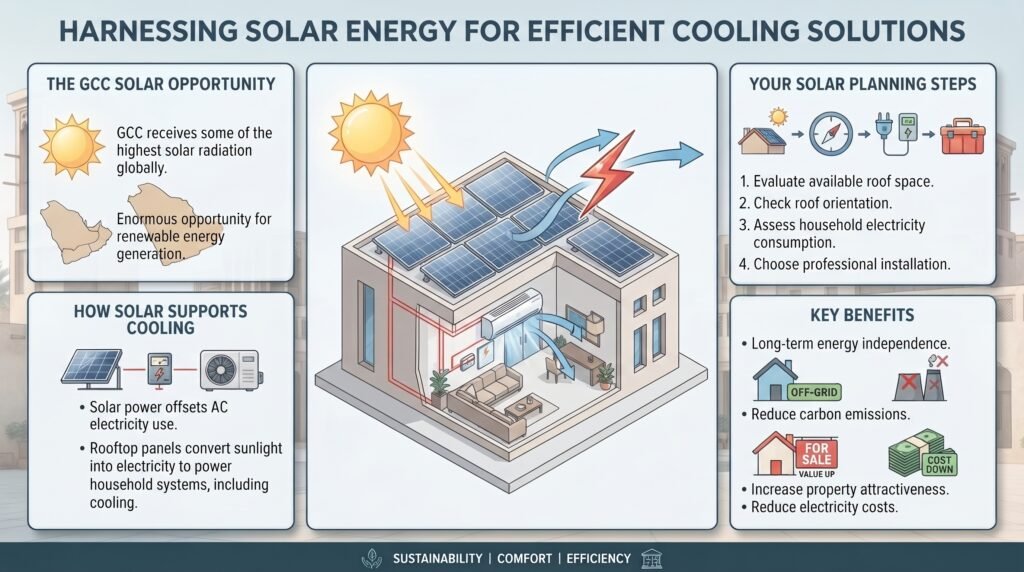
- The GCC region receives some of the highest levels of solar radiation in the world. While sunlight creates cooling challenges, it also creates an enormous opportunity for renewable energy generation.
- Solar power can help offset the electricity required for air conditioning. Rooftop solar panels convert sunlight into electricity that can power household systems, including cooling equipment.
- Evaluate available roof space, check roof orientation, assess household electricity consumption, and choose professional installation
Solar solutions can:
- Provide long-term energy independence
- Reduce carbon emissions
- Increase property attractiveness
- Reduce electricity costs
8. Use Energy-Efficient AC Systems
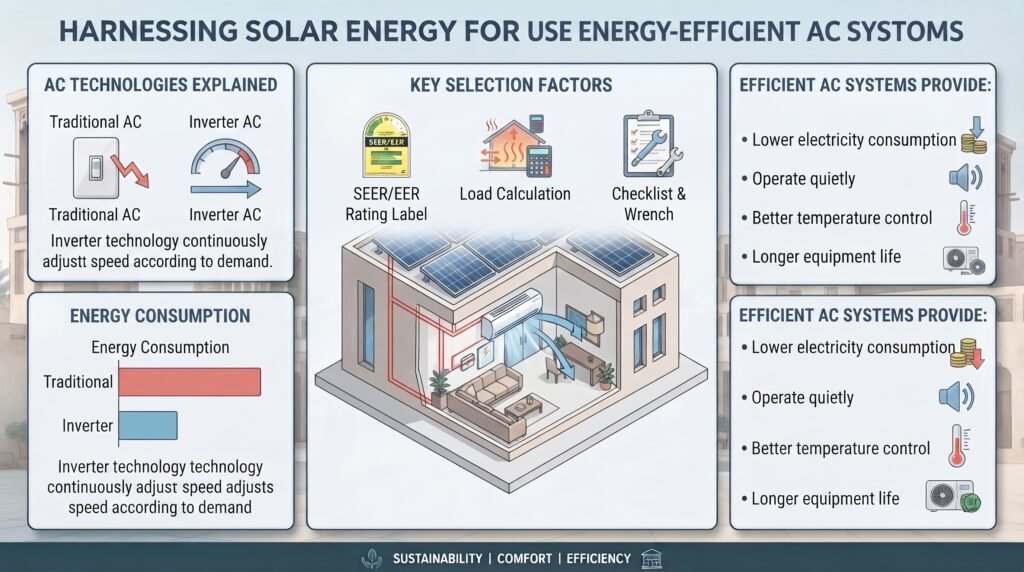
- Modern energy-efficient systems use improved technology to provide cooling with less electricity.
- Inverter AC technology, unlike traditional systems that repeatedly switch on and off, adjusts its speed according to cooling demand, reduces energy waste, and improves temperature stability.
- Efficiency (SEER/EER) ratings help homeowners compare AC performance. Higher-rated systems generally provide better energy performance.
- Professional load calculations help select the correct capacity. An oversized AC unit may cool quickly but operate inefficiently. An undersized system struggles continuously.
- Compare energy ratings, choose a suitable capacity, consider inverter technology, ensure professional installation, and check warranty and maintenance support before replacing an AC system
Efficient AC systems provide:
- Lower electricity consumption
- Operate quietly
- Better temperature control
- Longer equipment life
9. Reduce Indoor Heat Sources
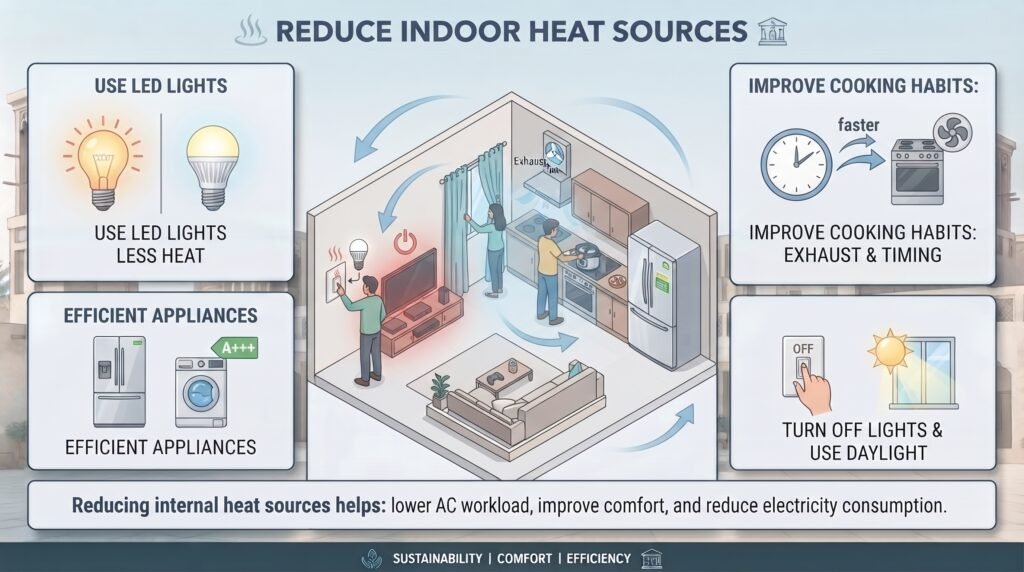
- Appliances, lighting, and daily activities release heat into indoor spaces. The AC system must remove this additional heat.
- LED lights use less power, produce less heat, and last longer. Traditional bulbs generate more heat and consume more electricity.
- Use Efficient Appliances. Energy-efficient refrigerators, washing machines, and electronics reduce electricity consumption and indoor heat generation.
- Improve Cooking Habits. Cooking creates significant heat, especially in smaller homes.
- Consider using exhaust fans, cooking during cooler hours, and improving kitchen ventilation.
- Turn off unused electronics, avoid unnecessary indoor lighting, and use natural daylight when possible.
- Reducing internal heat sources help: lower AC workload, improve comfort, and reduce electricity consumption.
10. Combine Passive Cooling Design Strategies
- Passive cooling focuses on reducing heat gain before mechanical cooling is required.
- Passive cooling strategies include shading, insulation, reflective surfaces, landscaping, building orientation, and natural airflow planning.
- Traditional and modern desert architecture both demonstrate an important principle: The best energy is the energy you do not need to use.
- A well-designed home naturally stays cooler, reducing dependence on air conditioning.
- Reflective roofing materials reduce heat absorption.
- Trees, plants, and shaded outdoor areas can reduce temperatures in the surrounding area.
- Pergolas, balconies, and architectural screens reduce direct sunlight exposure.
- Placing less-used spaces on the hotter sides of the building can reduce cooling demand.
- Passive cooling provides better thermal comfort, improved property value, and long-term energy savings.
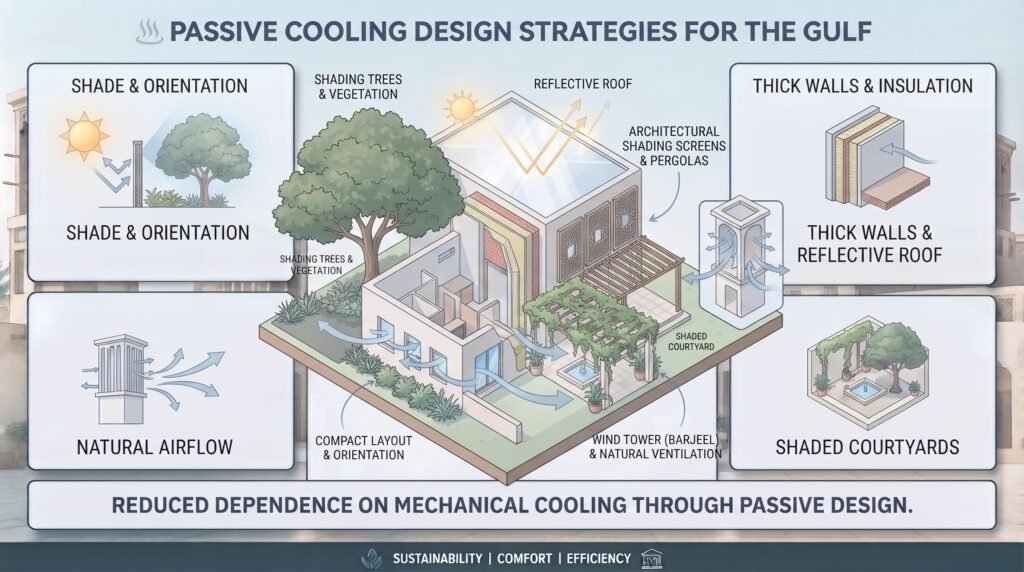
Traditional Gulf Cooling Wisdom
- Wind Towers (Barjeel): Wind towers captured natural airflow and directed cooler air into buildings. Modern architects can adapt this concept through ventilation systems, airflow planning, and passive cooling designs.
- Shaded Courtyards: Courtyards created cooler microclimates by providing shade, airflow, and reduced solar exposure.
- Thick Walls: Traditional buildings used thick materials that slowed heat movement. Modern insulation follows the same principle by reducing heat transfer.
- Compact Building Layouts: Smaller exposed surfaces reduced heat gain. Modern climate-responsive architecture continues this approach through efficient building forms.
Biggest Mistakes That Increase AC Electricity Bills in GCC Homes
- Extreme cooling settings increase energy consumption without significantly improving comfort.
- Dirty filters and neglected systems reduce efficiency.
- Cool air escapes while hot air enters, increasing the AC workload.
- Large untreated windows can lead to significant solar heat gain.
- Furniture blocking vents reduces cooling efficiency.
- Older units often consume significantly more electricity.
Conclusion: Building a Cooler, Smarter Future for GCC Homes
Reducing AC electricity consumption during GCC summers is not about sacrificing comfort. It is about awareness to create homes that work intelligently with the desert environment.
From better thermostat habits and AC maintenance to insulation, renewable energy, and passive cooling strategies, every improvement contributes to a more efficient lifestyle.
The future of sustainable living in the UAE and across GCC countries depends on combining modern technology with climate-smart design principles. A truly energy-efficient home does not simply fight the heat, it manages it.
By adopting smarter cooling habits, improving building performance, and investing in sustainable solutions, homeowners can create spaces that are cooler, healthier, more affordable, and better prepared for future climate challenges.
Energy efficiency is not only an environmental responsibility. It is a financial investment that improves everyday living.
Related Guides
Organic Concealer Guide: Can One Fix Both Under-Eyes and Blemishes?

Organic Serums Decoded: Which Natural Actives Are Actually Stable?

Best Certified Organic Korean Skincare-Makeup Hybrids [2026 Guide]

Organic Foundation Guide 2026: Find Your Perfect Match

How to Choose Organic Lipstick: A Shade-by-Shade, Ingredient-by-Ingredient Guide

10 Best Passive Cooling Techniques for GCC Homes