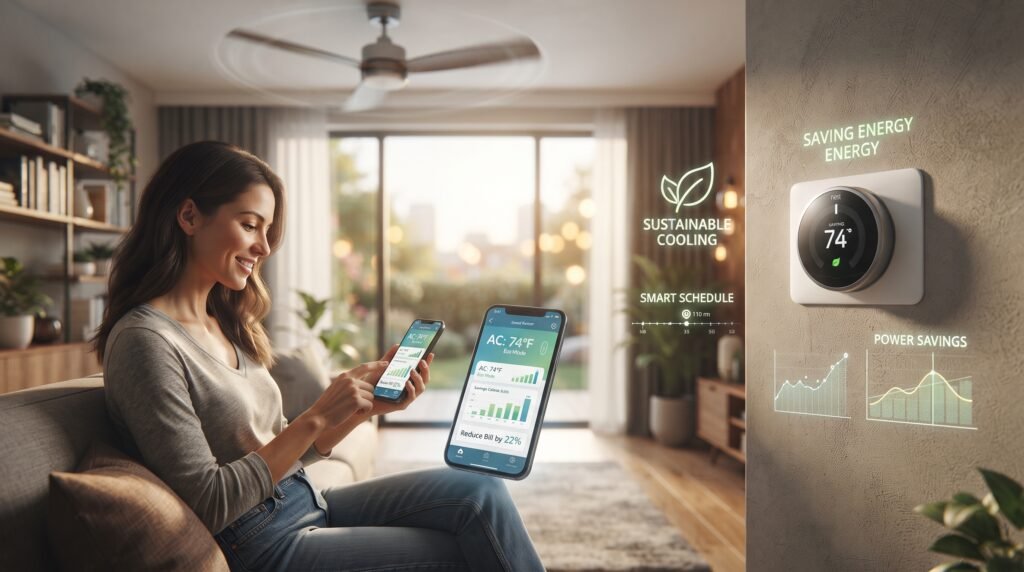
The Gulf region is no stranger to extreme heat. During summer, temperatures across the UAE, Saudi Arabia, Qatar, Oman, Bahrain, and Kuwait regularly soar above 40°C, while humidity in many coastal cities can make conditions feel even more intense. For homeowners, this often means air conditioners running almost nonstop, leading to higher electricity bills and significant energy use.
At the same time, rapid urban development has intensified the urban heat island effect. Large areas of concrete, asphalt, and glass absorb and retain heat throughout the day, making cities noticeably warmer than surrounding landscapes. As energy demand continues to rise, homeowners and developers are seeking smarter ways to create comfortable living environments without relying entirely on mechanical cooling. This is where passive cooling techniques become essential.
Unlike conventional cooling systems that consume electricity, passive cooling strategies work with the local climate to reduce heat gain, improve airflow, and naturally maintain indoor comfort. Many of these solutions are inspired by centuries of traditional Gulf architecture, while others are supported by modern building science and advanced materials. For homeowners, architects, builders, and sustainability-conscious residents, passive cooling is no longer optional. It is becoming a necessity for creating energy-efficient homes that GCC residents can enjoy for decades to come.
Understanding Passive Cooling
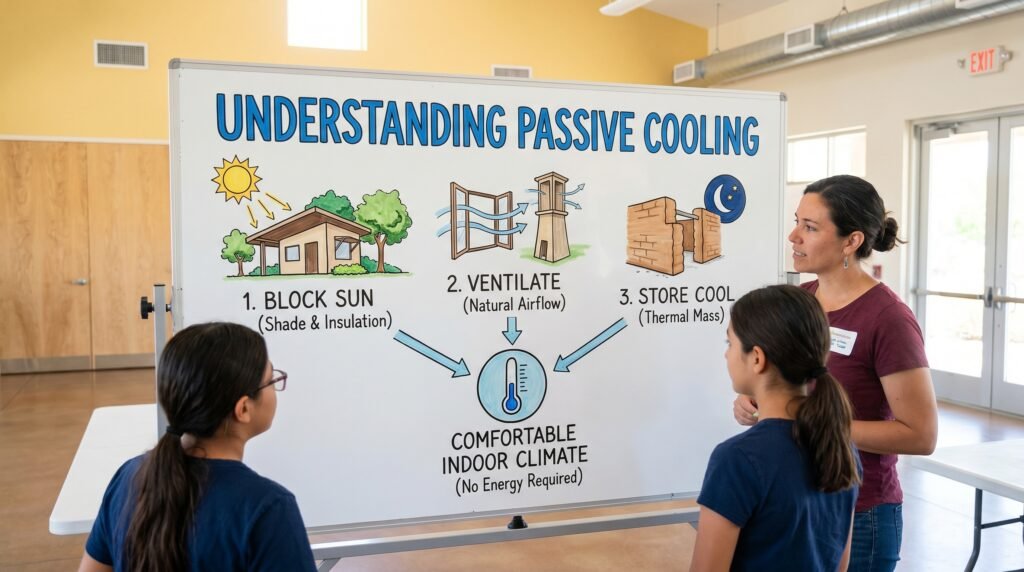
Passive cooling refers to design strategies that reduce indoor temperatures without relying heavily on mechanical air-conditioning systems.
The goal is simple:
- Minimize heat entering the building
- Maximize natural airflow
- Reduce heat storage within construction materials
- Improve thermal comfort naturally
- Lower energy consumption and cooling costs
When multiple passive cooling strategies are combined, homes can remain significantly cooler even during the hottest months of the year.
1. Strategic Building Orientation
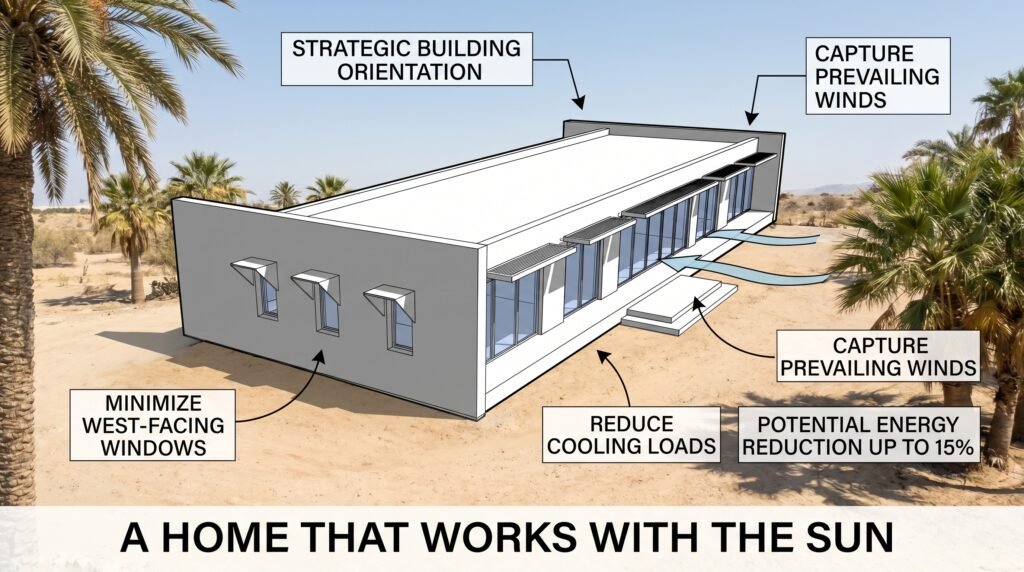
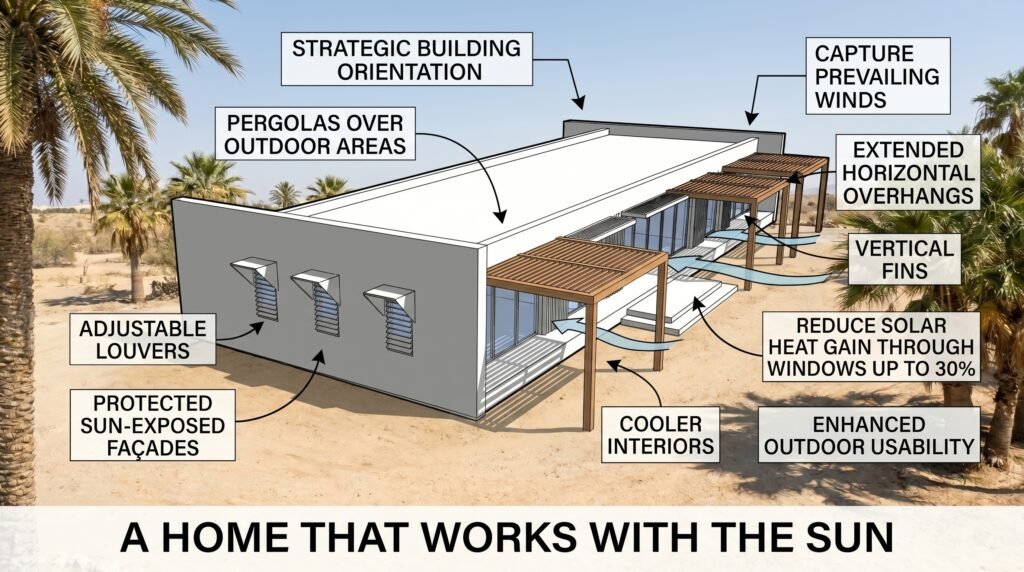
Building orientation determines how much solar radiation a home receives throughout the day. In GCC climates, western façades typically experience the most intense afternoon heat.
Reducing exposure to direct solar radiation can dramatically lower indoor temperatures and cooling loads.
Implementation
- Large west-facing windows should be minimized
- Position main living spaces away from western exposure
- Align building directions to capture prevailing winds
- Design elongated structures along east-west axes
Expected Benefits
- Potential reduction in cooling energy up to 15%
- Cooler interior spaces by reducing hot spots near windows
- Improve daytime comfort
Large unshaded west-facing glass walls should be avoided. During design, prevailing wind directions must be considered. A home that works with the sun rather than fighting it will require significantly less cooling energy over its lifetime.
2. High-Performance Thermal Insulation
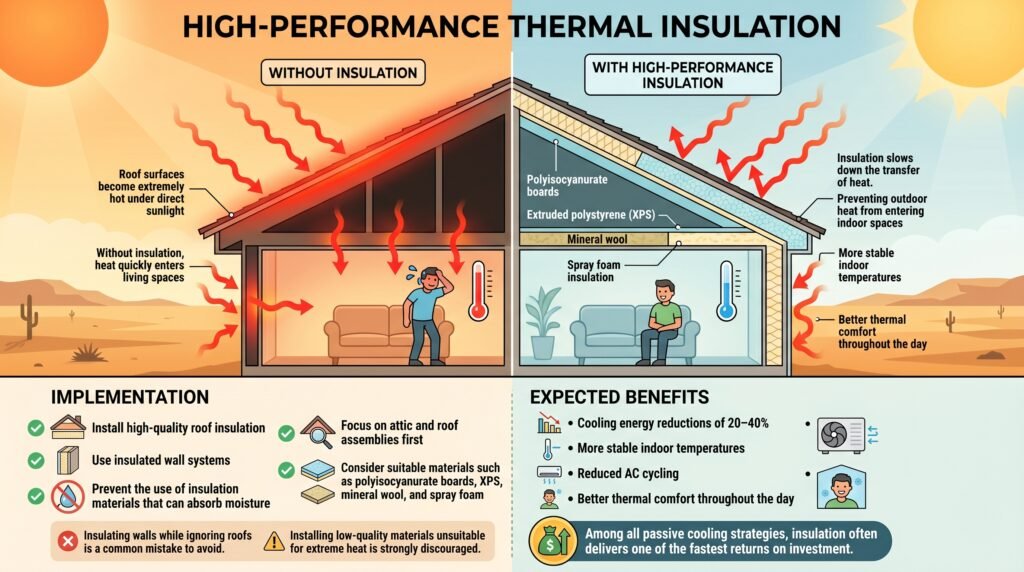
Insulation slows down the transfer of heat through roofs and walls, preventing outdoor heat from entering indoor spaces.
Roof surfaces in desert climates can become extremely hot under direct sunlight. Without insulation, this heat quickly enters living spaces.
Implementation
- Install high-quality roof insulation
- Use insulated wall systems
- Prevent the use of insulation materials that can absorb moisture
- Focus on attic and roof assemblies first
- Consider the use of suitable materials such as polyisocyanurate boards, extruded polystyrene (XPS), mineral wool, and spray foam insulation
Expected Benefits
- Cooling energy reductions of 20–40%
- More stable indoor temperatures
- Reduced AC cycling
- Better thermal comfort throughout the day
Insulating walls while ignoring roofs is a common mistake to avoid. Installing low-quality materials that are unsuitable for extreme heat is strongly discouraged.
Among all passive cooling strategies, insulation often delivers one of the fastest returns on investment.
3. Reflective and Cool Roofing Systems
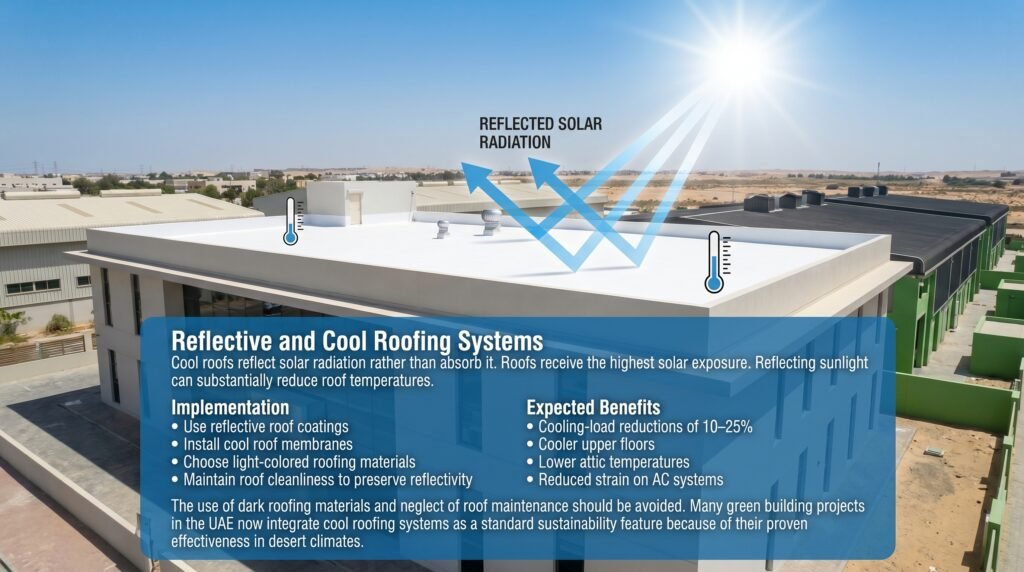
Cool roofs reflect solar radiation rather than absorb it. Roofs receive the highest solar exposure. Reflecting sunlight can substantially reduce roof temperatures.
Implementation
- Use reflective roof coatings
- Install cool roof membranes
- Choose light-colored roofing materials
- Maintain roof cleanliness to preserve reflectivity
Expected Benefits
- Cooling-load reductions of 10–25%
- Cooler upper floors
- Lower attic temperatures
- Reduced strain on AC systems
The use of dark roofing materials and neglect of roof maintenance should be avoided. Many green building projects in the UAE now integrate cool roofing systems as a standard sustainability feature because of their proven effectiveness in desert climates.
4. External Shading Systems
Shading prevents direct exposure of walls, windows, and other ventilation areas to solar radiation. A shaded window can absorb dramatically less heat compared to an exposed one.
Implementation
- Install pergolas over outdoor areas
- Use horizontal overhangs
- Incorporate vertical fins
- Add adjustable louvers
- Protect sun-exposed façades
Expected Benefits
- Reduce solar heat gain through windows by up to 30%
- Cooler interiors
- Enhanced outdoor usability
- Reduced glare
Avoid common mistakes such as relying solely on internal curtains and installing decorative shading with insufficient coverage. External shading is one of the simplest and most cost-effective passive cooling techniques available today.
5. Traditional Mashrabiya Design
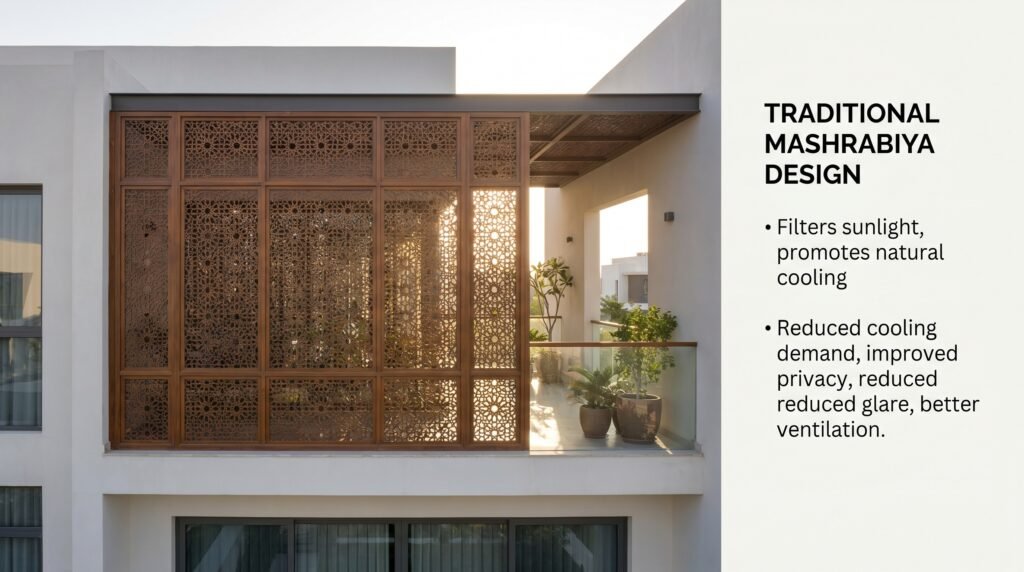
Mashrabiya screens filter sunlight while allowing airflow. For centuries, traditional Gulf homes used mashrabiya elements to balance privacy, ventilation, and comfort. These screens help to reduce direct solar heat gain while promoting natural cooling.
Implementation
- Integrate modern aluminum or wooden mashrabiya screens
- Apply them on west-facing elevations
- Use them for balconies and terraces
Expected Outcomes
- Reduced cooling demand through shading and airflow enhancement
- Improved privacy
- Reduced glare
- Better ventilation
Treating mashrabiya purely as decoration and blocking airflow with dense designs must be discouraged. Mashrabiya demonstrates how traditional architecture can still solve modern sustainability challenges.
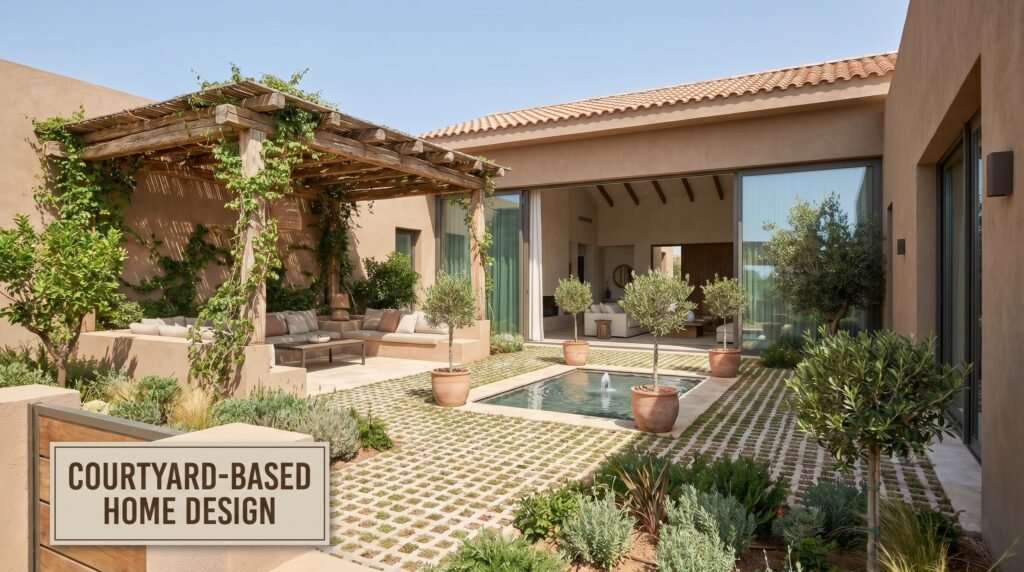
6. Courtyard-Based Home Design
Courtyards create microclimates that promote cooling and airflow. Traditional Arabic homes relied heavily on internal courtyards to moderate heat.
Implementation
- Design central courtyards
- Include shaded seating areas
- Add water features where feasible
- Incorporate vegetation
Expected Outcomes
- Lower cooling demand through natural temperature moderation
- Cooler outdoor spaces
- Better air circulation
- Improved indoor-outdoor living
Avoid fully paving courtyards while completely neglecting shading elements. Many modern sustainable villa design projects are reintroducing courtyards as both functional and aesthetic features.
7. Natural Ventilation Strategies
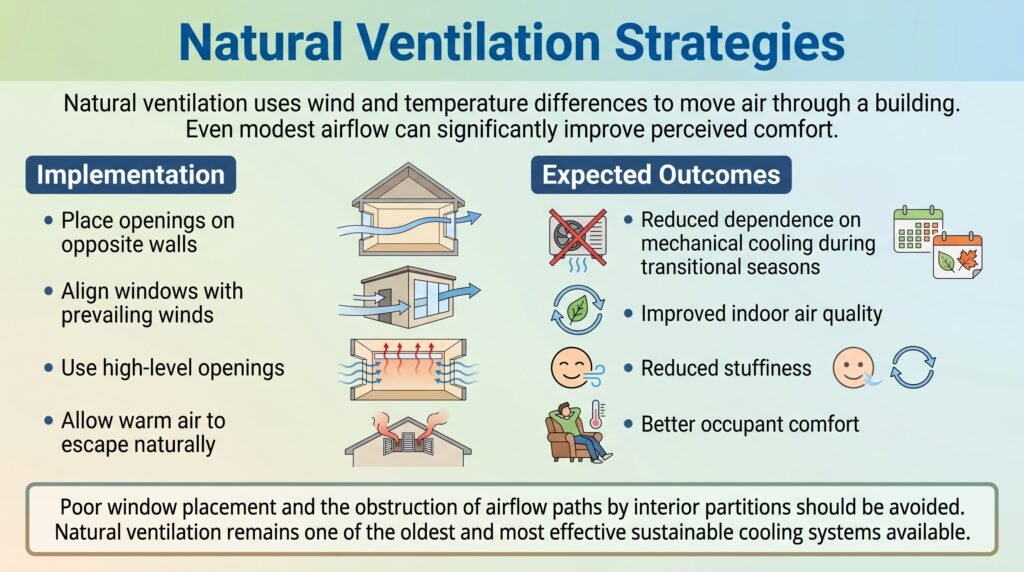
Natural ventilation uses wind and temperature differences to move air through a building. Even modest airflow can significantly improve perceived comfort.
Implementation
- Place openings on opposite walls
- Align windows with prevailing winds
- Use high-level openings
- Allow warm air to escape naturally
Expected Outcomes
- Reduced dependence on mechanical cooling during transitional seasons
- Improved indoor air quality
- Reduced stuffiness
- Better occupant comfort
Poor window placement and the obstruction of airflow paths by interior partitions should be avoided. Natural ventilation remains one of the oldest and most effective sustainable cooling systems available.
8. Thermal Mass and Smart Material Selection
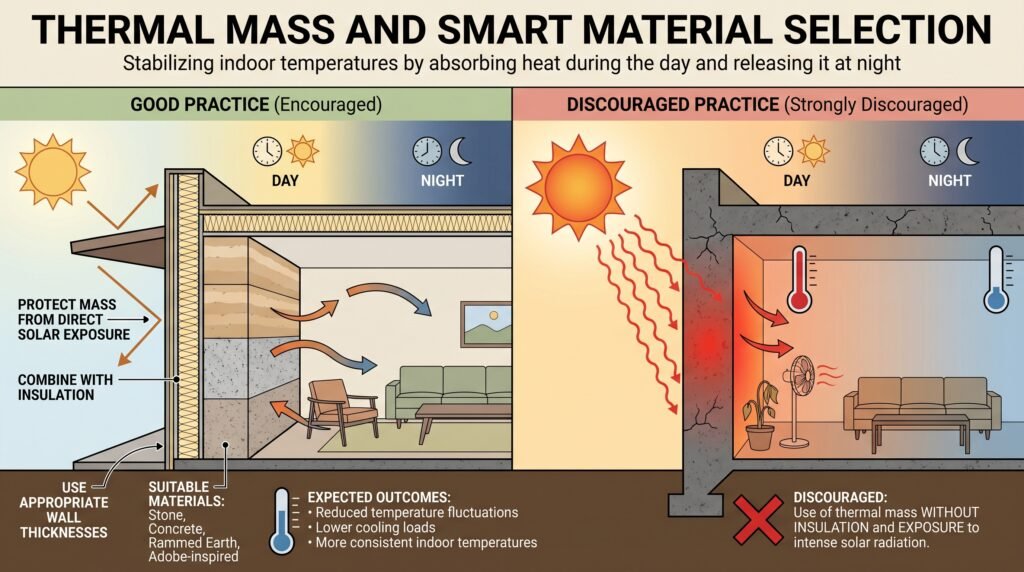
Thermal mass absorbs heat during the day and releases it slowly as temperatures drop. Properly designed thermal mass can stabilize indoor temperatures. Some suitable materials include stone, concrete, rammed earth, and adobe-inspired construction systems.
Implementation
- Combine thermal mass with insulation
- Protect mass from direct solar exposure
- Use appropriate wall thicknesses
Expected Outcomes
- Reduced temperature fluctuations
- Lower cooling loads
- More consistent indoor temperatures
The use of thermal mass without insulation and the exposure of thermal mass to intense solar radiation are strongly discouraged.
9. Heat-Reducing Landscaping
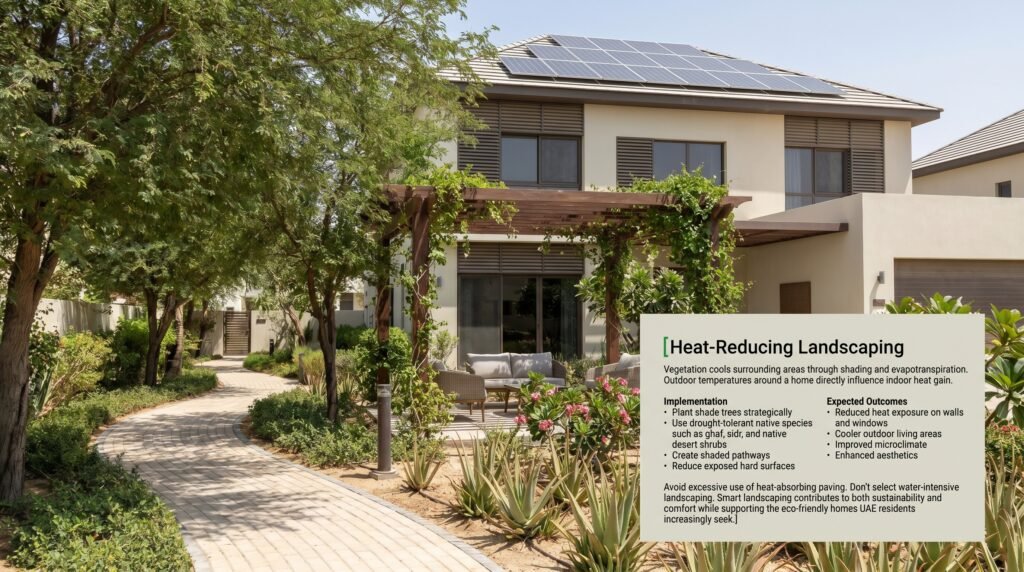
Vegetation cools surrounding areas through shading and evapotranspiration. Outdoor temperatures around a home directly influence indoor heat gain.
Implementation
- Plant shade trees strategically
- Use drought-tolerant native species such as ghaf, sidr, and native desert shrubs
- Create shaded pathways
- Reduce exposed hard surfaces
Expected Outcomes
- Reduced heat exposure on walls and windows
- Cooler outdoor living areas
- Improved microclimate
- Enhanced aesthetics
Avoid excessive use of heat-absorbing paving. Don’t select water-intensive landscaping. Smart landscaping contributes to both sustainability and comfort while supporting the eco-friendly homes UAE residents increasingly seek.
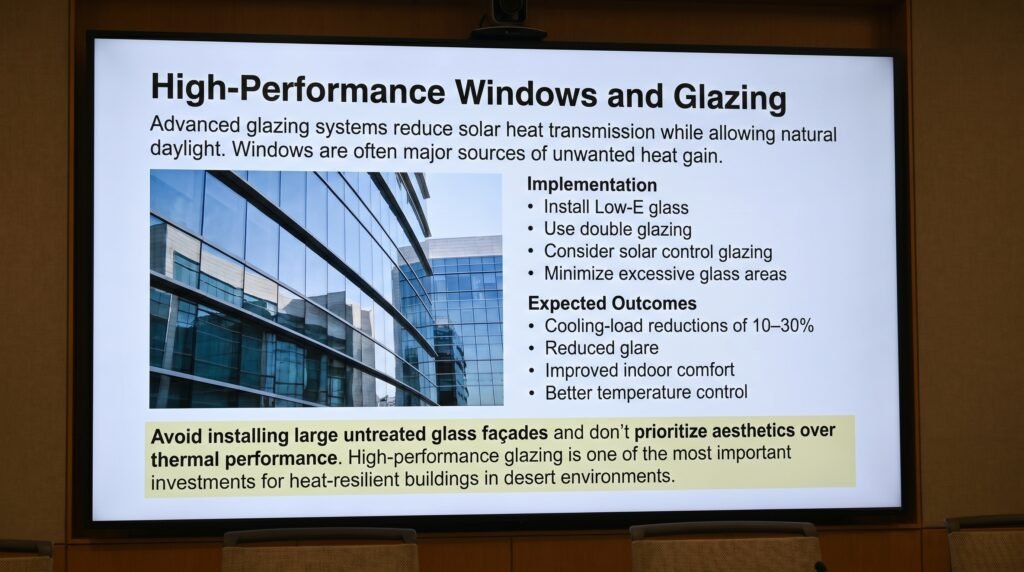
10. High-Performance Windows and Glazing
Advanced glazing systems reduce solar heat transmission while allowing natural daylight. Windows are often major sources of unwanted heat gain.
Implementation
- Install Low-E glass
- Use double glazing
- Consider solar control glazing
- Minimize excessive glass areas
Expected Outcomes
- Cooling-load reductions of 10–30%ts
- Reduced glare
- Improved indoor comfort
- Better temperature control
Avoid installing large untreated glass façades and don’t prioritize aesthetics over thermal performance. High-performance glazing is one of the most important investments for heat-resilient buildings in desert environments.
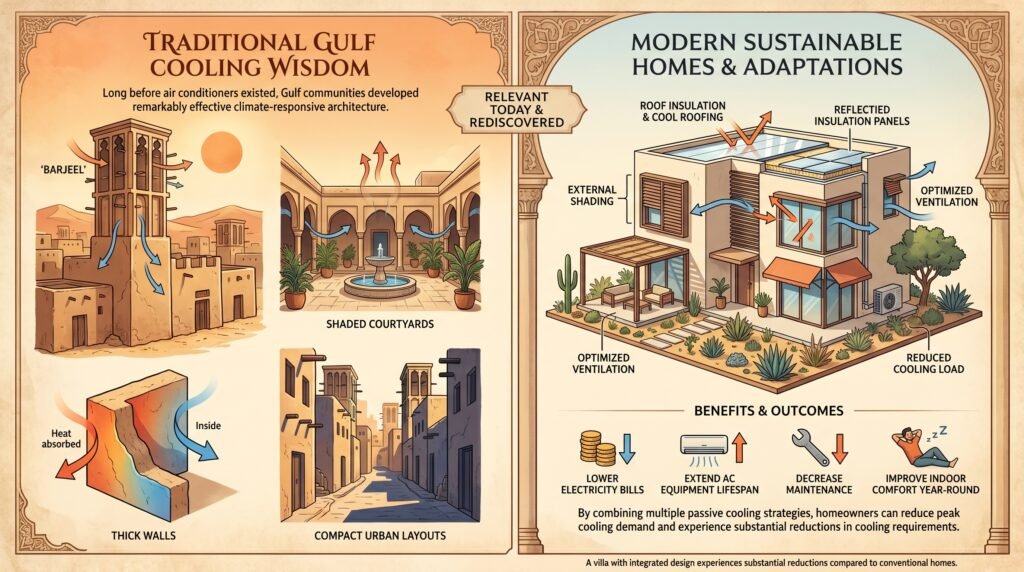
Traditional Gulf Cooling Wisdom That Modern Homes Can Learn From
Long before air conditioners existed, Gulf communities developed remarkably effective climate-responsive architecture.
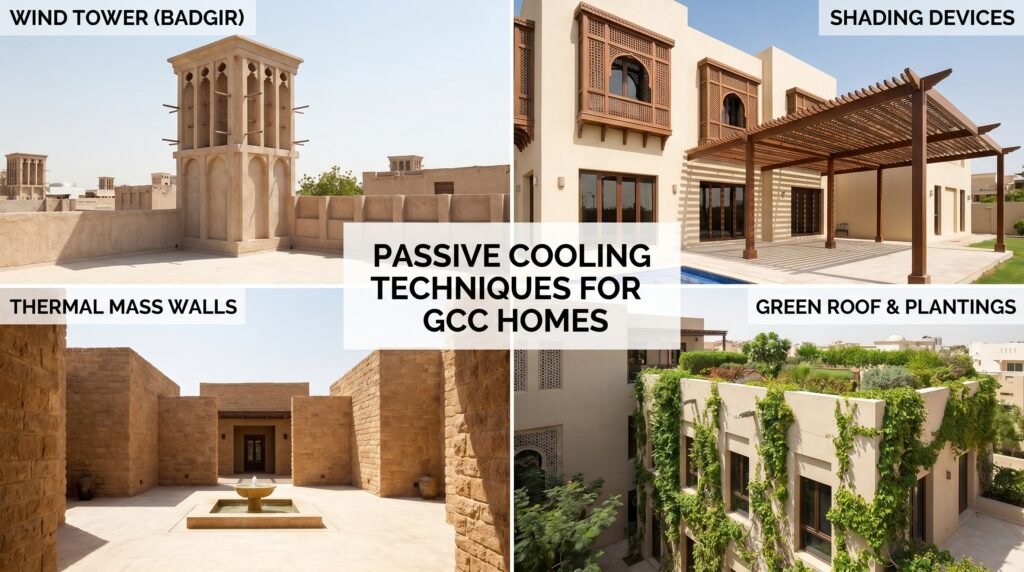
Wind Towers (Barjeel): Wind towers captured breezes and directed them into homes, creating natural ventilation and cooling.
Thick Walls: Traditional buildings used thick walls to delay heat transfer and stabilize indoor temperatures.
Shaded Courtyards: Courtyards generated cooler microclimates and encouraged airflow.
Compact Urban Layouts: Narrow streets and closely spaced buildings created shade and reduced heat exposure.
Many sustainable architecture projects in desert climates are rediscovering these traditional solutions because they remain highly relevant today.
Air conditioning often accounts for the largest share of residential electricity consumption in GCC homes.
By combining multiple passive cooling strategies, homeowners can:
- Reduce peak cooling demand
- Lower monthly electricity bills
- Extend AC equipment lifespan
- Decrease maintenance requirements
- Improve indoor comfort year-round
A villa that integrates roof insulation, cool roofing, external shading, low-E glazing, and optimized ventilation can experience substantial reductions in cooling requirements compared with a conventional villa built without climate-responsive design.
Over the life of the property, these savings can amount to thousands of dollars while improving resilience against future energy price increases.
Conclusion
The future of sustainable living in GCC countries will not be built solely through larger air conditioners or higher energy consumption. It will be achieved through smarter design choices that work with the climate rather than against it.
From strategic building orientation and thermal insulation to traditional mashrabiya screens and shaded courtyards, passive cooling techniques offer practical pathways toward more comfortable, energy-efficient, and environmentally responsible homes. They reduce electricity consumption, lower operating costs, improve indoor comfort, and help create healthier living environments for families across the region.
As temperatures continue to rise and sustainability becomes an increasingly important priority, investing in climate-responsive architecture is one of the smartest decisions homeowners, developers, and policymakers can make.
Every shaded window, insulated roof, courtyard garden, and thoughtfully designed airflow pathway contributes to a more resilient future. By embracing both traditional Gulf wisdom and modern building science, we can create homes that remain cool, efficient, and comfortable for generations to come.
Related Guides
Organic Concealer Guide: Can One Fix Both Under-Eyes and Blemishes?
Organic Serums Decoded: Which Natural Actives Are Actually Stable?

Best Certified Organic Korean Skincare-Makeup Hybrids [2026 Guide]
Organic Foundation Guide 2026: Find Your Perfect Match

How to Choose Organic Lipstick: A Shade-by-Shade, Ingredient-by-Ingredient Guide

10 Proven Ways to Reduce Your AC Energy Bills in the GCC