Most people do not notice unsustainable development until it starts affecting everyday life.
It manifests as rising summer temperatures, traffic-clogged streets, polluted air, disappearing trees, overcrowded neighborhoods, and rising stress levels. Many modern communities consume huge amounts of energy and resources while producing equally massive amounts of waste and pollution.
Poor urban planning has disconnected people from nature and, in many cases, from each other. As climate change intensifies, cities are facing floods, heatwaves, water shortages, and declining public health.
But sustainable communities offer another path.
Communities built around renewable energy, green spaces, efficient transportation, responsible resource use, and stronger social connections are proving that healthier and more resilient cities are possible.
The way neighborhoods are designed directly shapes environmental sustainability, economic stability, and quality of life. Small local changes — cleaner transport, better public spaces, greener buildings, and community-driven planning — can create long-term environmental and social benefits. Sustainable community development is no longer just an environmental idea. It is becoming a practical necessity for future generations.
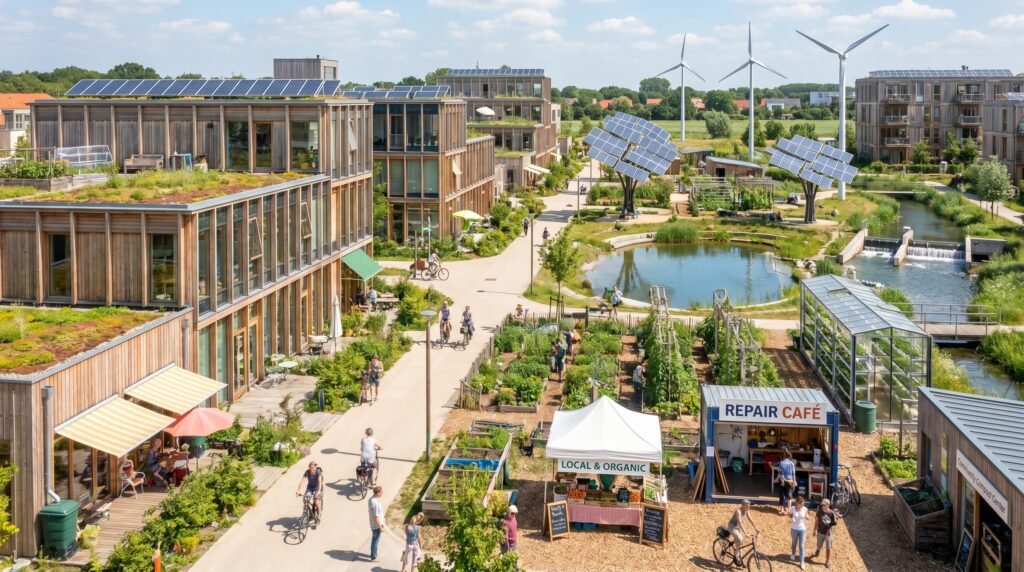
1. Renewable Energy Integration
Communities cannot reduce environmental damage without moving away from fossil fuels. Renewable energy supports cleaner, healthier, and more resilient neighborhoods.
- Solar and wind energy reduce carbon emissions significantly.
- Cleaner energy improves air quality and public health.
- Households often save money through lower electricity bills.
- Local renewable systems improve energy security.
- Green energy projects create long-term employment opportunities.
- Renewable infrastructure supports climate-resilient development.
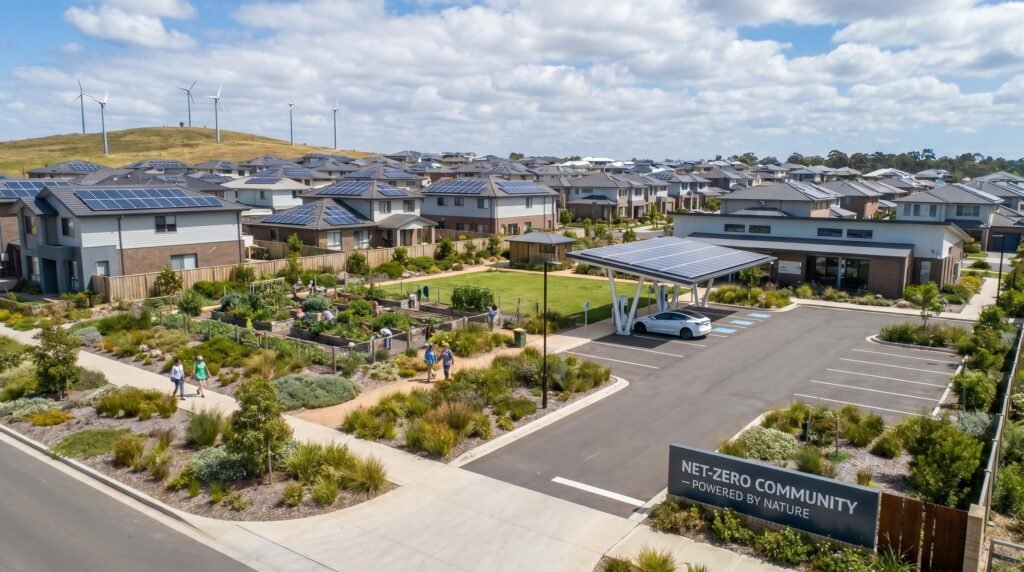
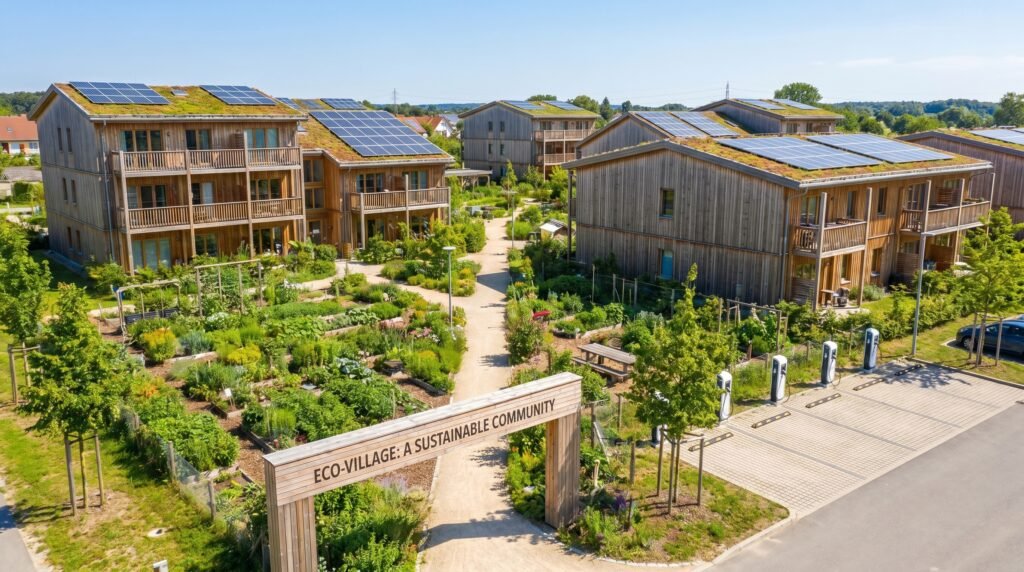
2. Green Buildings and Eco-Friendly Architecture
Buildings shape how communities consume energy, water, and resources. Sustainable architecture focuses on efficiency, comfort, and environmental responsibility.
- Energy-efficient buildings reduce electricity consumption.
- Natural ventilation improves indoor comfort and air quality.
- Sustainable materials reduce environmental damage.
- Green roofs help cool densely populated cities.
- Water-efficient systems lower resource waste.
- Durable designs reduce long-term maintenance costs.
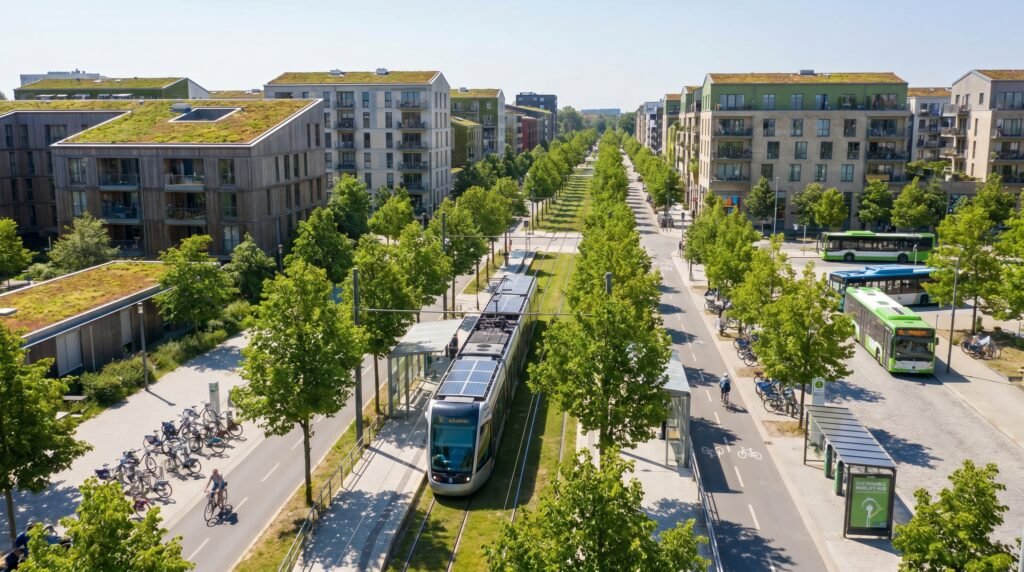
3. Sustainable Transportation Systems
- Public transport reduces traffic congestion and emissions.
- Cycling and walking improve physical health.
- Cleaner transportation improves urban air quality.
- Affordable transit increases access to jobs and services.
- Electric buses and trains lower fossil fuel dependence.
- Efficient mobility systems strengthen local economies.
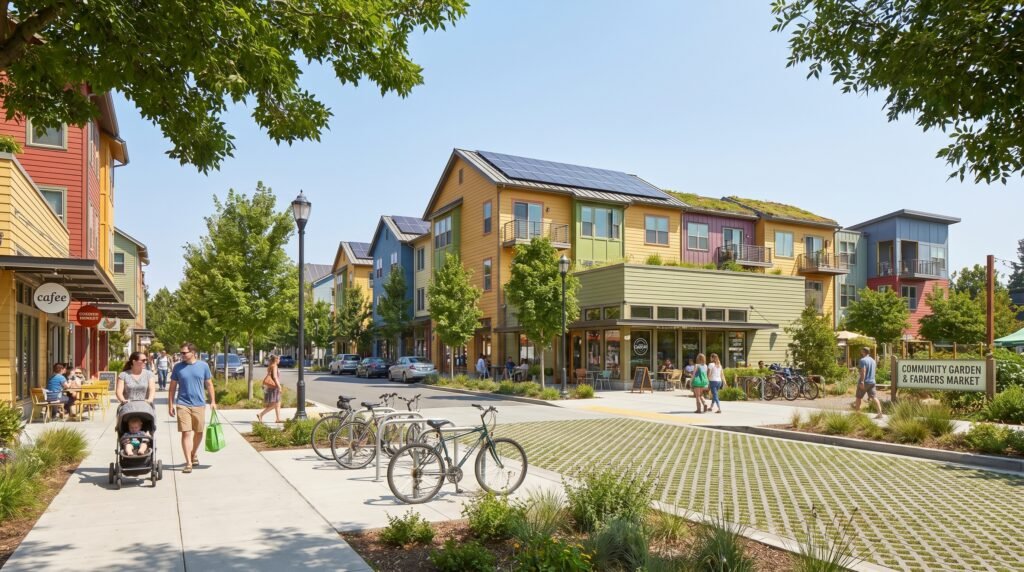
4. Walkable Neighborhoods
Walkable communities create safer, healthier, and more connected environments for residents.
- Walking reduces dependence on private vehicles.
- Pedestrian-friendly streets encourage physical activity.
- Local businesses benefit from increased foot traffic.
- Safer sidewalks improve accessibility for all age groups.
- Reduced traffic lowers stress and noise pollution.
- Public spaces encourage stronger social interaction.
5. Waste Reduction and Recycling Systems
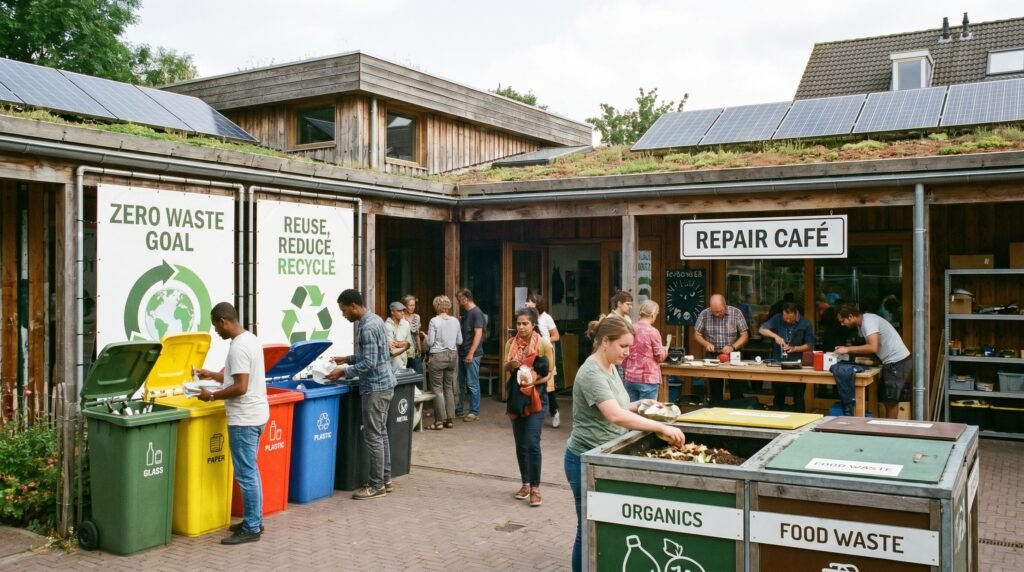
Waste management plays a major role in environmental sustainability. Communities that reduce waste protect ecosystems and conserve resources.
- Recycling reduces pressure on landfills.
- Composting turns organic waste into useful soil nutrients.
- Circular economy practices encourage reuse instead of disposal.
- Reduced plastic waste protects wildlife and oceans.
- Cleaner neighborhoods improve public health.
- Waste reduction lowers long-term municipal costs.
6. Water Conservation and Sustainable Water Management
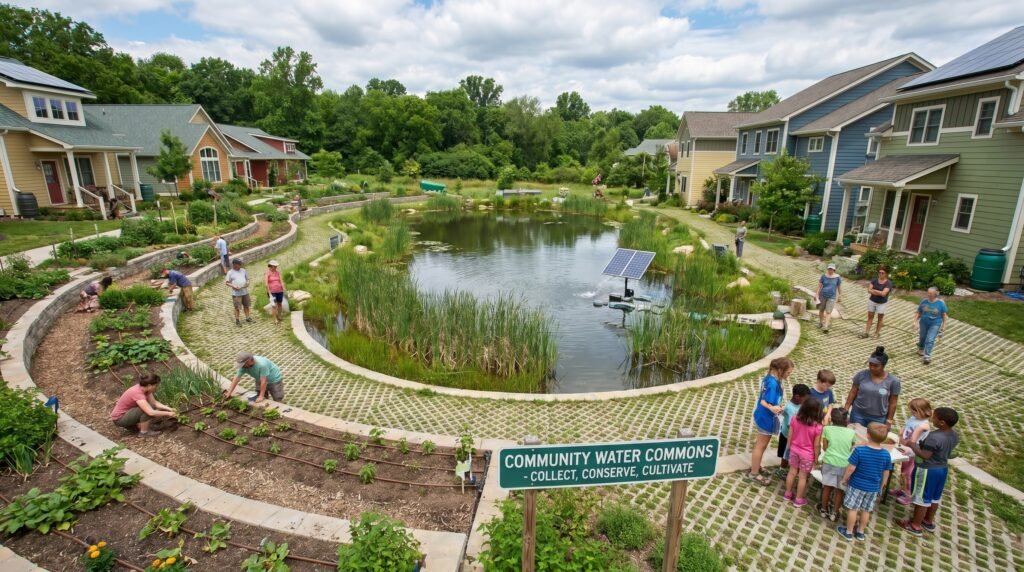
- Water-efficient systems reduce unnecessary consumption.
- Rainwater harvesting improves drought resilience.
- Sustainable drainage systems help prevent flooding.
- Water conservation protects natural ecosystems.
- Efficient infrastructure lowers utility costs.
- Responsible planning improves long-term water security.
7. Urban Green Spaces and Biodiversity
Green spaces are essential for environmental health and human well-being in modern cities.
- Trees and parks improve urban air quality.
- Green spaces reduce heat in crowded neighborhoods.
- Access to nature improves mental health.
- Biodiversity supports healthier ecosystems.
- Parks encourage outdoor activity and recreation.
- Natural landscapes help absorb stormwater and reduce flooding.
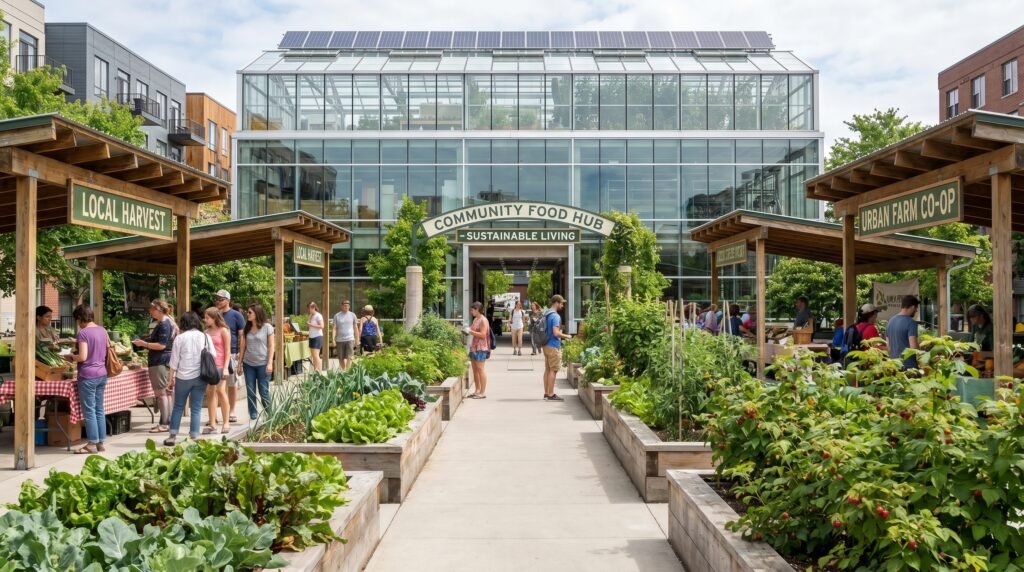
8. Local Food Systems and Urban Farming
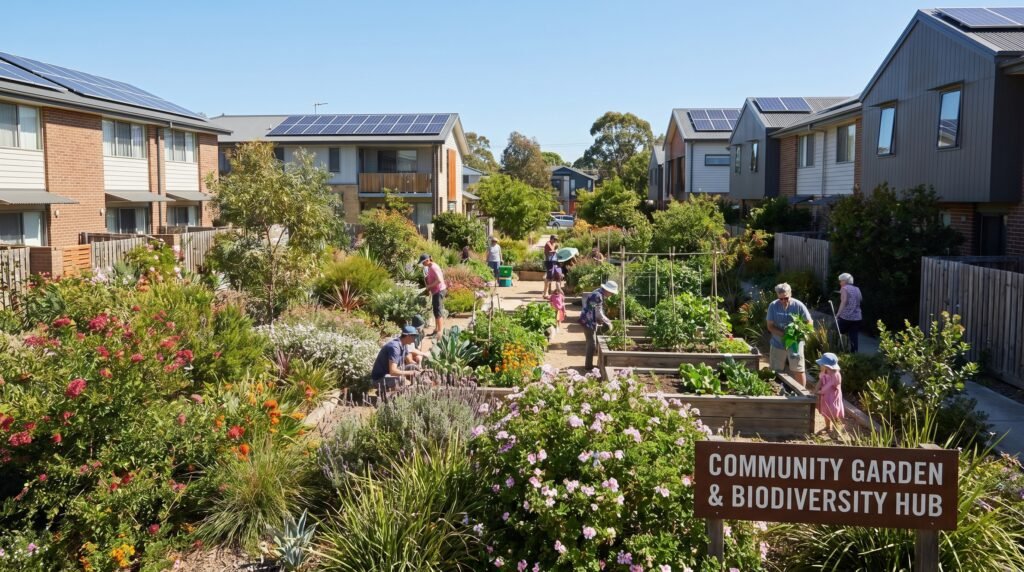
Local food production strengthens communities while reducing environmental impact.
- Urban farming reduces transportation-related emissions.
- Fresh local produce supports healthier diets.
- Community gardens strengthen neighborhood relationships.
- Local food systems support small businesses and farmers.
- Sustainable farming protects soil and biodiversity.
- Reduced packaging waste lowers pollution levels.
9. Community Engagement and Social Inclusion
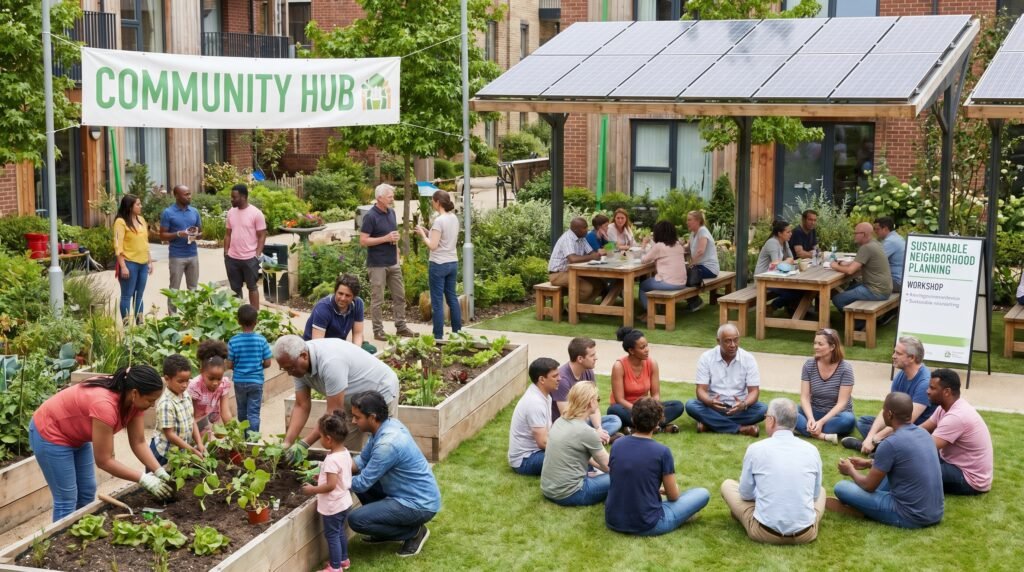
A sustainable community depends on people feeling connected, included, and involved in local decision-making.
- Community participation strengthens local planning.
- Inclusive spaces reduce social inequality.
- Stronger social connections improve mental well-being.
- Community projects encourage shared responsibility.
- Public involvement increases support for sustainability efforts.
- Connected neighborhoods become more resilient during crises.
10. Smart Infrastructure and Resilient Urban Planning
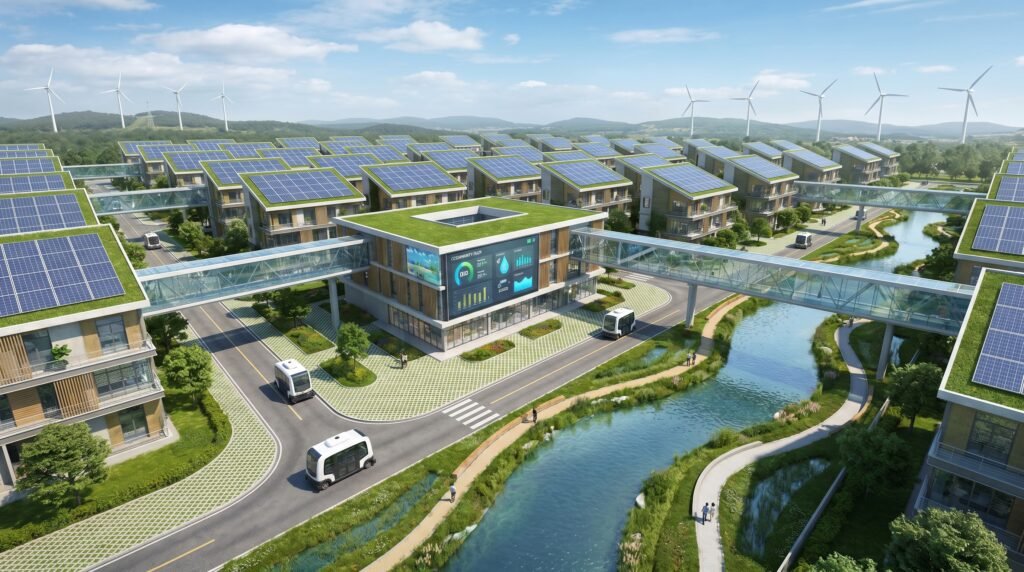
Future-ready communities require planning that balances environmental protection with long-term urban growth.
- Smart systems improve energy and resource efficiency.
- Climate-resilient infrastructure reduces disaster risks.
- Efficient planning limits uncontrolled urban sprawl.
- Green infrastructure supports healthier environments.
- Sustainable development lowers long-term operational costs.
- Resilient cities adapt more effectively to climate challenges.
Building Sustainable Communities for Future Generations
Sustainable communities are not created overnight. They evolve through consistent decisions made by governments, businesses, architects, urban planners, educators, and ordinary citizens.
One of the most important lessons modern cities are learning is that environmental sustainability and human well-being are deeply connected. When communities invest in cleaner air, safer public spaces, renewable energy, and green infrastructure, they also invest in healthier and happier people.
Human behavior is strongly influenced by surroundings. People are more likely to recycle when recycling systems are accessible. They are more likely to walk when streets feel safe and inviting. They are more likely to support local businesses when communities create spaces that encourage interaction.
Sustainable living becomes easier when communities are intentionally designed to support it. Governments can help by investing in renewable energy, climate-resilient infrastructure, and sustainable transportation. Businesses can adopt cleaner production methods and support environmentally responsible innovation. Urban planners and architects can prioritize people-centered design instead of car-centered expansion.
Citizens also play a powerful role.
Supporting local sustainability initiatives, reducing waste, conserving energy, using public transportation, and participating in community projects may seem like small actions, but collectively they create meaningful change.
The future of sustainable community development depends on balance — balancing economic growth with environmental protection, and balancing urban expansion with human well-being. Communities that successfully achieve this balance will be healthier, more resilient, and better prepared for future environmental challenges.
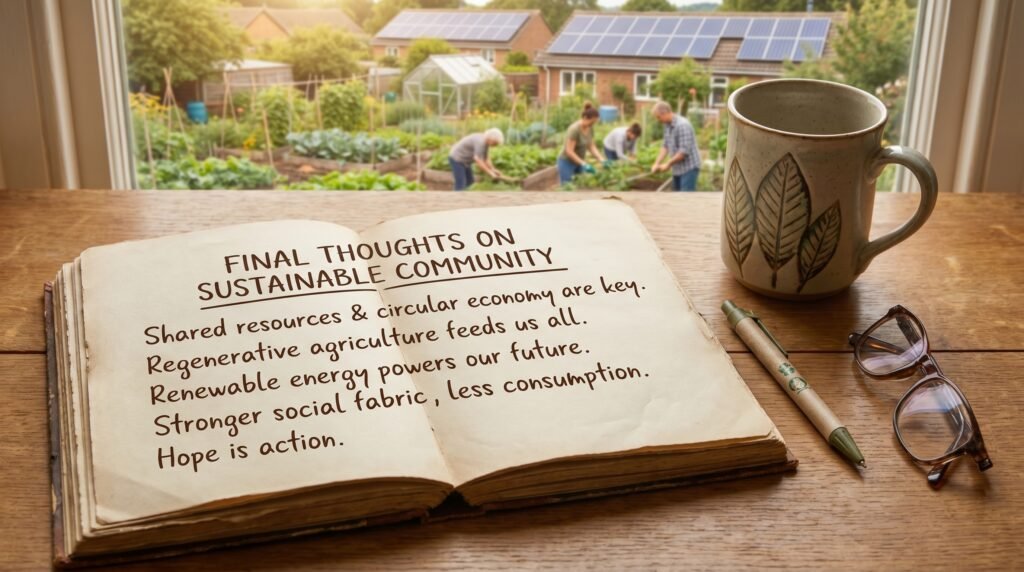
Final Thoughts
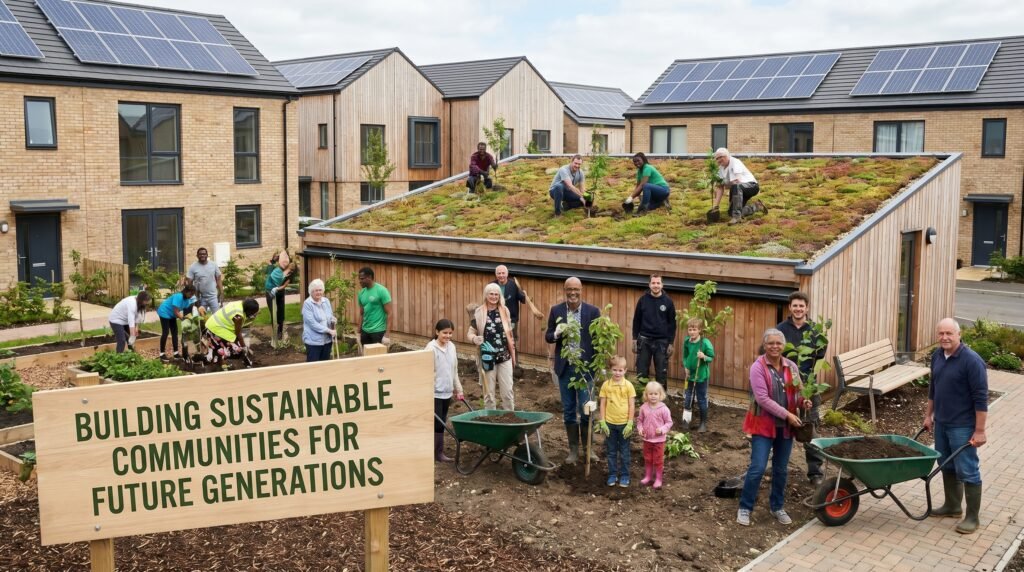
The world does not need perfect cities. It needs communities that are willing to change. Sustainable community development is ultimately about creating places where both people and nature can thrive together. It is about designing neighborhoods that reduce pollution rather than create it. It is about building economies that support long-term well-being rather than short-term consumption. Most importantly, it is about recognizing that environmental sustainability is deeply connected to human health, happiness, and quality of life.
Every renewable energy project, every protected green space, every bike lane, every community garden, and every sustainable building contribute to a larger transformation. The choices communities make today will shape the lives of future generations.
Cleaner cities, healthier neighborhoods, resilient infrastructure, and stronger social connections are not unrealistic goals. They are achievable when governments, businesses, and citizens work together with a shared commitment to sustainability.
Communities across the world now face an important question: Will future generations inherit polluted, overcrowded, and environmentally unstable cities — or healthier, greener, and more resilient communities designed with both people and the planet in mind? The answer depends on the actions taken today.
Related Guides
Organic Concealer Guide: Can One Fix Both Under-Eyes and Blemishes?

Organic Serums Decoded: Which Natural Actives Are Actually Stable?

Best Certified Organic Korean Skincare-Makeup Hybrids [2026 Guide]

Organic Foundation Guide 2026: Find Your Perfect Match

How to Choose Organic Lipstick: A Shade-by-Shade, Ingredient-by-Ingredient Guide

10 Proven Ways to Reduce Your AC Energy Bills in the GCC