Practical, affordable steps you can start today to build a zero-waste kitchen: sustainable and eco-friendly, with data-backed wins and an easy 4-week plan.
Food, packaging, and the leftovers of our daily cooking add up. Roughly 1.05 billion tons of food were wasted globally in 2022, accounting for approximately 19% of the food produced. Households are responsible for around 60% of that waste. At the same time, plastic and packaging waste continue to increase, with global plastic waste reaching hundreds of millions of tons per year. The growing plastic waste contributed an equivalent of roughly 1.8 billion tons of CO₂ in 2019. These numbers reveal the gravity of the situation but also highlight an enormous opportunity at home. The average household that shifts its attitude, shopping habits, and waste practices can both reduce environmental impacts and save money. OECD
Why Does a Zero-Waste Kitchen Matter?
To be precise, loss and waste account for a notable amount of global greenhouse gas emissions, as well as wastewater, and the inefficient use of human efforts and natural resources in food production. Therefore, reducing household food waste is one of the simplest but high-impact actions consumers can take.
In my opinion, shifting buying habits to bulk quantities is evidence that low-income households can save a reasonable amount of money on grocery spending like high-income households. This smart shift in buying habits can save hundreds to thousands of dollars each year.

Globally, only a small percentage of total plastic waste is recycled. Single-use packaging and items can be replaced with reusable bags to reduce plastic waste. The reduction in consumer demand for plastic will result in a decline in industrial production. Discourage the use of plastic and urge businesses involved in plastic manufacturing, packaging, and sales to adopt more sustainable practices.
Table 1: Quick-reference numbers (Sources: UNSDN | AP | OECD | UNEP | Mallik)
| Metric | Estimated numbers |
| Global food wasted (2022) | ≈1.05 billion tons |
| Share of food waste from households | ~60% of total food waste |
| Global plastic waste (2019) | ~353 million tons |
| Plastic related GHG (2019) | ~3.4% of global CO2 emissions |
| Potential grocery savings from bulk buying | ~5% household grocery expenditures |
Step-by-step budget edition of a zero-waste kitchen
1) Plan: the smallest investment, biggest payoff
- Thoughtful planning reduces over-purchasing, the most significant single cause of household food waste. A weekly meal plan with a simple shopping list based on meals rather than impulse items. Those items that must be used in the first half of the week should be placed in the “use-first” labelled shelf of the fridge. The list of the weekly meals is to be displayed on the door of the kitchen or fridge.
2) Shop smart: buy less packaging, buy what you’ll use
- The packaging and per-unit costs can be reduced by purchasing staples such as rice, flour, beans, oats, spices, loose tea, and soap in bulk quantities or from nearby refill shops. The number of refill and zero-waste stores is increasing in many countries, offering a low-cost, local option.
- Bringing a set of your own glass jars and cloth bags for groceries is a cost-effective and reusable option; most grocery stores accept this. Keep the small jars for spices and the larger jars for rice, flour, cereal, oats, and other dry goods.
- Purchase fruits, vegetables, and other items at discounted rates or during promotions, if available, as they are of the same quality and taste.
3) Store well: cut waste with time and technique
- The dried goods are to be stored in airtight jars; extra bread, fruits, and vegetables should be frozen for later use; and herbs should be dried for future use.
- Label jars with item names and buy-and-use dates using a sticker/masking tape and a marker to keep everything visible.
4) Smart Cooking: portion, repurpose, preserve
- If cooked in a batch, portion the food into individual servings and store it in a reusable container for the next day’s meal. Alternatively, portions/leftovers can be served/gifted to those who are homeless or cannot afford it.
- Basic preservation procedures, such as drying, pickling, and freezing with a simple salt-and-vinegar pickle, should be learned by everyone to extend the life of vegetables for days to weeks at nearly zero cost.
5) Compost or feed: make biodegradables valuable
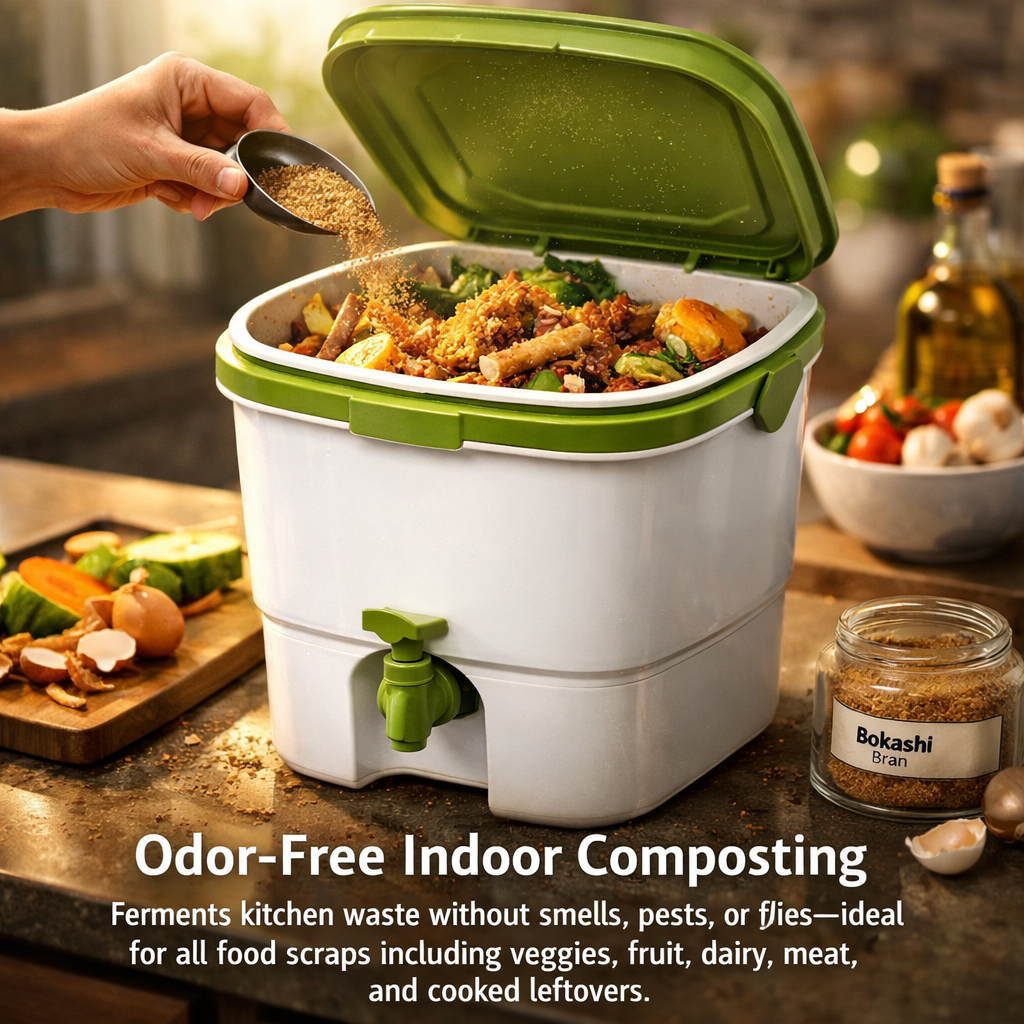
- Unlike traditional composting, a small bio-drops countertop bokashi composting bucket/bin eliminates foul smells, making it perfect for indoor/kitchen use.
- It uses anaerobic fermentation to quickly and efficiently break down kitchen waste without odors, pests, or flies. Those easily composted vegetable peels, fruit scraps, dairy, meat, and cooked food can be used as organic fertilizer for your home garden.
- Start a small compost heap if you have a yard. Otherwise, you can also join municipal green waste programmes and community compost schemes in your own cities or towns.
6) Replace disposable cleaners and storage slowly
- Swap paper towels for reusable cotton or microfiber cloth rags, as paper towels generate a massive quantity of waste and are expensive.
- Old t-shirts, towels, and other cotton cloths can also be cut up to create a heap of rags for cleaning. For wipes and spills, highly absorbent, biodegradable cellulose sponges, dedicated cotton cloths are reasonable alternatives.
Effective, affordable, and eco-friendly cleaning solutions can be easily produced at home, for example, a vinegar and water solution for washing glass, and baking soda for scrubbing. Alternatively, for scrubbing pans and pots, use a wooden brush with natural, compostable palm or Tampico fibers.
7) Buy second-hand and multi-purpose
- For low-income households, if you can’t afford brand-new, expensive non-stick kitchenware from grocery stores, consider looking for second-hand/used items, such as stainless-steel pots, cast-iron pans, wooden utensils, or glass containers, at community marketplaces and thrift stores. The idea is to purchase cheaper but durable items at a price less than half that of brand-new items.
Adopt 5 R’s hierarchy
- Refuse (plastic, paper towels, disposable, single-use items)
- Reduce (detergents, buy in bulk)
- Reuse (reusable cloth rags, glass jars, BPA-free silicone bags)
- Recycle (process what can’t be refused, reduced, reused)
- Rot (compost vegetable, fruits, organic)
Budget estimate to start a zero-waste kitchen
| Items | Logic | Range ($US) |
| Cloth towels & cleaning rags (set) | Replace paper towels | $5–15 |
| Mason/Screw-top jars (6–12) | Storage, bulk buying, pickling | $10–30 |
| Reusable bags (set) | Replace plastic produce bags | $5–12 |
| Silicone food bags/beeswax wraps | Replace plastic zipper bags/wrap | $8–25 |
| Bokashi/worm compost bucket | Compost kitchen scraps | $25–60 |
| Airtight containers (2–4) | Food portioning & longer storage | $10–40 |
Low-end cost: $60 ± 10. High-end cost: $200 ± 20.
Four-week zero-waste kitchen strategy:
- Audit and plan week: The first and most important week is to track food purchases and the waste ratio. Plan your meal accordingly for the whole week.
- Swap and store week: Purchase some jars and one set of reusable produce cotton mesh bags. Organize your pantry and freeze any leftover bread.
- Purchase bulk and compost week: Test staples from a bulk store or try a refill station and buy a small counter composter for indoor use.
- Lock it in for a week: Cook with leftovers twice a week, replace paper towels with cloth rags, tea bags with loose tea, plastic wrap with beeswax wraps, plastic sponges with natural fiber brushes, and single-use coffee pods with a reusable filter.
At the end of four weeks, calculate your savings and waste reduction. Bear in mind that micro-wins create momentum; small, consistent changes in your daily routine are more effective than a complete success or a total failure approach.
Tracking Matrix
- Track your success with a simple matrix by cooking two meals a week with leftovers. Track the paper towel waste and cost for a whole month, then switch to cloth rags in the next month. Track your weekly grocery expenditures versus your baseline; even a small percentage drop is still significant.
- Immediately divide the dinner into meal-sized portions and freeze the extras.
- Put your borderline items into one labeled jar, “use first,” which forces visibility.
- If possible, consider swapping and sharing bulk purchases with your neighbors. For example, if one person buys rice and another buys oil this month, and then the roles are reversed next month, small sharing will keep the upfront cost low. Leftovers can also be shared among neighbors.
Common perceptions
- The most common objection is that zero-waste is expensive. The upfront cost is high, but my real-life experience shows that bulk buying, swapping paper towels for cloth towels, and eliminating disposables can save money and pay back in months.
- The second objective is that I don’t have time for meal planning, freezing leftovers, and storing them in jars. All these activities add minutes, but save hours of shopping, long-term costs, gasoline, and transportation expenses.
- The third objective is that I don’t have enough space. In reality, countertop bokashi/worm compost buckets and preserving food in small portions work remarkably well in tight places. It will lower bulk buying to what can be stored.
The bigger picture
- Rather than perfection, a zero-waste kitchen is a set of small, budget-friendly, and practical choices that, if applied across millions of households worldwide, can lead to systemic change. Whether you live in a district with access to bulk stores, a city with local refill kiosks, or a small town, making smarter portion choices or serving leftovers to those in need can help reduce global food waste and save on your grocery costs.
This week, choose one doable habit from this guide as your contribution to reducing billions of tons of food waste around the world. The data on environmental pollution reveals the seriousness of this problem, but your kitchen shows how meaningful and easy the solution can be.
Your feedback on future articles related to this subject would be greatly appreciated.
Related Guides
10 Frequently Used Plastic Bathroom Swaps for an Eco-Friendly Home

Safer Swaps of 10 Frequently Used Plastic Kitchen Items

Plastic Is Dying: These 10 Packaging Alternatives Are the Future

6 Revolutionary Plastic Alternatives in 2026 to Replace Traditional Plastic
9 Affordable Green Technology Products to Reduce Energy Consumption in 2026

How Fog Harvesting Is Redefining Water Security

worth reading. from today as a housewife i am going to apply these simple steps to play my part for a better tomarrow. write more articles on sustainable home.
Very informative! These simple zero-waste kitchen tips are easy to follow and truly helpful for daily life.
Impressed by the budget-friendly tips! Starting a zero-waste kitchen doesn’t have to break the bank. From planning meals to repurposing leftovers, these simple steps can lead to a more eco-friendly lifestyle.
This is a wonderfully insightful article! I especially appreciate how it highlights the practical steps one can take toward a sustainable, zero-waste kitchen. The tips are both achievable and inspiring, and they serve as a great reminder that small changes add up to make a big difference.
Love these tips!! Every little change makes a big difference and for sure i’m going for this change.
It was fascinating and very helpful.The one who worte this surely put a lot of efforts into this . It was brilliant really loved it 💖 It is very helpful and informative 👏🏼
This is so inspiring and life changing def gonna try this at my own house🫶🏼
It’s really a amazing article for all the women bcz all women’s in our society going for grocery nd cooked their own food if these thing may apply everyone in daily routine we can help and support environments for waste and we save money as well nd i try my best inshallah in my routine this is very helpful for me