Introduction — small actions, real impact
You can shrink your household’s carbon footprint with micro-sustainability habits: tiny, practical actions that fit into daily life. No need for a solar roof or zero-waste wardrobe: these easy actions make real cuts in emissions without disrupting your routine. This guide offers 25 low-effort, low-cost habits, each backed by international data and real-world numbers, so you can easily choose those that suit your family and location.
Global CO₂ emissions hit a record high in recent years, underscoring the importance of even household-level reductions. AP News
Why “micro” habits matter
Millions of small individual and household actions, though not a substitute for policy, can powerfully reduce energy use and demand for carbon-intensive products when multiplied across communities. Because per-capita emissions range from under 2 to over 14 tons per person annually between countries, simple habits are particularly impactful in higher-emitting contexts. WB Group
25 micro-sustainability habits you can start this week
Each habit is grouped for convenience and designed to be cheap, available globally, and easy to keep.
Home energy & lighting
- Swap to LED Bulbs: LEDs use ~75% less energy than incandescent bulbs and last far longer; replacing five frequently used bulbs will lower electricity use and reduce replacement costs. energy.gov
- Unplug standby devices: chargers and TVs draw standby power; use a single power strip to cut phantom loads.
- Use smart (or simple) timers for water heaters and heated towel rails so they run only when needed.
- Lower the thermostat by 1°C in winter or raise it by 1°C in summer: small changes that yield noticeable savings with no loss of comfort for most people.
- Close curtains at night in winter and open them on sunny days to passively manage heat.

Laundry & clothing
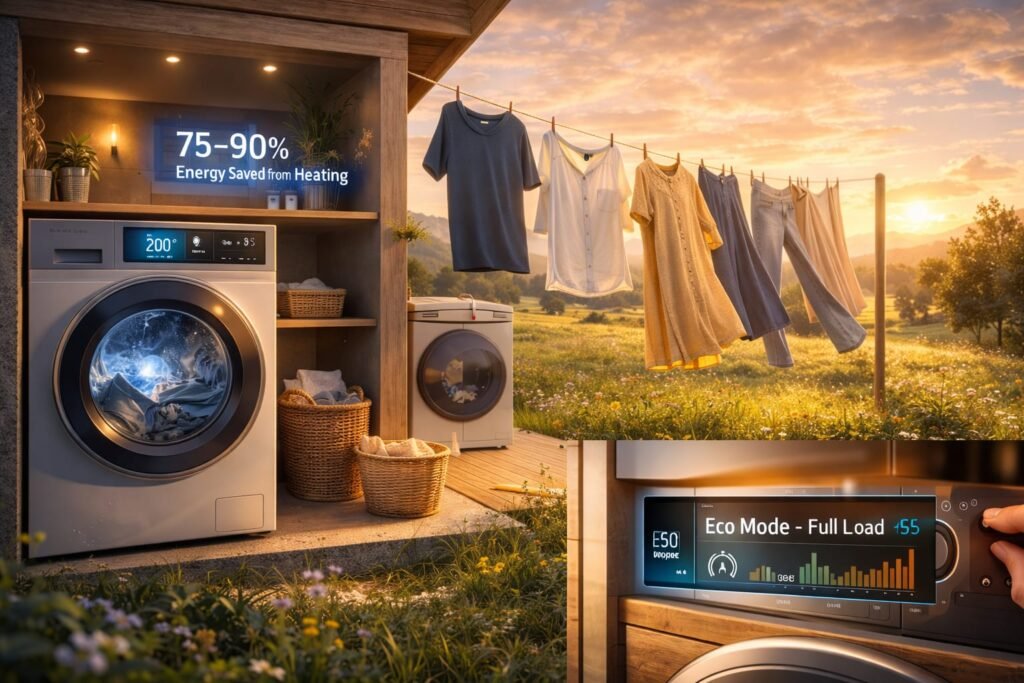
- Wash in cold water whenever possible: 75–90% of washer energy goes to heating water, so cold washes save a lot of energy and extend clothes’ life.
- Air-dry when you can: a dryer consumes significant electricity or gas; line-drying is zero-carbon and gentle on fabrics.
- Full loads, lower spin: running full loads and using efficient cycles reduces per-item energy and water use.
- Mend instead of replacing minor sewing fixes, keep garments longer, and cut manufacturing emissions.
Food & kitchen
- Swap one beef meal per week for a chicken or plant-based meal: beef has one of the highest per-kilogram footprints; replacing it with lower-footprint proteins offers significant returns.
- Plan meals to minimize food waste: a weekly plan and leftovers system cut waste and save money.
- Cook with lids and batch-cook: cover pots to speed cooking and reuse leftovers instead of single-use meals.
- Use an energy-efficient kettle: boiling only the water you need saves energy compared to the stove.

Travel & transport
- Replace one short car trip per week with walking or cycling: short trips are often the easiest to replace, reducing petrol use and local pollution.
- Use public transportation for errands: when realistic, it lowers per-person emissions compared with driving alone.
- Combine trips: fewer starts/stops and consolidated shopping reduce total miles and fuel use.

Daily consumption & waste
- Buy refillable or concentrated products (e.g., cleaning liquids, shampoo) to reduce packaging waste and transport emissions.
- Carry a reusable bottle and cup to avoid single-use plastic and save money.
- Choose durable over cheap disposables: a slightly higher upfront cost for a long-lasting product often pays back many times over.
- Set up a small home repair corner: glue, thread, and basic tools keep items in use longer.

Water & outdoors
- Shorten showers by 1 minute: small time savings add up to liters saved and lower energy for heating water.
- Collect rainwater for garden use (where legal) to reduce mains water consumption.
- Plant one native shrub or tree: costs are small, and local planting supports biodiversity and cooling.

Digital & everyday
- Declutter digital storage: moving less data to cloud servers and deleting old files reduces the small but growing energy footprint of data centers.
- Teach one micro habit to your family each month: social spread is how small changes become community norms.

How to pick the most effective habits for your household
- Start where the energy and emissions are: if you live in a high per-capita emissions country, energy and transport swaps often yield larger savings; in lower-emitting places, dietary and consumption swaps can be proportionally necessary. Use your electricity bills and routine to identify high-use areas (heating, cooling, dryer).
- Choose habits you can keep: pick 1–3 habits and make them routine (habit stacking works well: attach a new habit to an existing one).
- Measure small wins: track money saved, fewer grocery trips, or reduced energy bills. Seeing results helps maintain motivation.
- Share with family and friends: social reinforcement makes micro habits sticky and spreads impact.
Common obstacles (and simple fixes)
- “I don’t have time” — pick swaps that save time (batch cooking, LED bulbs require no daily effort).
- “It costs more” — many habits either save money (cold washing, LEDs, less meat) or pay back quickly. Start with no-cost habits (shorter showers, unplugging devices).
- “My landlord won’t allow changes” — focus on portable or non-invasive actions: LED lamps, shower timers, air-drying, meal swaps.
Tracking progress without becoming obsessive
You don’t need fancy tools. A simple monthly checklist (lights changed, laundry habits, meat-free meals) plus a glance at your energy bill will show progress. If you want digital help, many free carbon calculators let you set small targets and track savings—use them as a motivational tool, not a guilt generator.
Final opinion: the ripple effect of tiny changes
Micro sustainability habits to reduce carbon footprint are a practical path between inaction and major lifestyle shifts.
Chart: estimated CO₂ equivalent annual savings from micro habits
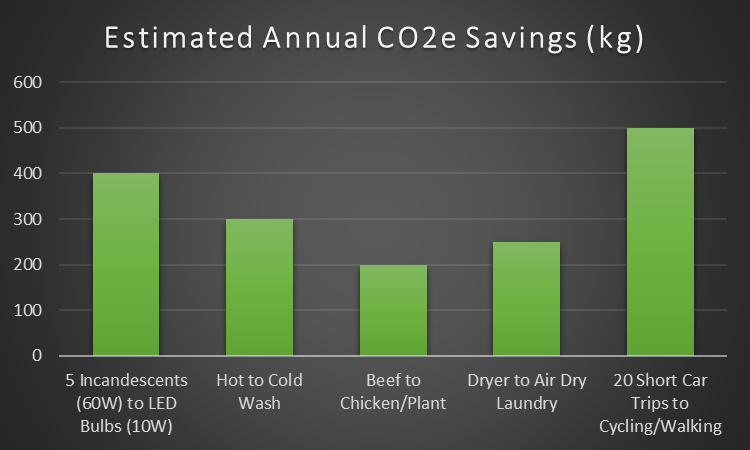
These affordable, comfortable changes add up: one household’s actions influence neighborhoods and markets, pushing progress toward a lower-carbon future when paired with policy and business change.
Affiliate disclosure: As an Amazon Associate, I earn from qualifying purchases.
Related Guides
10 Frequently Used Plastic Bathroom Swaps for an Eco-Friendly Home

Safer Swaps of 10 Frequently Used Plastic Kitchen Items

Plastic Is Dying: These 10 Packaging Alternatives Are the Future

6 Revolutionary Plastic Alternatives in 2026 to Replace Traditional Plastic
9 Affordable Green Technology Products to Reduce Energy Consumption in 2026

How Fog Harvesting Is Redefining Water Security

This article is worth reading because it demonstrates how small actions can significantly reduce our carbon footprint.
Excellent work 👍
Excellent work 👏
A very clear and informative article. I like how it explains simple ways to reduce our carbon footprint without big changes.
A great reminder that small daily habits can make a big impact. Simple actions like reducing waste, saving energy, and choosing reusable items may seem minor, but together they meaningfully cut our carbon footprint. Loved how the article makes sustainability easy and practical.