Rising Hailstorm Events:
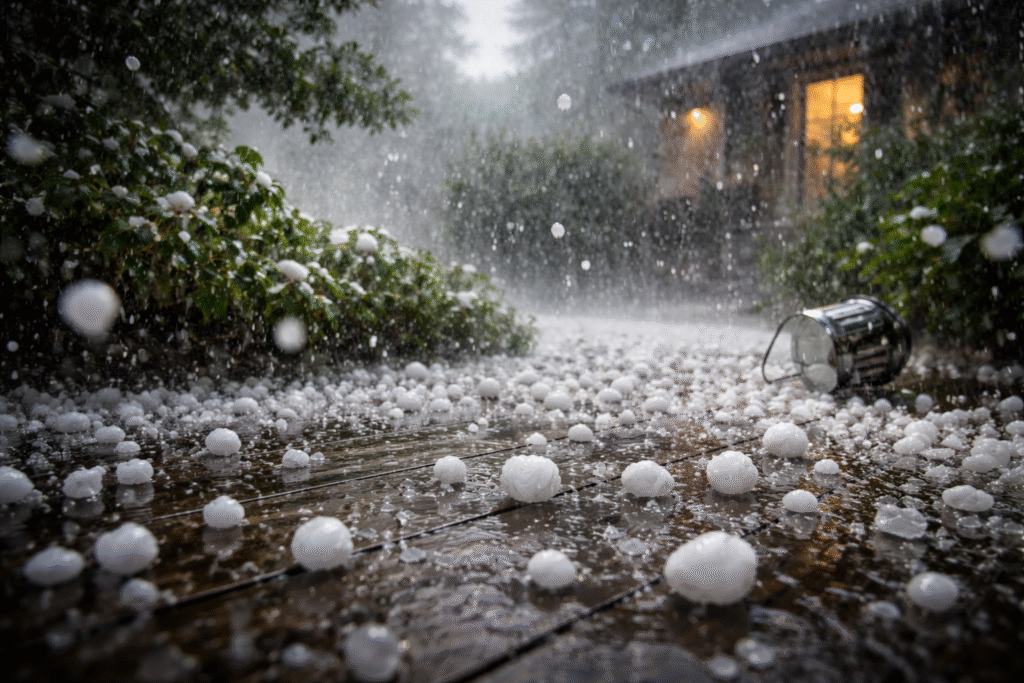
On November 1, 2025, news, videos, and eyewitness accounts circulated that golf-ball-sized hail struck parts of Queensland, Texas, and Brazil, damaging windshields, rooftops, and stunning residents. ABC
While individual storm reports still need local verification, the pattern of larger, more destructive hail is consistent with a growing body of scientific evidence that the character of hailstorms is changing worldwide.
Why are hail size and intensity changing
Hail grows inside strong thunderstorm updrafts. Two climate-related factors are key:
- A warmer, moister atmosphere holds more water vapor, roughly 7% more per degree Celsius, which fuels stronger storms and more precipitation loading inside updrafts. That can provide the raw material for larger hailstones. (This mechanism has been shown for other extreme precipitation phenomena and is a core reason scientists expect changes in convective storms.) Axios
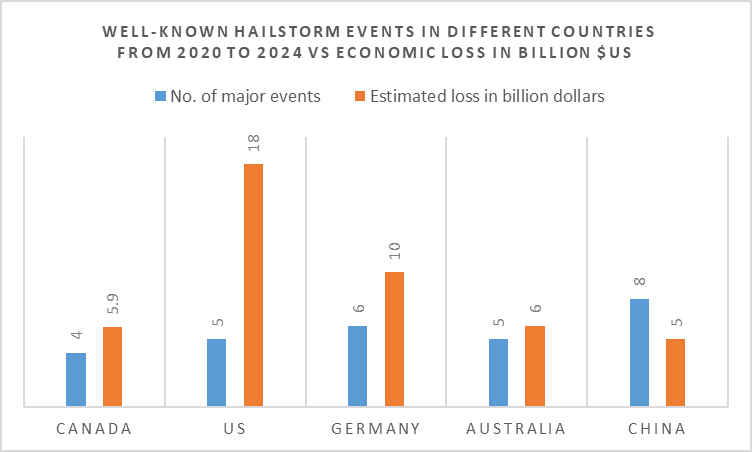
- Shifts in storm dynamics. High-resolution, convection-permitting climate simulations now reveal regional differences: some areas will experience fewer storms overall but a higher proportion of storms that produce very large hail; other regions show an increase in hailstorm frequency and hail days. That spatial heterogeneity explains why Texas, parts of Europe, China, and Brazil may all experience different but worrying changes. NHESS
Put simply, climate change does not guarantee more hail everywhere, but it is increasing the chance that when severe storms occur, they will produce larger and more damaging hail in many populated regions. NASA and independent analyses have also flagged a rapid rise in the intensity and duration of extreme water-related events globally, underscoring the broader trend. The Guardian
Real impacts
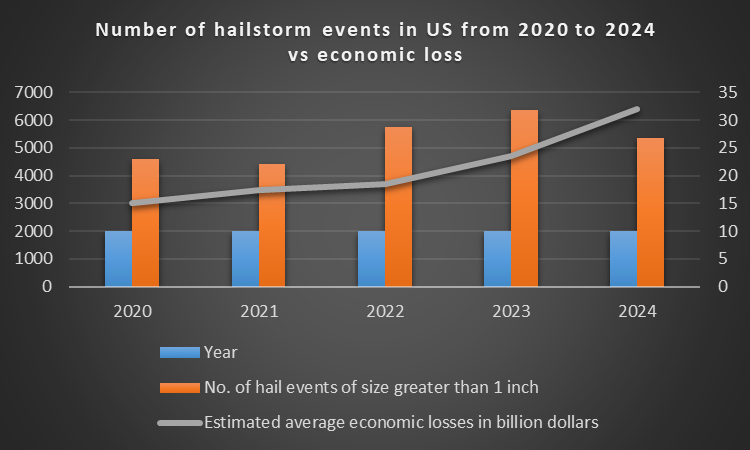
Golf-ball hail damages cars, breaks windows, ruins agriculture, and strains insurance markets. Beyond property loss, larger hail increases the risk of injury and interrupts livelihoods, especially for farmers who depend on vulnerable orchards and vineyards during harvest. Insurance losses from hail and severe storms are a significant portion of the billion-dollar climate damage totals that have been increasing over recent years. NCEI
Immediate actions required — practical, evidence-based steps
The good news is that many actions can reduce harm now, while longer-term emissions reductions address root causes.
- Upgrade early-warning and observation networks. Expand radar coverage, deploy additional hail pads, and encourage rapid and standardized reporting to enable emergency services and insurers to respond more effectively. NOAA’s storm databases and localized nowcasting tools provide templates for scaling up. NCEI
- Strengthen infrastructure and buildings. Adopt hail-resistant materials for roofs, windows, and vehicles (e.g., codes that require impact-resistant glazing in high-risk zones). Municipal planning should map hail vulnerability in a similar manner to flood or wildfire zoning. Insurance incentives (lower premiums for resilient retrofits) accelerate adoption.
- Protect agriculture with targeted measures. Cover crops, windbreaks, hail netting for high-value orchards, and flexible crop insurance payouts reduce economic shock to farmers. Real-time, localized forecasts, plus rapid response funds, help ensure harvest protection.
- Improve land-use and urban design. Heat islands can modify local convective behavior. Increasing urban green cover and reducing rapidly heating surfaces may modestly reduce the severity of convective triggers in cities.
- Deeply reduce greenhouse gas emissions. The only way to curb the growing tail risk of extreme convective storms is to limit global warming. National and subnational commitments to rapid decarbonization, paired with nature-based carbon sinks, remain essential. International evidence links rising extreme-event intensity to warming trends being tracked by NASA, the WMO, and national agencies. The Guardian
What we can do today
- To live in or travel to hail-prone areas: keep an emergency kit, park vehicles under cover when severe thunderstorm watches are issued, secure outdoor equipment, and follow local shelter-in-place advisories.
- Homeowners should check the ratings of their roofs and windows; farmers should consult their local extension services for information on hail protection.
Hailstorms are sudden, noisy, and destructive — and the recent stream of large-hail reports (including the golf-ball events on November 1, 2025) is a reminder that climate change events are not just average but getting extreme. Hence, it is essential to build a strong monitoring system, smarter planning, resilient design, and target emissions reductions to assist communities in mitigating losses and protecting lives as storms become increasingly volatile.
Related Guides
10 Frequently Used Plastic Bathroom Swaps for an Eco-Friendly Home

Safer Swaps of 10 Frequently Used Plastic Kitchen Items

Plastic Is Dying: These 10 Packaging Alternatives Are the Future

6 Revolutionary Plastic Alternatives in 2026 to Replace Traditional Plastic
9 Affordable Green Technology Products to Reduce Energy Consumption in 2026

How Fog Harvesting Is Redefining Water Security

This article gives good information about how hailstorms are becoming stronger and more common because of climate change. It explains how they damage crops, houses, and daily life. The article reminds us to protect our environment and take steps to reduce these harmful weather problems in the future.
great read about hailstorms and their causes. It’s surprising how climate change is making hailstorms more frequent.
Great!
Every extreme weather event is a reminder that climate action is not a choice, it’s our responsibility.
How informative!!! I truly appreciate.!!
Concerning trend! 🌪️ Rising hailstorm events and increasing hail size pose significant threats. Practical steps like improving forecasting, hail-resistant infrastructure, and community preparedness can mitigate impacts.
This is so interesting nd if the climate change can’t be controlled then after some years we saw a very harsh atmosphere. Increasing hail size is a threat for all of us we all should know about these changes nd facts sadly only a little peoples of our society are interested. We should harvest trees that are the good source improving our environment. (I wish you also write about ozone deplition nd side effects)
This article is too informative about how climate changes strengthen hailstorm and destruction caused by hailstorm in various regions. Appreciative to spread awareness about environment.
informative acticle and this Awarness is valueable for whole region
This articale was so informative and engaging.I appreciated the different perspective presented in the articale.
Very insightful! Staying prepared and supporting climate-resilient solutions is the best way to face these changing weather challenges.”
This article is more than just information; it is a vital tool for awareness and empowerment. In a world saturated with headlines, your work stands out as a beacon of lucid explanation and profound importance. You have not only educated your readers but have also, undoubtedly, inspired them to think more deeply about our changing planet and the urgent need for action.