Introduction: Why Plastic in the Bathroom Matters for Climate and Health
Plastic pollution has become one of the defining environmental crises of our time. Every year, more than 400 million tons of plastic are produced globally, and a significant portion eventually ends up in landfills, oceans, or microplastic particles circulating through ecosystems. The bathroom, often overlooked in sustainability discussions, is actually one of the most plastic-heavy areas of modern homes. From shampoo bottles and toothbrushes to razors and loofahs, many daily hygiene items are made of plastic that is used for only a short time but persists in the environment for centuries.
The climate impact is also substantial. Plastic production relies heavily on fossil fuels such as oil and natural gas, contributing to greenhouse gas emissions. Additionally, when plastic breaks down, it releases microplastics that have now been detected in water, soil, air, and even human blood. Reducing plastic use in everyday routines is therefore not only an environmental responsibility but also a step toward protecting human health.
Fortunately, sustainable alternatives are becoming increasingly accessible. Many eco-friendly bathroom products are designed to be reusable, biodegradable, or made from natural materials that do not release harmful chemicals. By making small but intentional swaps, households can significantly reduce plastic waste while improving personal well-being.
Below are ten frequently used plastic bathroom swaps that are safer for your health and kinder to the planet.
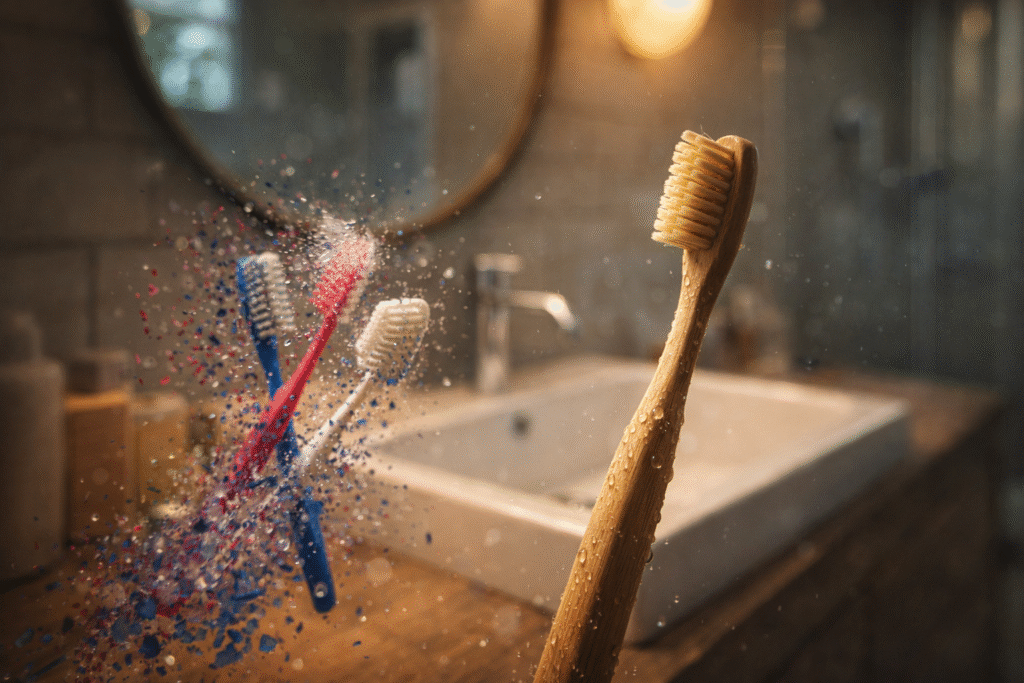
1. Plastic Toothbrush → Bamboo Toothbrush
Plastic toothbrushes are among the most commonly found items during beach cleanups worldwide. Because they are made from mixed materials, they are extremely difficult to recycle and often end up in landfills or oceans.
A bamboo toothbrush offers a simple yet effective alternative. Bamboo is a fast-growing, renewable resource that naturally biodegrades when disposed of properly.
Benefits
- Biodegradable handle
- Renewable natural material
- Reduces long-term plastic pollution
Most bamboo toothbrushes still use nylon bristles, but some newer models feature plant-based bristles that further reduce plastic content.
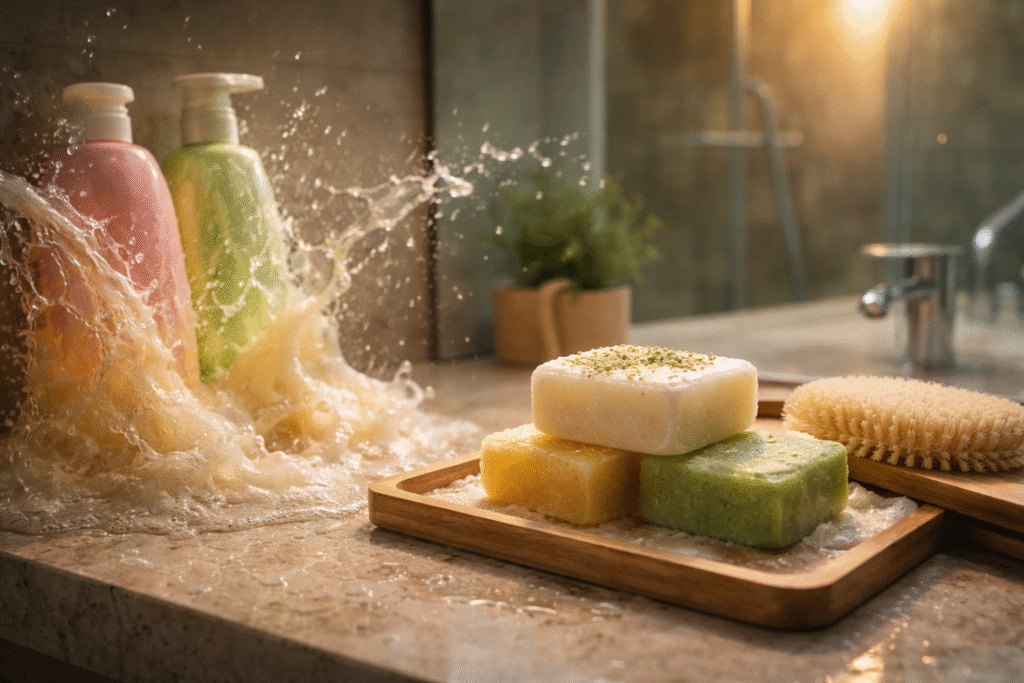
2. Liquid Shampoo in Plastic Bottles → Shampoo Bars
Traditional shampoo bottles are usually made from single-use plastic. Even when recyclable, many of these containers never reach recycling facilities.
Shampoo bars eliminate the need for plastic packaging entirely. These concentrated bars last longer than bottled shampoo and often contain fewer synthetic ingredients.
Benefits
- Zero or minimal packaging
- Longer lasting than liquid shampoo
- Often free from harsh chemicals
Many shampoo bars are formulated with natural oils, making them gentler for the scalp and hair.
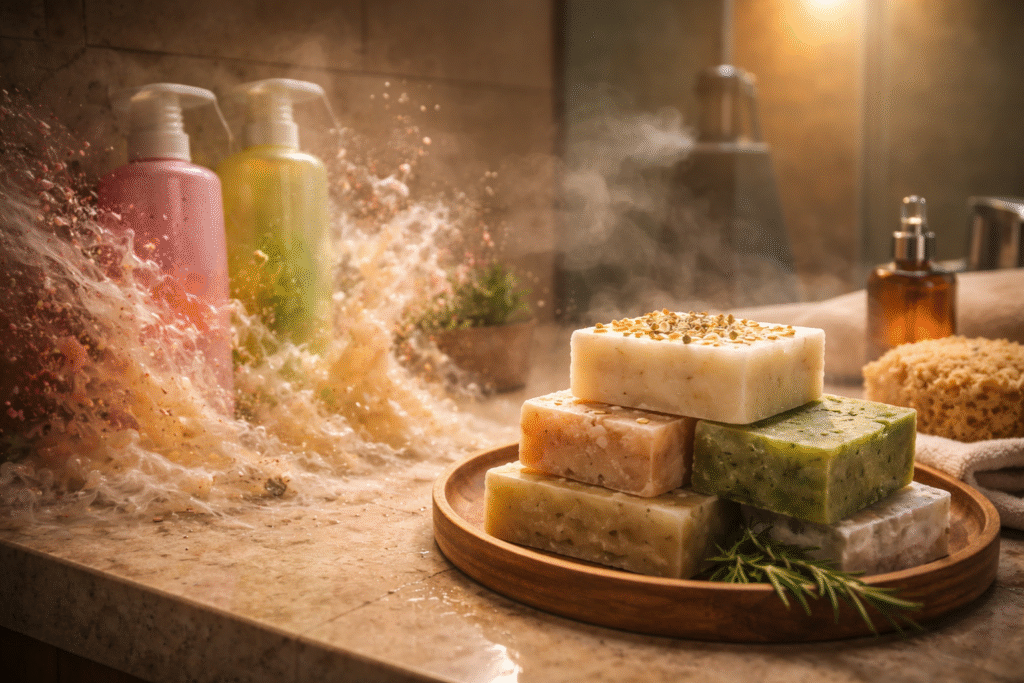
3. Plastic Body Wash Bottles → Natural Soap Bars
Body wash products typically come in plastic bottles that are used for only a few weeks before being discarded.
Natural soap bars provide a classic and sustainable alternative. They are often packaged in paper or cardboard and contain fewer synthetic additives.
Benefits
- Minimal packaging waste
- Often made with natural oils and plant ingredients
- Biodegradable and environmentally friendly
Soap bars also tend to last longer than liquid body wash, making them cost-effective.
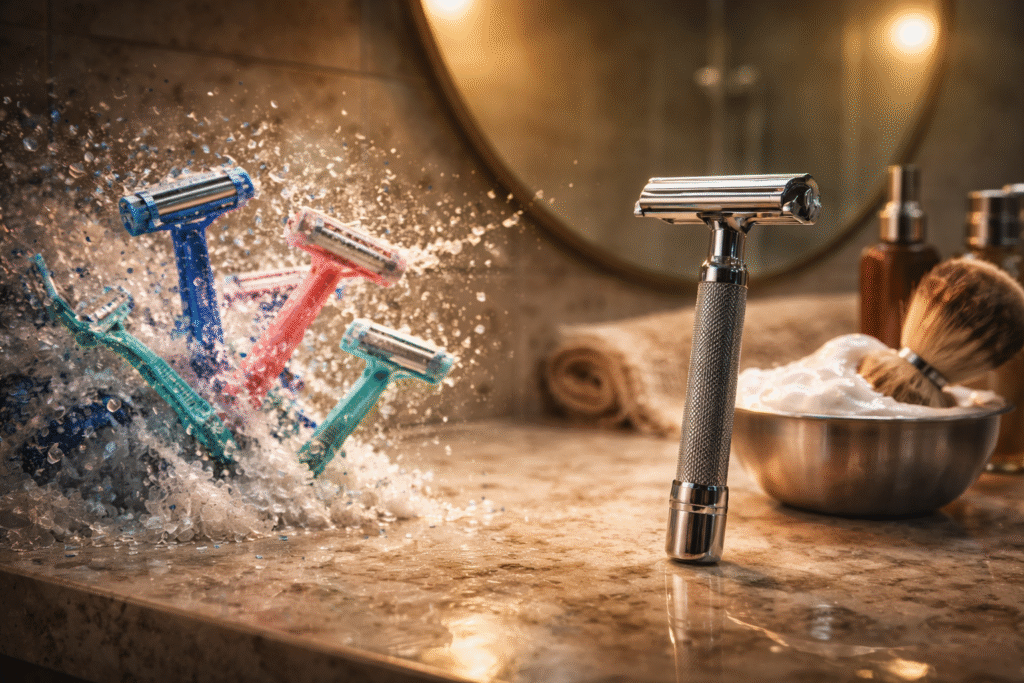
4. Disposable Plastic Razors → Safety Razors
Disposable plastic razors are widely used but extremely wasteful. They are rarely recyclable due to their mixed materials.
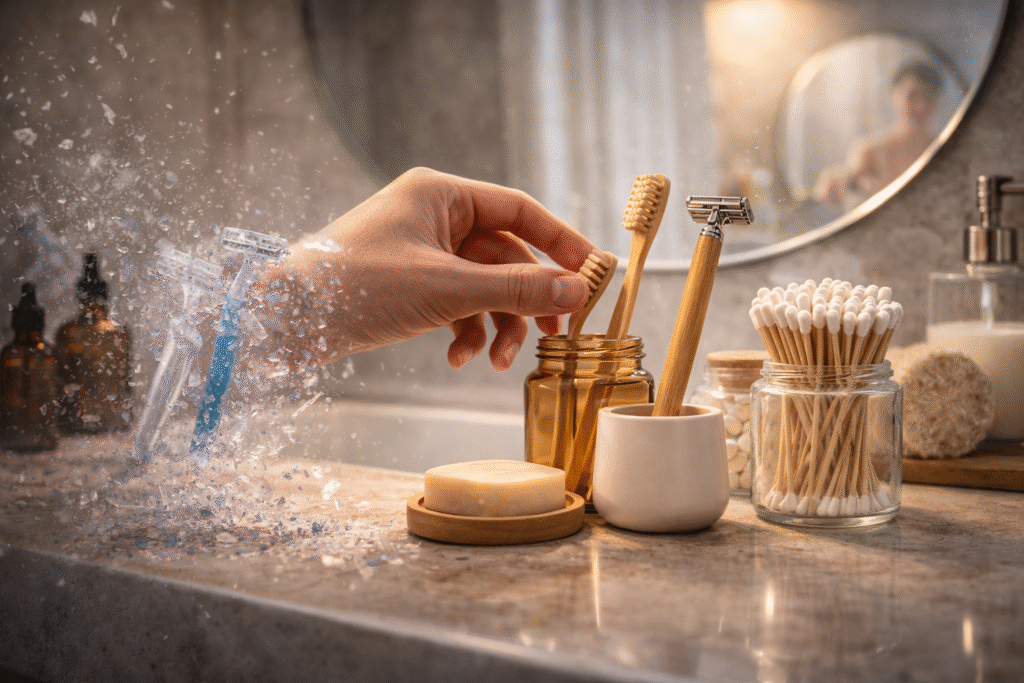
A stainless-steel safety razor is a durable, long-lasting alternative. Only the metal blade needs replacement, and those blades can often be recycled.
Benefits
- Long-term durability
- Reduced plastic waste
- Cost-effective over time
Many users also find that safety razors provide a closer shave with less irritation.
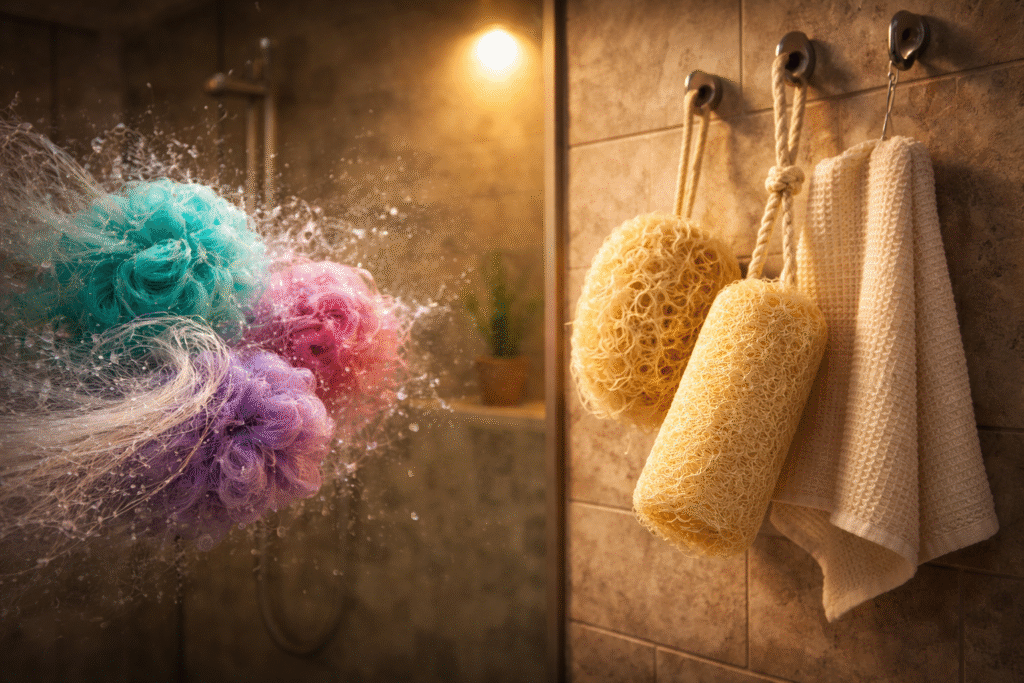
5. Plastic Loofahs → Natural Loofah or Washcloth
Synthetic plastic loofahs break down quickly and release microplastics into wastewater systems.
Natural alternatives include plant-based loofah sponges, cotton washcloths, or bamboo fiber scrubbers.
Benefits
- Biodegradable materials
- No microplastic shedding
- Durable and easy to clean
Plant-based loofahs are made from dried gourds and compost easily when worn out.
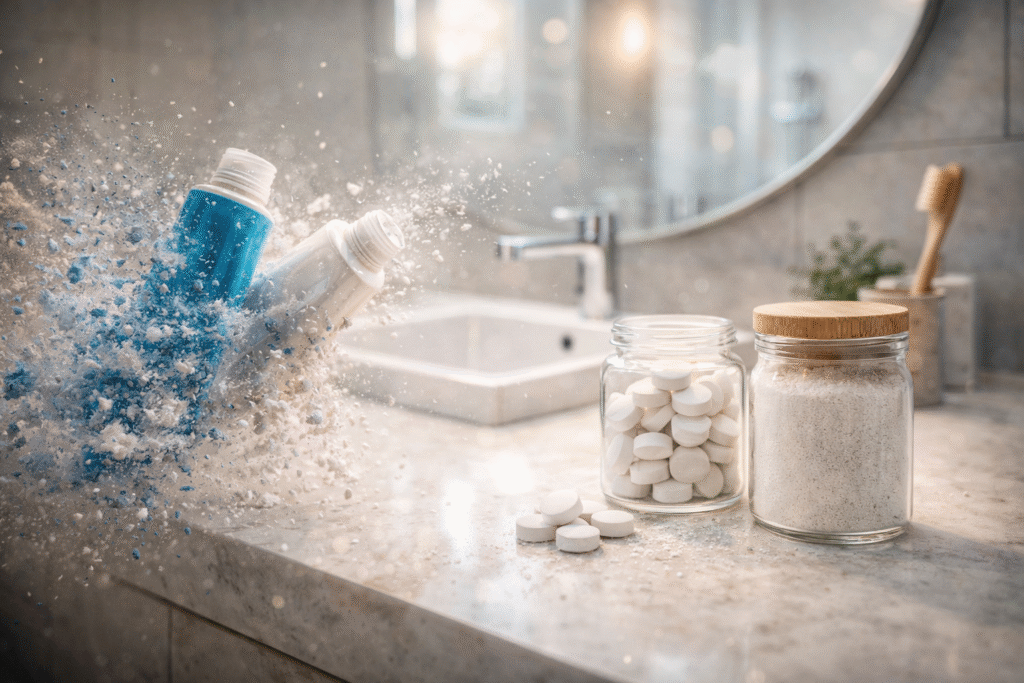
6. Plastic Toothpaste Tubes → Toothpaste Tablets or Powder
Traditional toothpaste tubes are notoriously difficult to recycle due to their layered plastic and aluminum composition.
Toothpaste tablets or powders provide an innovative alternative. They are often packaged in reusable glass jars or compostable pouches.
Benefits
- Zero-waste packaging options
- Travel-friendly
- Reduced chemical additives
Users simply chew a tablet and brush with a wet toothbrush.
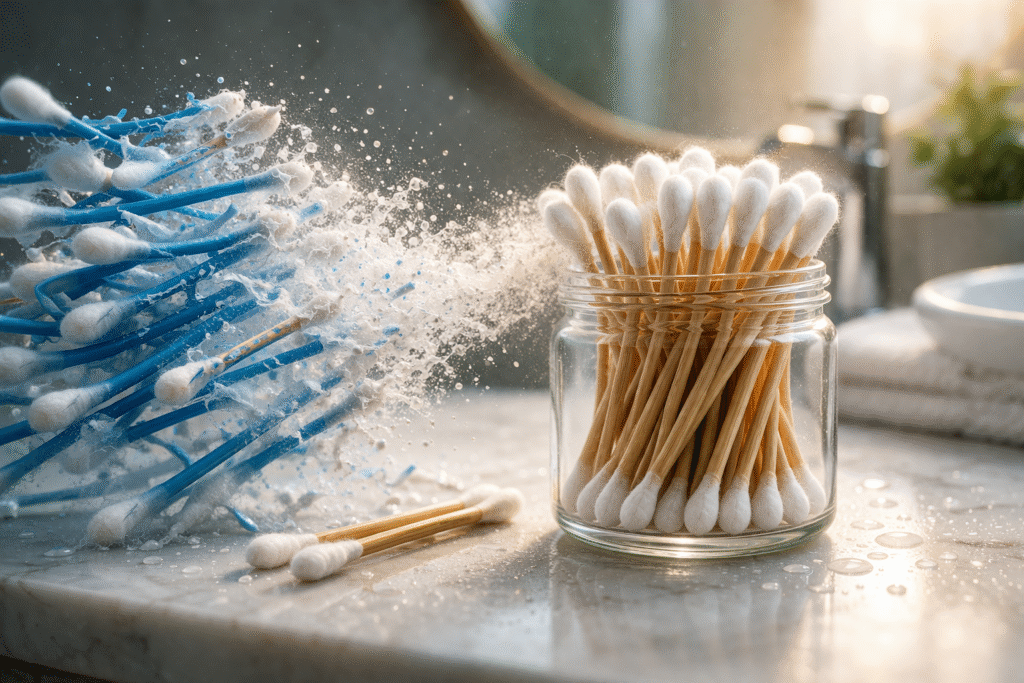
7. Plastic Cotton Swabs → Bamboo Cotton Swabs
Plastic cotton swabs are among the most frequently found marine debris items. Because of their small size, they easily escape waste management systems.
Bamboo cotton swabs use biodegradable sticks instead of plastic, making them far less harmful if they end up in the environment.
Benefits
- Compostable sticks
- Reduced marine pollution
- Same functionality as plastic swabs
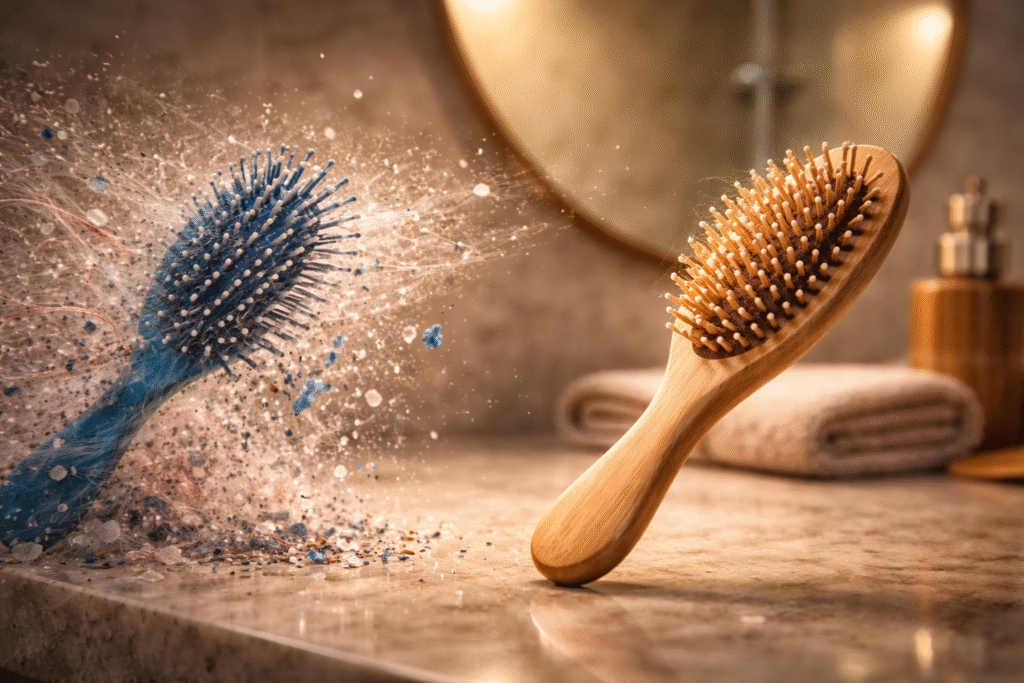
8. Plastic Hairbrush → Wooden Hairbrush
Many conventional hairbrushes have plastic handles and synthetic bristles.
A wooden hairbrush with natural bristles offers a more sustainable option. Wooden brushes are durable and often gentler on the scalp.
Benefits
- Natural materials
- Reduced plastic production
- Long lifespan
Some natural bristles also help distribute scalp oils more evenly through the hair.
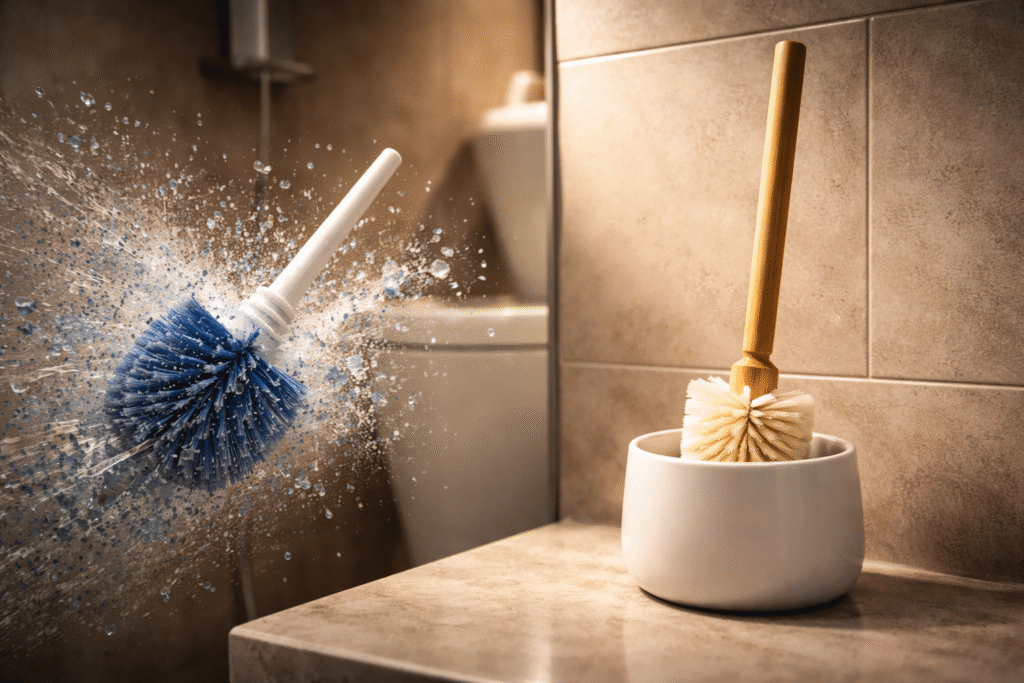
9. Plastic Toilet Brush → Wooden Toilet Brush with Replaceable Head
Plastic toilet brushes wear out quickly and are usually discarded entirely when they degrade.
A wooden toilet brush with replaceable brush heads significantly reduces waste. Only the brush head needs to be replaced, not the entire product.
Benefits
- Long-lasting handle
- Reduced plastic waste
- Replaceable components
10. Plastic Shower Curtain → Fabric or Hemp Shower Curtain
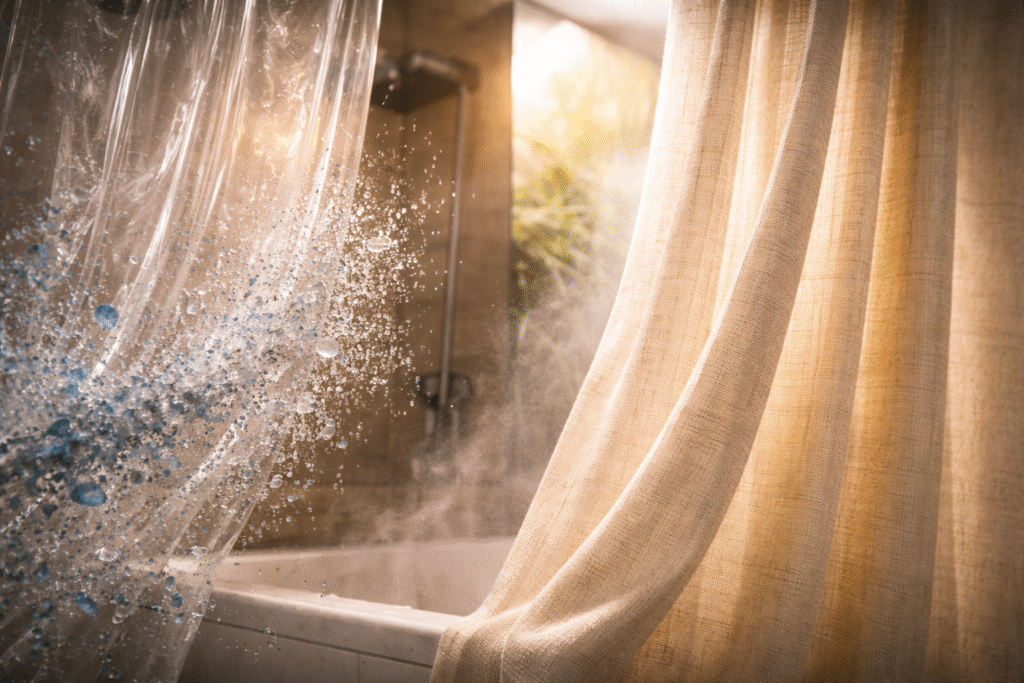
Plastic shower curtains are often made from PVC or vinyl, materials that may release harmful chemicals over time.
A fabric shower curtain made from cotton, linen, or hemp provides a healthier alternative.
Benefits
- Free from toxic plasticizers
- Washable and reusable
- Long lifespan
Fabric curtains also add a more natural aesthetic to the bathroom.
Creating a Sustainable Bathroom Routine
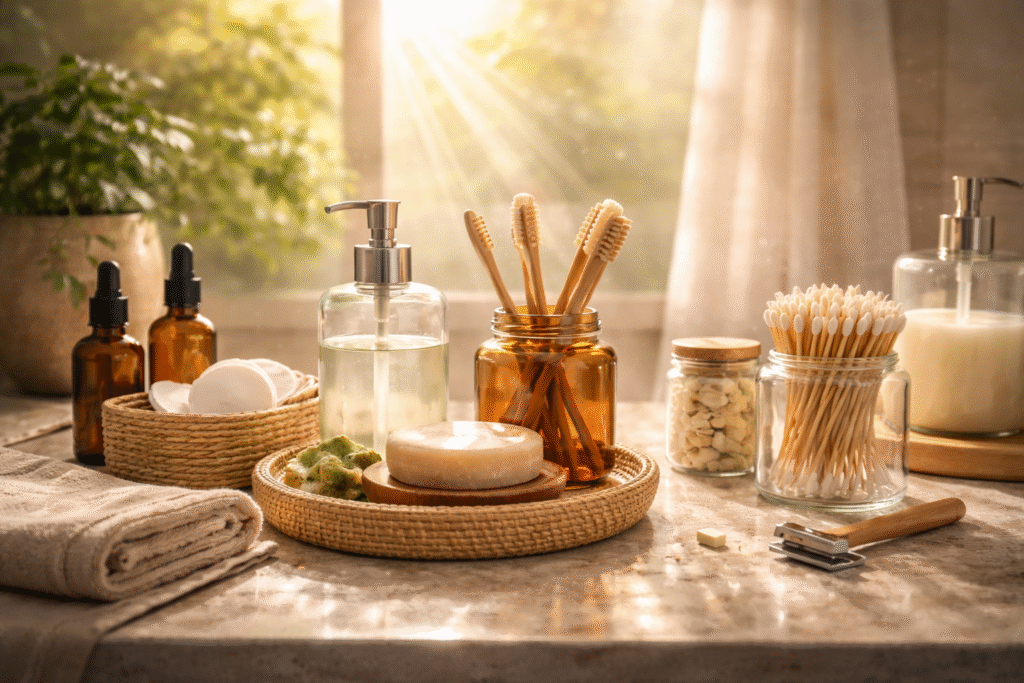
Switching to eco-friendly bathroom products does not have to happen all at once. Gradual changes, replacing items as they run out, can make the transition both affordable and practical.
Small choices accumulate into meaningful environmental impact. For example, if one household replaces plastic toothbrushes with bamboo alternatives for a year, it prevents dozens of plastic items from entering the waste stream.
Sustainable bathroom habits may also encourage broader lifestyle changes, such as reducing plastic use in the kitchen, laundry room, and personal care routines.
Final Thoughts: Awareness Leads to Action
Plastic pollution is not just an environmental issue. It is also a human health concern. The chemicals and microplastics associated with plastic products are increasingly being studied for their potential long-term impacts on ecosystems and human wellbeing.
The good news is that individuals have the power to influence change through everyday choices. By adopting safer, natural, and reusable bathroom products, households can reduce waste, limit exposure to harmful substances, and contribute to a healthier planet.
Awareness is the first step. When more people recognize the environmental consequences of everyday plastic products, sustainable alternatives can become the new norm rather than the exception. Even the smallest change in the bathroom routine can ripple outward, supporting a cleaner environment and a more responsible future.
Related Guides
Safer Swaps of 10 Frequently Used Plastic Kitchen Items

Plastic Is Dying: These 10 Packaging Alternatives Are the Future
6 Revolutionary Plastic Alternatives in 2026 to Replace Traditional Plastic
9 Affordable Green Technology Products to Reduce Energy Consumption in 2026
How Fog Harvesting Is Redefining Water Security

Does Fast Fashion Cause Pollution
very informative and detailed article.
Well written!!!!
A really insightful and well written piece🫶🏻
Great reminder that every little step counts🤍