Water efficiency that actually fits your life
Water has long been treated as something we’ll always have, but this assumption is changing due to prolonged, unpredictable droughts and rainfall cycles, as well as rising water bills. To address water scarcity and to create a meaningful difference, you don’t need to overhaul your lifestyle or invest in expensive equipment. Practical water efficiency and sustainability mean small changes that preserve comfort, reduce costs, and protect the environment.
This article presents low-cost, widely available water-use solutions that work in cities and villages alike.
Average daily domestic water uses in liters per person per day. OCED
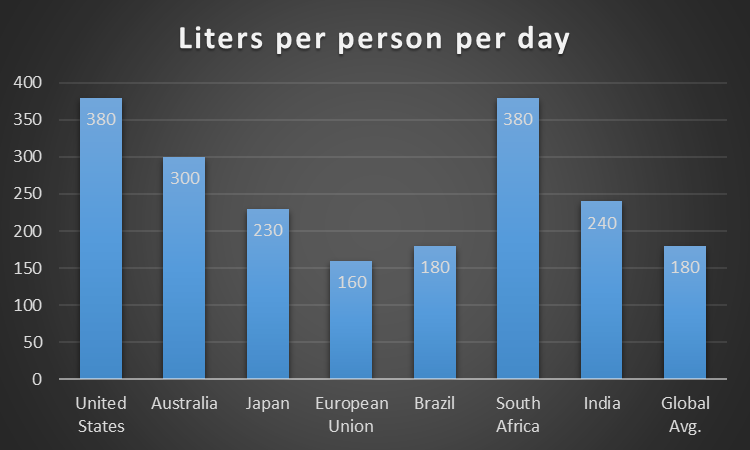
These are rough but useful figures showing that some places use two to three times as much water per person as others, even though modern comfort doesn’t require that level of consumption.
Where the water goes in a typical home. EPA
Getting a breakdown makes it easier to decide what to tackle first. Globally, household water usually goes roughly like this:
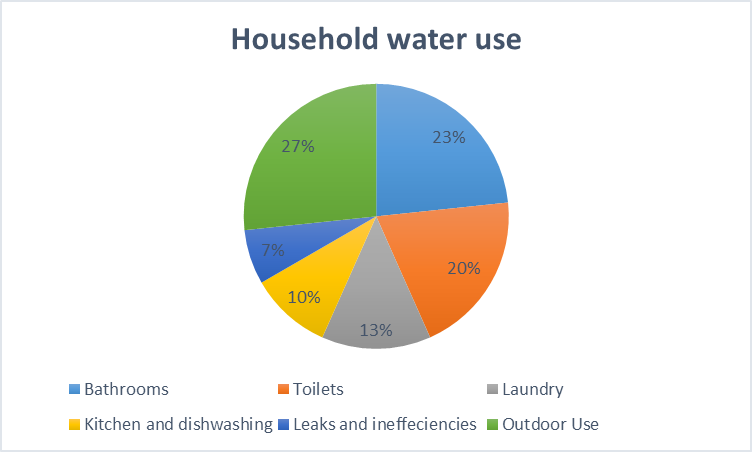
Bathrooms, toilets, and laundry are the big-ticket items. Fixing problems there yields the fastest wins.
Focusing on efficiency
Turning off taps or taking very short showers can reduce water usage. But it’s not a long-term solution to address the root cause. Efficiency varies in ways that don’t affect daily routines, while it reduces the water required to execute them. Upgrading plumbing fixtures, installing rainwater harvesting for irrigation or toilet flushing, and making small lifestyle changes can help you maintain your current lifestyle while using less water and requiring minimal additional effort. Co-benefits of water efficiency include lower energy bills (hot water costs money), lower sewage charges in some areas, and reduced stress on public supply systems during the dry season.
Start with small actions you can take today
Below are some practical, cost-effective steps that work almost everywhere.
Find and fix leaks
Leaks are often overlooked, yet even a minor drip can lead to substantial water loss over time. Fixing a leaking tap or a constantly running toilet is far less expensive than paying for the water it wastes. A running toilet can waste thousands of liters in a day; a dripping faucet can add up to several thousand gallons a year.
Substitute or adjust bathroom fittings
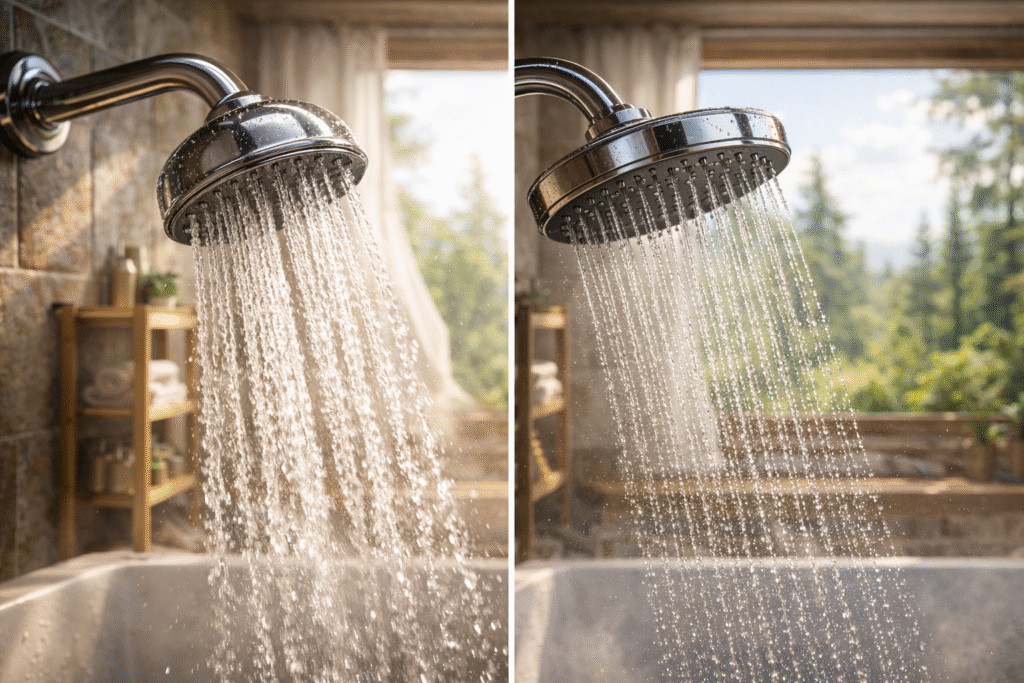
A modern low-flow showerhead and a sink aerator can deliver the same experience with less water. Many of these parts are low-cost and convenient to install. Latest dual-flush toilets or simple displacement devices for older tanks can reduce toilet water use by 20-50%.
Change laundry habits
Run washing machines only with full loads, select shorter cycles for lightly soiled clothes, and use cold water whenever possible. Washing at lower temperatures not only saves energy but can also reduce the water usage per cycle in some older machines.
Use water-efficient dishwashing methods
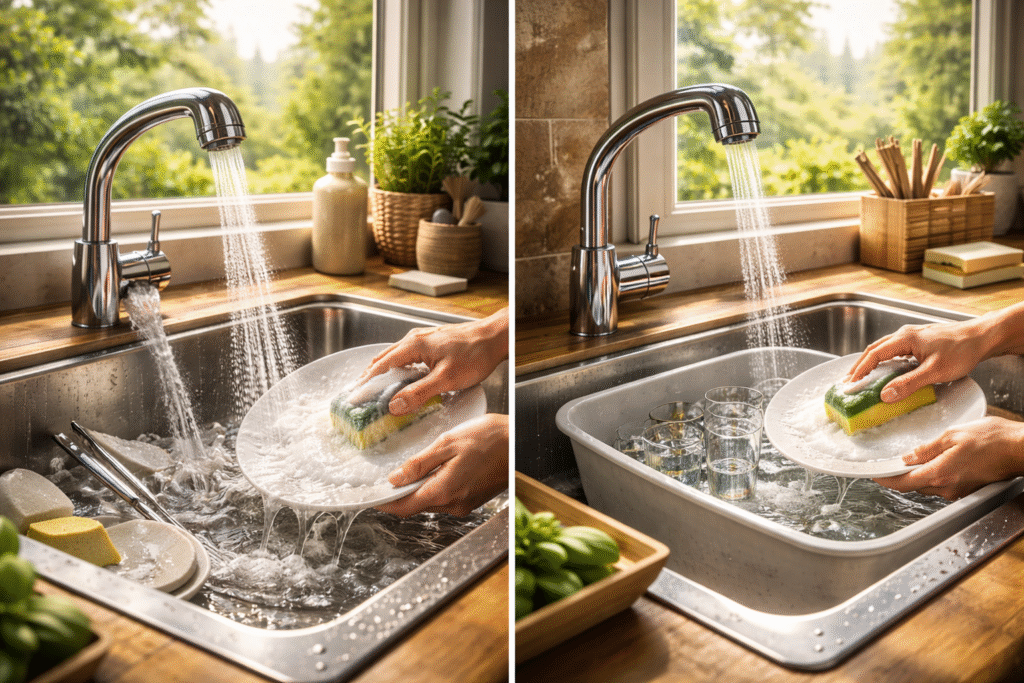
When washing dishes by hand, use a basin rather than leaving the tap running continuously. If you use a dishwasher, wait until it’s fully loaded. When operated correctly, modern dishwashers often use less water than hand washing.
Rainwater Harvesting
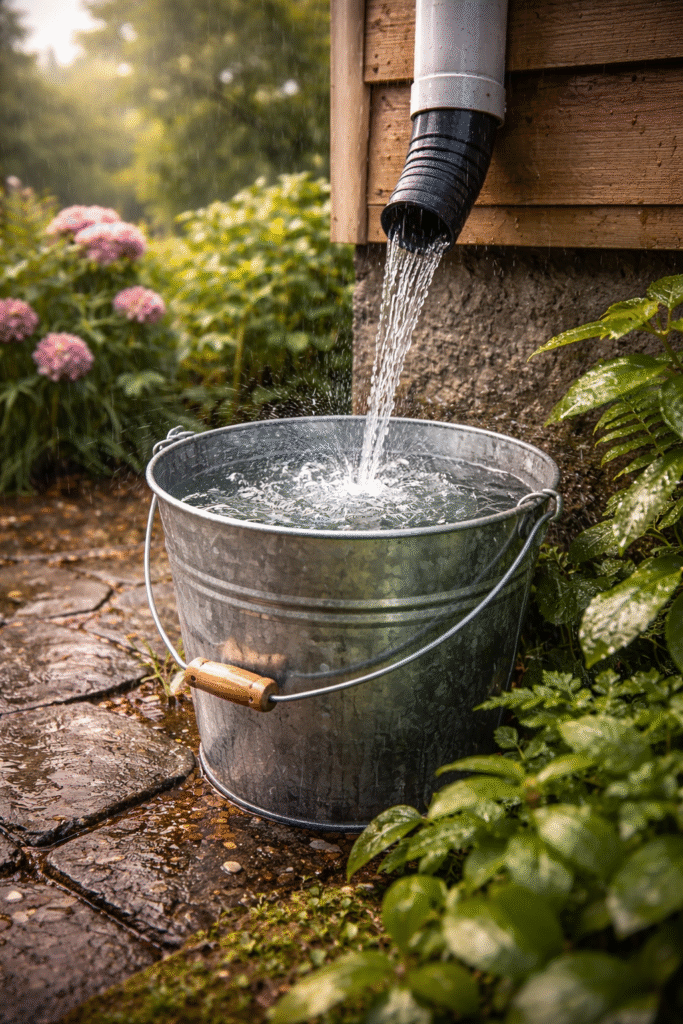
Where it is legal and safe, rainwater capture can significantly reduce outdoor water use. Placing a simple bucket under the downpipe or a small storage can provide sufficient water for gardening and basic cleaning tasks, making it a low-cost, low-tech solution.
Mulching
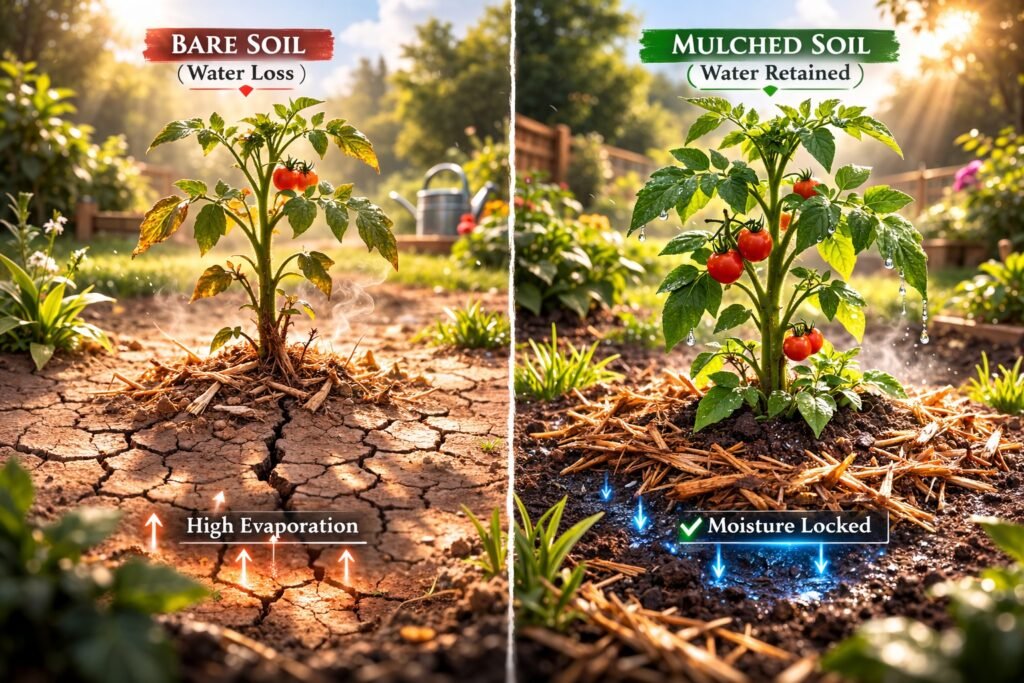
Mulch retains soil moisture, so you need less irrigation water. Water plants early in the morning or late in the evening to reduce evaporation. This way, identical plant health requires less water.
Affordable upgrades that pay back fast
If you can spend a little, these measures usually pay for themselves quickly through lower bills.
- Replace old toilets with high-efficiency models, such as modern low-flush toilets, which dramatically reduce per-flush volume.
- Install the latest, highly efficient showerhead to reduce shower water use by 30–50% while maintaining pressure.
- Insulating hot water pipes reduces heat loss, so you can run taps for less time to get hot water.
- Upgrade to a modern washing machine if your old one is very inefficient; newer machines often use far less water.
- Even in areas with limited product availability, local plumbers or hardware stores can offer simple retrofit options.
Small behavioral changes that make a difference
- Not every solution requires a product. Habits matter and usually cost nothing.
- Reduce shower time by even one or two minutes. It’s surprising how quickly you adapt.
- Turn off the tap while brushing your teeth.
- Use the minimal amount of water necessary for cleaning tasks.
- Reuse water where safe, e.g., water used to wash vegetables can be used to pre-rinse dishes or water plants.
These habits are low-friction and work in apartments and houses.
Measuring progress without expensive tools
You don’t need advanced smart meters at home to measure real progress. A straightforward, practical method works just as well:
- Start by creating a baseline for your water use. Keep a record of your water bills for three consecutive months to understand your regular consumption pattern.
- Next, introduce several improvements at once—such as repairing leaks, installing a low-flow showerhead, and updating your laundry habits.
- After these changes, compare your new bills with the baseline. When possible, factor in seasonal differences that may naturally affect water use.
- If you don’t see a noticeable reduction, review your home again. Undetected leaks and everyday habits that are easy to overlook are often the main reasons water consumption remains unchanged.
Things to watch for and avoid
- Don’t double-count savings. If you change both the appliance and the behavior, attribute savings carefully.
- Be aware of indirect impacts. Water savings may be reduced if high-efficiency fixtures unintentionally encourage more prolonged use, such as extended showers.
- Reuse of unsafe water should be avoided. When handled safely, greywater can be reused for irrigation and toilet flushing, in accordance with local regulations. Greywater can only be used for irrigating edible plants unless it’s treated appropriately.
Policy and community actions that scale individual efforts
Minor household improvements are often most effective when supported by broader, system-level policies. At the community level, several approaches consistently reduce water use.
- Clear appliance and fixture standards—supported by independent labeling programs—help consumers identify and choose water-efficient products, such as those certified under ENERGY STAR–type schemes.
- Well-designed pricing signals also play a role. Water tariffs that reflect local scarcity send a clear message about value, encouraging both conservation and smarter, more efficient use.
- Campaigns for public education with clear regional advice, what works in a dry city might be different from what works in a wet one.
- Small subsidies or allowances for efficient bathroom fixtures make upgrades affordable.
- Cities and utilities that already use some of these tools have seen per-person water use drop significantly over the past decade. That demonstrates what coordinated action, combined with household changes, can achieve.
What the future looks like—without losing sight of today
Technology will continue to improve: smart meters, automated irrigation systems, and enhanced greywater treatment will all help. Still, most of the water we can save in the short term comes from ordinary measures—fixing leaks, changing habits, and choosing efficient fixtures. Those steps build immediate resilience and save money now, long before large infrastructure projects can be planned and funded.
A short, practical checklist to get started this weekend
- Check sinks and toilets for drips and repair them.
- Time your shower; try to shave off two minutes.
- Run laundry and dishwashers only with full loads.
- Place a bucket in the shower to collect cold-water runoff while waiting for hot water, then use it on plants.
- Add mulch to garden beds and water deeply but less frequently.
- Consider a low-flow, cost-effective, and easy-to-install showerhead and a faucet aerator.
Final thoughts
Whether you’re a renter with only a few choices or a homeowner planning upgrades, there are practical steps you can take that genuinely make an impact. The trick is to act in ways that fit your life and keep doing them because when millions of households take that approach, the cumulative effect is enormous.
Affiliate disclosure: As an Amazon Associate, I earn from qualifying purchases.
Related Guides
Hidden Toxins in Synthetic Cosmetics You Must Avoid

10 Frequently Used Plastic Bathroom Swaps for an Eco-Friendly Home
10 Frequently Used Plastic Items Swaps for a Sustainable Kitchen
Plastic Is Dying: These 10 Packaging Alternatives Are the Future
6 Revolutionary Plastic Alternatives in 2026 to Replace Traditional Plastic
9 Affordable Green Technology Products to Reduce Energy Consumption in 2026

This article is very informative and well-written. It clearly explains the importance of water efficiency and how sustainable water use can protect the environment and secure resources for future generations.
Very informative for water sustainability
Good article