Why Plastic in the Kitchen Is a Climate and Health Issue
Climate change isn’t only driven by factories, oil rigs, or transport systems; it’s also quietly fueled inside our homes, especially in our kitchens. Plastic production depends heavily on fossil fuels, contributing significantly to greenhouse gas emissions, air pollution, and global warming. Worse, many everyday kitchen plastics degrade over time, releasing microplastics and toxic chemicals like BPA and phthalates into our food and bodies. As climate stress intensifies and health concerns rise, rethinking how we prepare, store, and consume food has never been more urgent. The kitchen, where daily habits are formed, is one of the most powerful places to start.
Why Focus on Kitchen Plastics?
The average household kitchen contains dozens of plastic items, from food storage containers and cutting boards to utensils and cling wrap. These plastics are frequently exposed to heat, oil, acidity, and repeated washing, accelerating chemical leaching and material breakdown.
Swapping plastic kitchen items isn’t about perfection; it’s about reducing exposure, lowering environmental harm, and choosing safer, longer-lasting, and more sustainable materials.
Below are 10 of the most commonly used plastic kitchen items, along with the best non-toxic, planet-friendly alternatives to replace them.
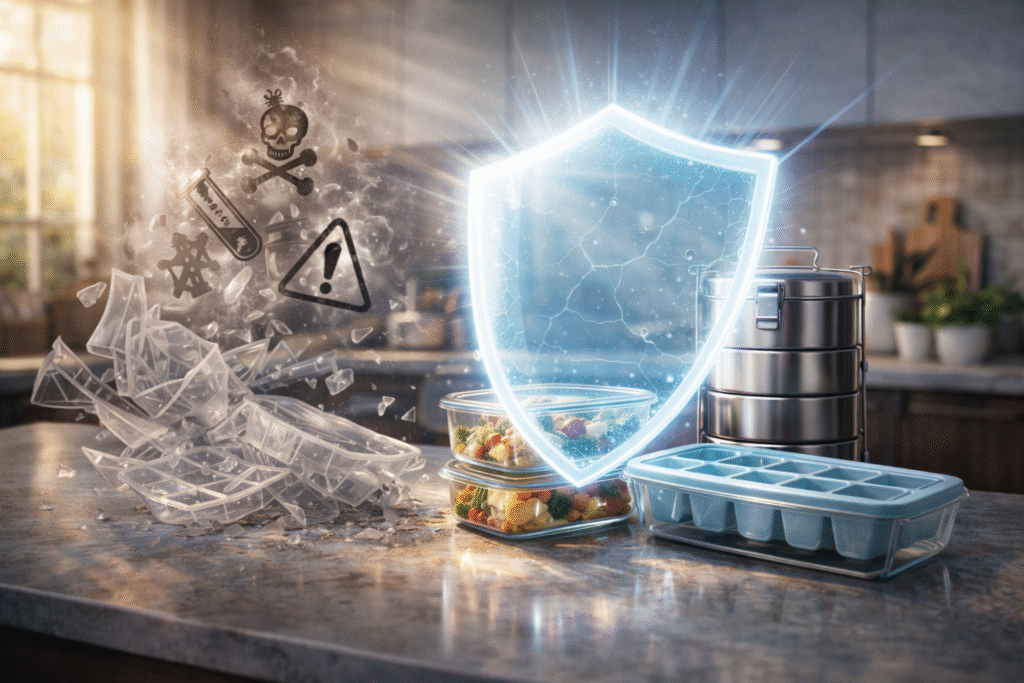
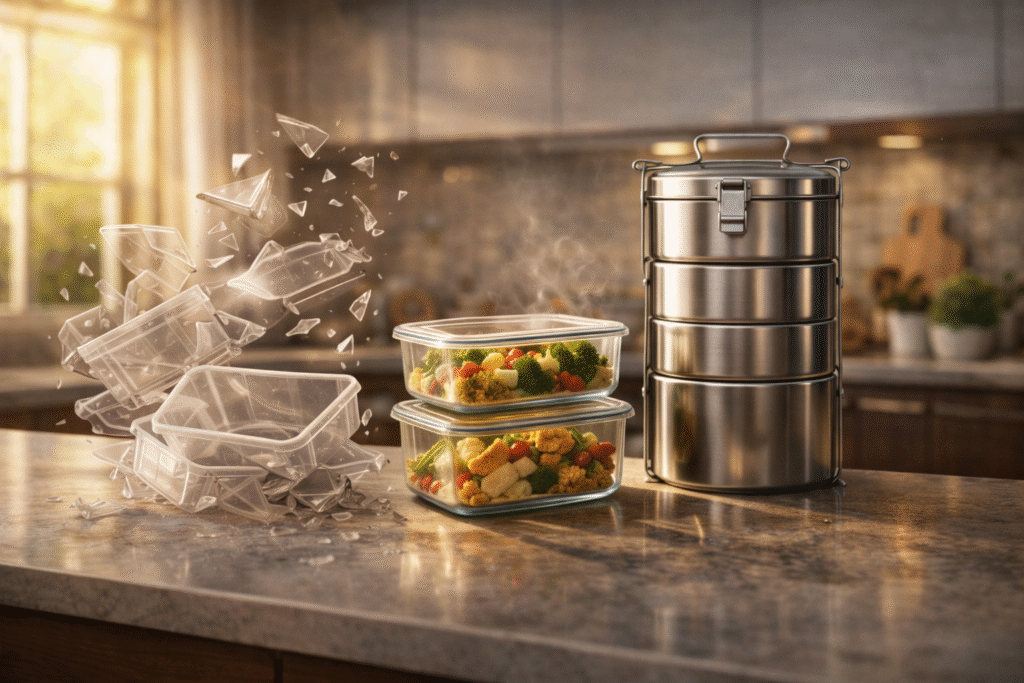
1. Plastic Food Storage Containers → Glass or Stainless-Steel Containers
Plastic containers are notorious for absorbing odors, staining, and leaching chemicals, especially when microwaved or used for hot foods.
Better Alternatives:
- Borosilicate glass containers (oven- and microwave-safe)
- Stainless steel lunch containers (durable and lightweight)
Why They’re Better:
- Non-reactive and toxin-free
- Do not absorb food smells or colors
- Fully recyclable and extremely long-lasting
Health bonus: No risk of BPA or microplastic contamination.
2. Plastic Water Bottles → Stainless Steel or Glass Bottles
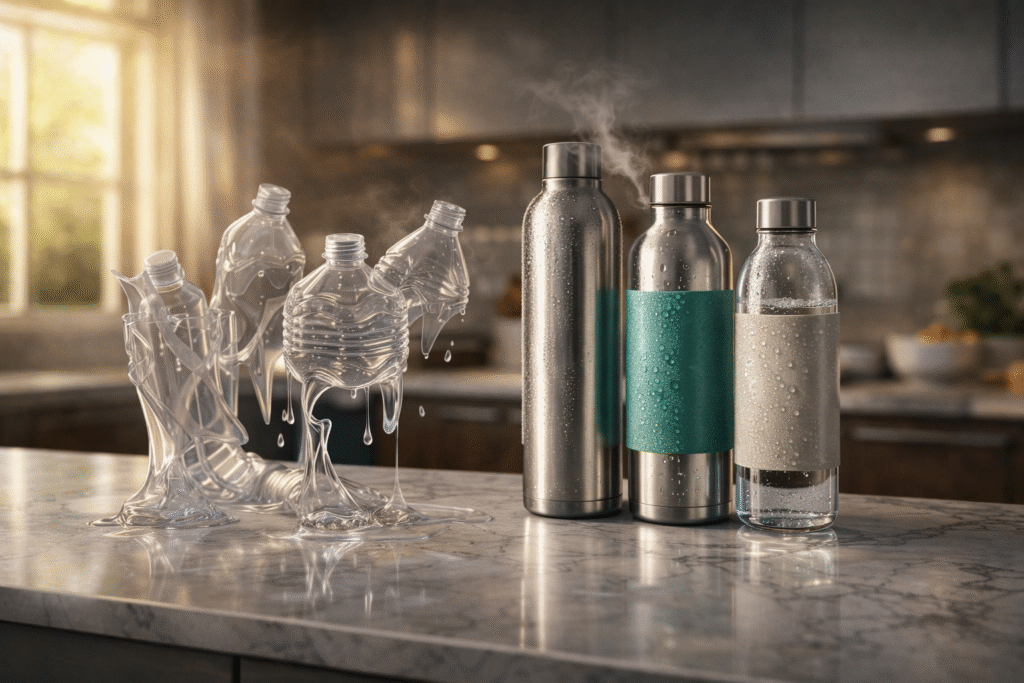
Both single-use and reusable plastic bottles pose risks, especially when exposed to heat or sunlight.
Better Alternatives:
- Insulated stainless steel bottles
- Protective silicone-sleeved glass bottles
Why They’re Better:
- Keep drinks cold or hot for hours
- No chemical leaching
- Reduce plastic waste dramatically
Environmental impact: One reusable bottle can replace thousands of disposable plastic bottles.
3. Plastic Cutting Boards → Wood or Bamboo Cutting Boards
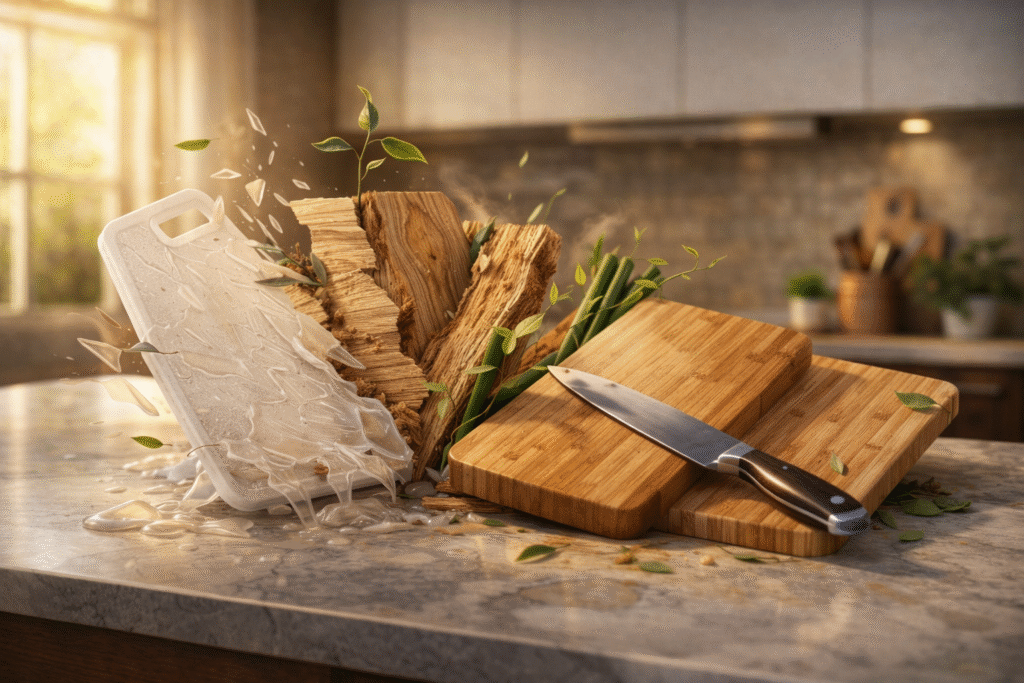
Plastic cutting boards shed microplastic particles with every knife stroke, particles that may end up in your food.
Better Alternatives:
- Hardwood boards (maple, teak)
- Bamboo boards (fast-growing and renewable)
Why They’re Better:
- Naturally antimicrobial
- Gentle on knives
- No microplastic shedding
Tip: Maintain with food-grade mineral oil for longevity.
4. Plastic Cooking Utensils → Wood, Silicone, or Stainless Steel
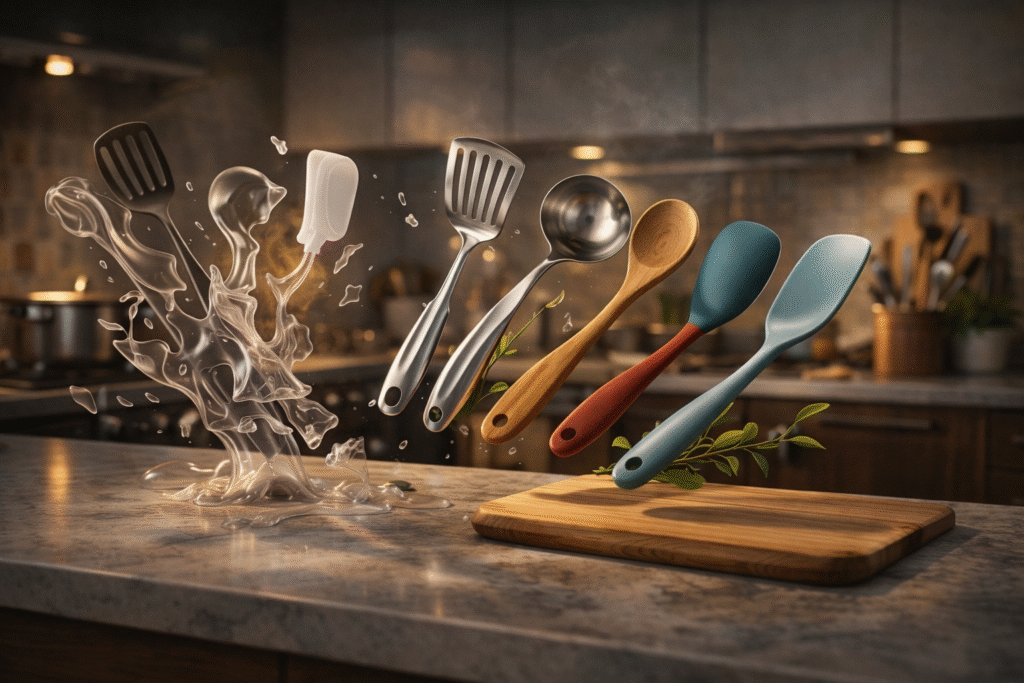
Plastic spatulas and spoons degrade quickly at high temperatures, releasing chemicals into food.
Better Alternatives:
- Wooden utensils (olive wood, beechwood)
- Platinum-grade silicone
- Stainless steel tools
Why They’re Better:
- Heat-resistant and non-toxic
- Longer lifespan
- Safer for hot cooking
Avoid: Low-quality silicone blends, always choose food-grade certification.
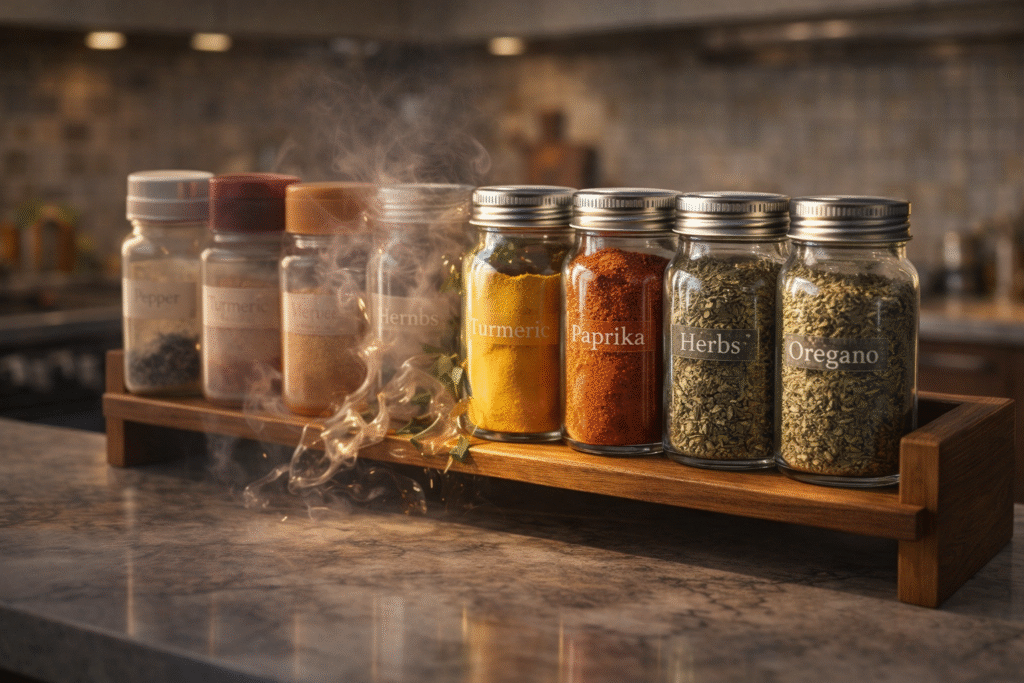
5. Plastic Spice Containers → Glass Jars
Spices stored in plastic can absorb chemical odors and degrade over time.
Better Alternatives:
- Glass spice jars with metal or bamboo lids
Why They’re Better:
- Preserve flavor and freshness
- Easy to clean and reuse
- Visually organized and aesthetic
Bonus: Glass keeps herbs potent for longer.
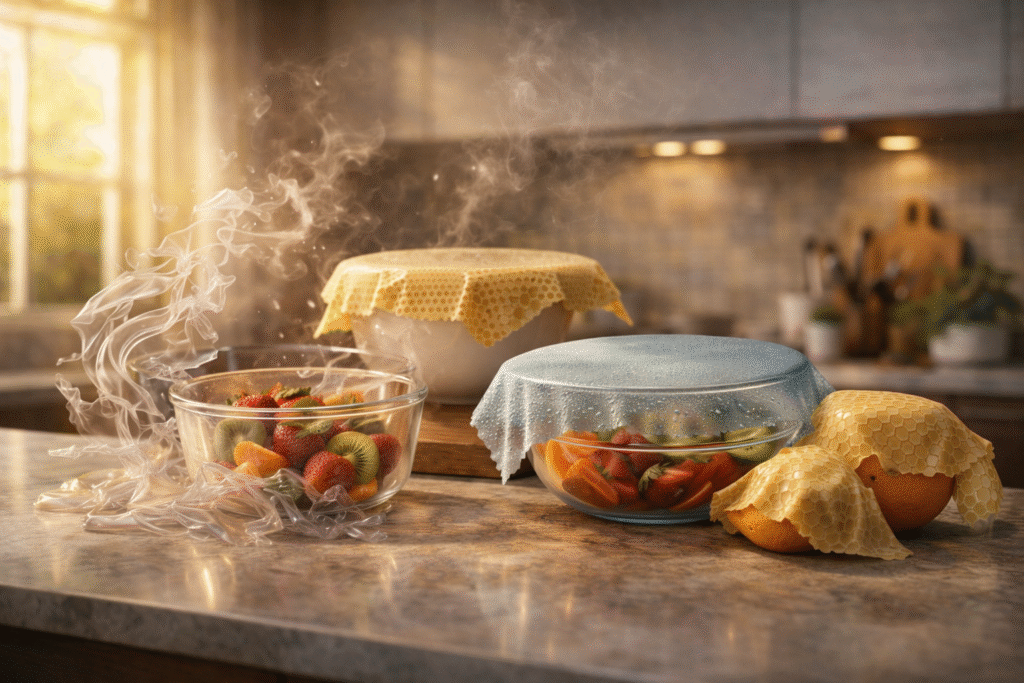
6. Plastic Wrap (Cling Film) → Beeswax Wraps or Silicone Covers
Plastic wrap is single-use, non-recyclable, and a major contributor to kitchen waste.
Better Alternatives:
- Beeswax wraps
- Stretchable silicone bowl covers
Why They’re Better:
- Washable and reusable for up to a year
- Compostable (beeswax wraps)
- No plastic waste
Note: Beeswax wraps are ideal for fruits, bread, and leftovers, but not raw meat.
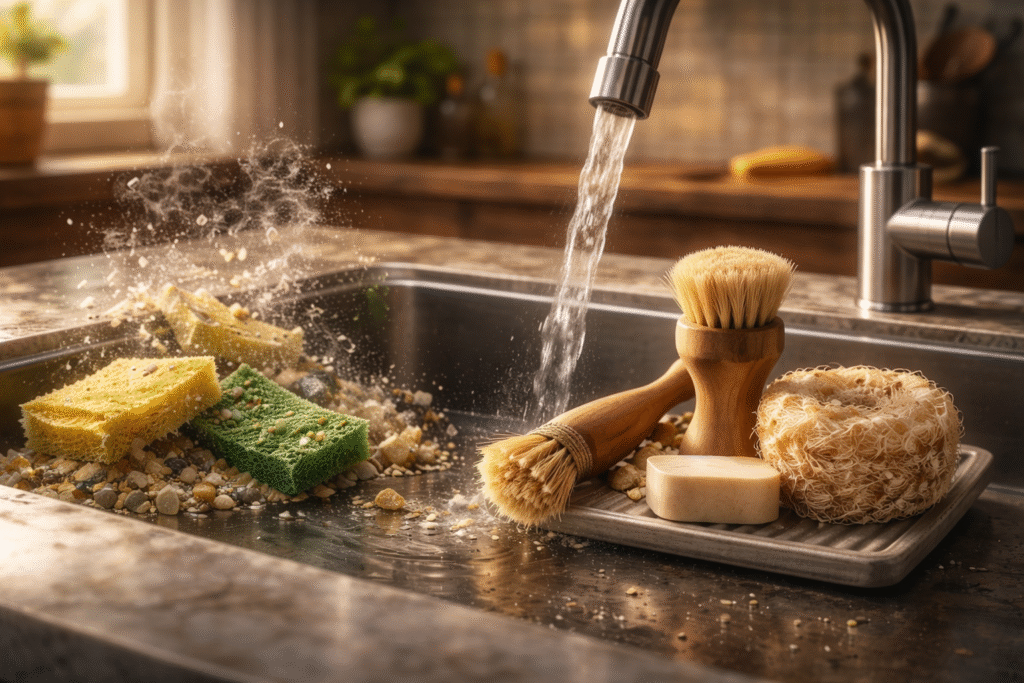
7. Plastic Dish Sponges → Natural Fiber Brushes or Loofahs
Synthetic sponges shed microplastics down the drain every time you wash dishes.
Better Alternatives:
- Wooden dish brushes with natural bristles
- Plant-based loofah sponges
Why They’re Better:
- Compostable at end of life
- More hygienic and longer-lasting
- Reduce microplastic pollution in waterways
Water protection matters—oceans start in our sinks.
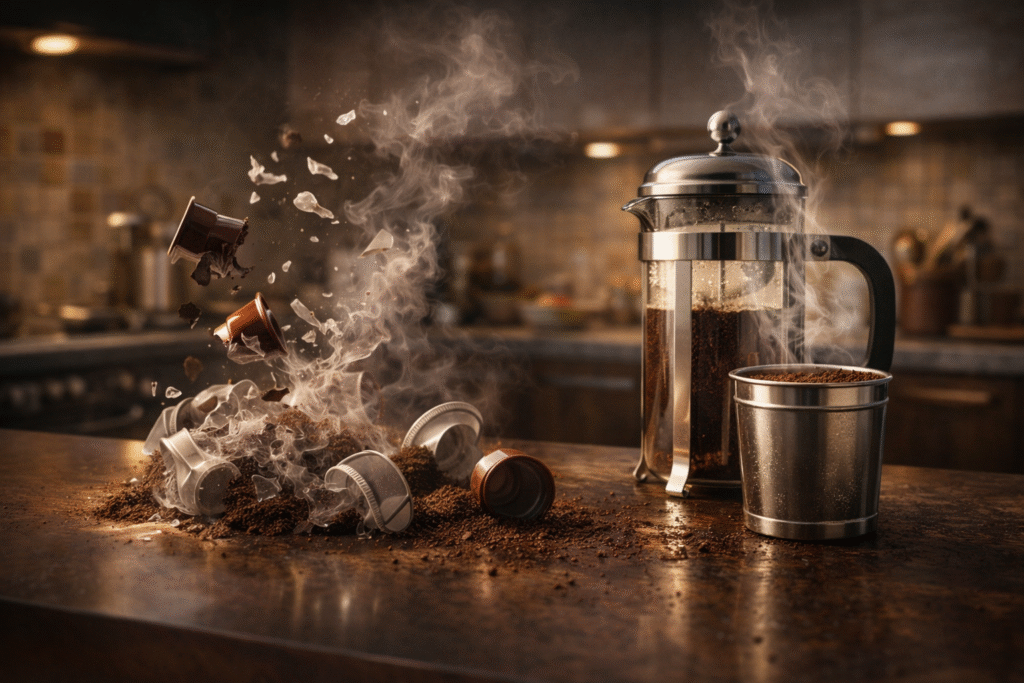
8. Plastic Coffee Makers & Pods → French Press or Stainless-Steel Filters
Plastic coffee machines and pods combine heat, pressure, and plastic—an unhealthy mix.
Better Alternatives:
- Glass or stainless-steel French press
- Reusable stainless steel coffee filters
Why They’re Better:
- No plastic contact with hot liquids
- Richer coffee flavor
- Zero pod waste
Win-win: Better taste, less waste, fewer toxins.
9. Plastic Lunch Boxes → Stainless Steel Tiffin or Glass Containers
Plastic lunch boxes degrade quickly and often retain food residues.
Better Alternatives:
- Multi-tier stainless steel tiffin
- Glass containers with locking lids
Why They’re Better:
- Durable for years
- No odor retention
- Ideal for hot meals
Great for adults and kids alike.
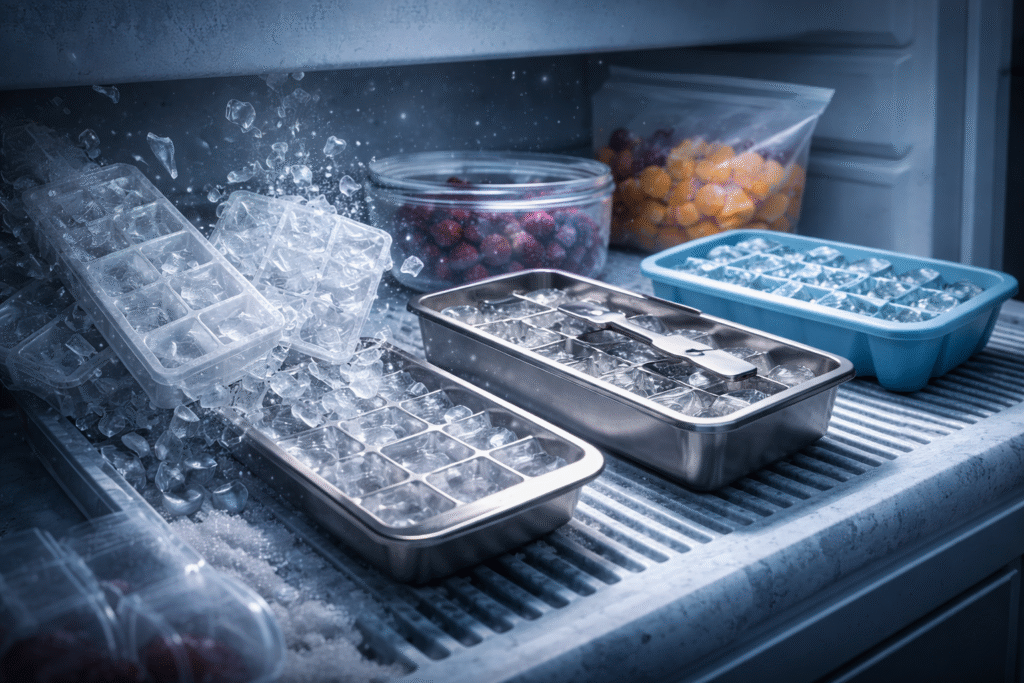
10. Plastic Ice Trays & Freezer Bags → Stainless Steel Trays or Silicone Molds
Freezing food in plastic increases the risk of chemical migration.
Better Alternatives:
- Stainless steel ice trays
- Food-grade silicone molds
Why They’re Better:
- No cracking or contamination
- Reusable for years
- Easy ice release
Freezing shouldn’t come with plastic exposure.
Why These Swaps Matter More Than You Think
Each plastic item replaced:
- Reduces fossil fuel demand
- Lowers greenhouse gas emissions
- Protects your family from long-term chemical exposure
When multiplied across millions of households, these small changes become a powerful climate solution.
Final Thoughts: Awareness Is the First Step Toward Change
Plastic has been normalized in modern kitchens, but normal doesn’t mean safe, and convenient doesn’t mean sustainable. Awareness is the bridge between habit and change. By choosing healthier materials and questioning everyday products, we not only protect our bodies but also contribute to a cleaner, more resilient planet. The kitchen is where nourishment begins; let it also be where responsibility, care, and climate action take root.
Related Guides
Plastic Is Dying: These 10 Packaging Alternatives Are the Future
6 Revolutionary Plastic Alternatives in 2026 to Replace Traditional Plastic
9 Affordable Green Technology Products to Reduce Energy Consumption in 2026

How Fog Harvesting Is Redefining Water Security

Does Fast Fashion Cause Pollution

Water Efficiency and Sustainability

This is such an informative and well-written article. It clearly explains how harmful plastic can be for our health and the environment. Thank you for raising awareness about safer alternatives.